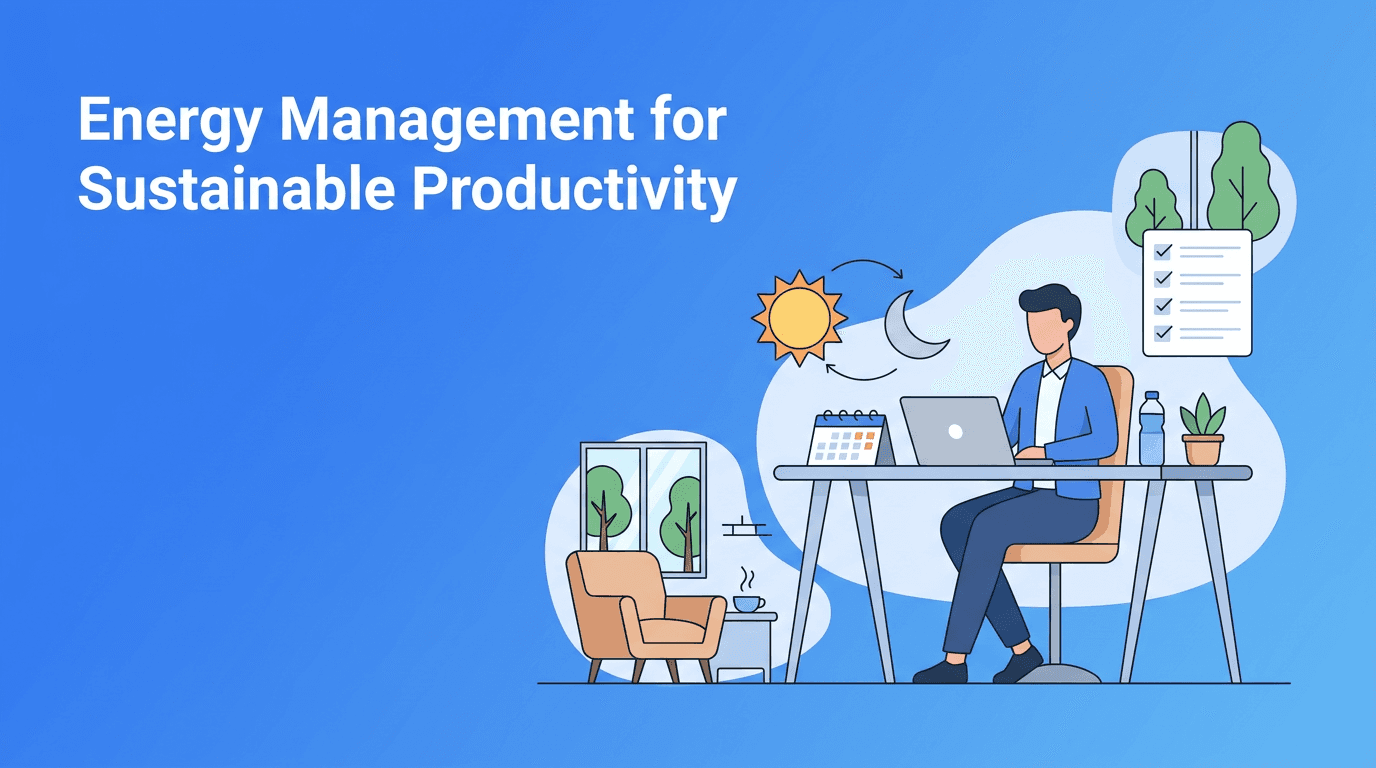
Energy Management for Sustainable Productivity: A Better Way to Protect Work-Life Balance
Energy management helps you build sustainable productivity, protect work-life balance, and reduce burnout without sacrificing meaningful results.

By Haply Team
Haply Editorial Team
Energy management is often the missing skill behind sustainable productivity. If your calendar is full but your focus is gone, the issue may not be time. It may be how your work demands interact with your mental, physical, and emotional energy. For professionals trying to protect work-life balance and avoid burnout, learning to manage energy can change everything.
Why energy management matters more than squeezing your calendar
Many high performers keep trying to solve every productivity problem with tighter schedules, more apps, or longer hours. That approach can work briefly, but it usually creates friction. You become more organized on paper while feeling more depleted in real life. Energy management asks a better question: What kind of work fits your current capacity, and how can you restore that capacity consistently?
- Time management helps you decide when to work.
- Energy management helps you decide what to do when your brain and body have different levels of capacity.
- This shift supports sustainable productivity, because it reduces the cycle of overwork followed by recovery crashes.
- It also protects work-life balance, because you stop borrowing energy from evenings, weekends, and sleep.
The four types of energy that shape your workday
1. Mental energy
This is your ability to concentrate, analyze, make decisions, and hold complex information in mind. Deep thinking, writing, strategy, and problem-solving all depend on it. If you schedule demanding tasks during your lowest-focus hours, output drops and frustration rises.
2. Physical energy
Sleep, movement, hydration, nutrition, and screen fatigue all affect your physical energy. Professionals often ignore this because physical energy sounds less urgent than deadlines. But a tired body makes everything feel harder, including simple tasks.
3. Emotional energy
Difficult conversations, uncertainty, people-pleasing, and constant responsiveness can quietly drain emotional reserves. When emotional energy is low, even short tasks feel heavy. This is one reason burnout can sneak up on capable people who still appear productive from the outside.
4. Motivational energy
This comes from meaning, momentum, autonomy, and visible progress. You can have enough time and decent focus, but still procrastinate if the task feels vague, disconnected, or overwhelming. Restoring motivation often requires clarity, not more pressure.
"You do not need to earn rest after breaking yourself. Rest is part of how sustainable work happens."
How to build an energy-aware schedule
An energy-aware schedule is not rigid. It is responsive. Instead of treating every hour as equal, you match your tasks to your most realistic capacity. This is where energy management becomes practical, not theoretical.
- Track your energy for 5 workdays. Note when you feel sharp, social, tired, restless, or distracted.
- Put high-focus work in your strongest energy window. This might be writing, planning, coding, or decision-making.
- Use medium-energy periods for meetings, admin, and collaboration.
- Save low-energy windows for easy tasks like inbox cleanup, file organization, or routine updates.
- Add recovery blocks on purpose, such as short walks, lunch away from your screen, or 10 minutes of breathing between demanding tasks.
This approach supports work-life balance because it lowers the need to "catch up" after work. When your most important tasks happen during your best hours, you create progress with less strain.
Small habits that reduce burnout over time
Preventing burnout is rarely about one dramatic change. It is usually about small, repeatable choices that stop depletion from piling up unnoticed.
- Start the day with one priority, not a long panic list.
- Create a shutdown ritual at the end of work, such as reviewing tomorrow's top 3 tasks and closing open tabs.
- Set response boundaries for email and chat instead of staying available every minute.
- Use meeting filters. Ask whether you need to attend live, send input asynchronously, or decline.
- Protect transition time between work and personal life, especially if you work remotely.
- Notice the difference between being busy and being effective.
If you want sustainable productivity, these habits matter more than occasional bursts of discipline. Consistency beats intensity when your goal is long-term performance without chronic exhaustion.
Build sustainable productivity with support
Haply is an AI life coaching app for iOS and Android that helps you turn energy management into daily action. Use Productivity coaches, the Focus Timer, Task Planner, habit streaks, and reminders to create a workflow that protects work-life balance and lowers burnout risk.
Try Haply FreeA simple weekly reset for better work-life balance
Try this 15-minute review at the end of each week. It helps you notice what drained you, what restored you, and what needs adjusting before stress compounds.
- What gave me the most energy this week?
- What drained me the fastest?
- Which tasks required more focus than I expected?
- Where did I protect or lose work-life balance?
- What is one change I can make next week to support sustainable productivity?
You do not need a perfect system. You need a system that notices reality. That is the heart of energy management at work: paying attention before exhaustion becomes your normal.
Frequently Asked Questions
What is energy management in productivity?
Energy management is the practice of aligning your tasks, breaks, and routines with your mental, physical, and emotional capacity. It helps you work more effectively without relying on constant overexertion.
How does energy management help prevent burnout?
It reduces chronic overload by helping you match demanding work to your strongest hours, build recovery into your day, and set healthier boundaries.
Is energy management better than time management?
It is not a replacement, but it often solves problems time management alone cannot. Time tells you when to work, while energy helps you decide what kind of work you can do well.
How can I improve work-life balance without getting less done?
Focus your most important work during peak energy periods, reduce unnecessary meetings, and create a clear end-of-day shutdown routine. This improves output while protecting your personal time.