Energy Management at Work: The Missing Skill for Better Work-Life Balance
Energy management can improve work-life balance, reduce burnout risk, and help you build a calmer, more sustainable way to get meaningful work done.

By Haply Team
Haply Editorial Team
Energy management is often the missing piece in modern productivity. If your calendar looks organized but you still end the day drained, the problem may not be time. It may be how your work demands interact with your attention, stress levels, and recovery. For professionals who want better work-life balance without sacrificing results, learning to manage energy can be more effective than simply squeezing more into the day.
Why energy matters more than hours worked
Many people are taught to treat every hour as equal. In real life, it is not. Your brain is sharper at some times than others. Meetings, notifications, emotional stress, and poor recovery all change how much quality effort you can give. That is why energy management is so closely tied to burnout prevention and long-term performance.
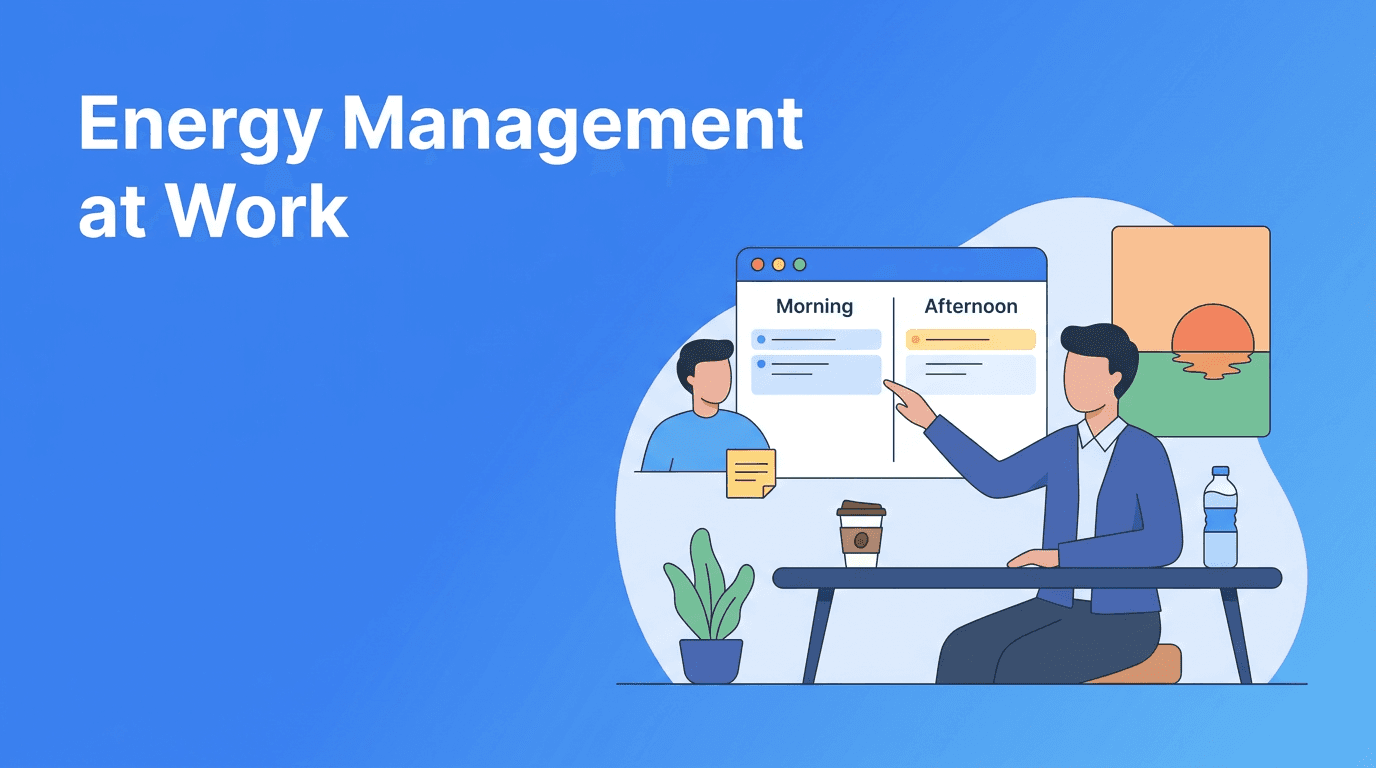
- High-energy hours are best for strategic thinking, writing, analysis, and difficult decisions.
- Medium-energy hours work well for collaboration, admin, and follow-ups.
- Low-energy hours are ideal for routine tasks, inbox cleanup, and simple maintenance work.
"You do not need to do everything at peak intensity. You need to do the right work with the right energy."
A practical energy map for your workday
Start by noticing patterns for one week. Track when you feel mentally clear, socially open, physically restless, or emotionally overloaded. This is your personal energy management baseline. Most people discover they have a reliable rhythm, even if it shifts slightly from day to day.
Step 1: Identify your peak zone
Ask yourself: when do I do my best thinking with the least resistance? Protect that window for your most valuable work. If possible, move status updates and shallow tasks outside that period.
Step 2: Match task type to energy type
Not all low energy is bad. You may feel less creative but still perfectly capable of organizing files, responding to messages, or reviewing documents. Matching the task to your state is a core energy management skill.
Step 3: Add recovery before you need it
One of the biggest drivers of burnout is waiting too long to recover. Short breaks, walking, hydration, food, and mental reset rituals help preserve attention before it collapses. Recovery is not a reward for finishing everything. It is part of doing good work sustainably.
Signs your current system is draining you
- You finish the day feeling busy but unclear about what actually mattered.
- Your hardest tasks keep getting pushed because you tackle them at the wrong time.
- You rely on caffeine or urgency to create momentum.
- You struggle to switch off after work, which weakens work-life balance.
- Your weekends feel like emergency recovery instead of normal rest.
These patterns are common in high-performing professionals. They do not mean you are lazy or undisciplined. They often mean your workflow ignores your human limits. That is exactly where better energy management can help.
Simple habits that support sustainable output
- Create a top 3 each morning so your best energy goes to meaningful work.
- Batch low-value tasks into one or two windows instead of scattering them all day.
- Use short transition rituals between tasks, such as standing up, breathing deeply, or writing the next step.
- Set a clear work shutdown routine to protect work-life balance and mental recovery.
- Review your week for recurring energy drains, not just missed tasks.
Build healthier productivity with Haply
Haply helps you turn energy management into a repeatable practice with AI coaching, a Focus Timer, Task Planner, habit tracking, and daily reminders that support calmer, more consistent progress.
Try Haply FreeIf you want support staying consistent, Haply offers chat-based AI coaching across productivity, wellness, and career growth on iOS and Android. You can use the Today Dashboard to plan around your energy, the Task Planner to reduce overload, and the Focus Timer to protect your best work windows without overextending yourself.
How to improve work-life balance without doing less
Better work-life balance does not always require cutting ambition. Often, it means reducing unnecessary friction. When you schedule complex work during your strongest hours and stop treating every task like an emergency, you create more space for both performance and recovery.
- Say no to tasks that create noise but not value.
- Avoid stacking demanding meetings next to deep-thinking work.
- Leave small buffers between commitments so your day has room to breathe.
- Choose a realistic stopping point for the day instead of chasing a perfect inbox.
A gentle reset if you feel close to burnout
If you already feel exhausted, start smaller than you think. Protect one high-energy block tomorrow. Take one real lunch break. End work at a defined time once this week. Tiny repairs matter. Preventing burnout is rarely about one dramatic change. It is about repeatedly honoring your limits before your body enforces them for you.
Frequently Asked Questions
What is energy management at work?
Energy management at work means organizing tasks around your mental, physical, and emotional capacity, not just the clock. It helps you do better work with less strain.
How does energy management help prevent burnout?
It reduces chronic overload by building recovery, protecting peak focus time, and matching demanding tasks to your strongest hours. This lowers the stress of constantly pushing through exhaustion.
Is energy management better than time management?
It is not a replacement, but it often works better when time management alone is not enough. Time tells you when to work, while energy helps you decide what kind of work fits that moment.
How can I improve work-life balance without losing productivity?
Protect your high-energy hours for important work, set a clear end to the workday, and reduce low-value tasks. That combination can improve results while also preserving recovery time.