Energy Management for Knowledge Workers: A Smarter Way to Protect Work-Life Balance
Energy management can improve focus, protect work-life balance, and reduce burnout risk. Learn a practical system for planning your day around real human capacity.

By Haply Team
Haply Editorial Team
Energy management is one of the most overlooked skills in modern work. Many professionals try to fix overload with better calendars, stricter to-do lists, or longer hours, yet still feel drained. If you want stronger focus, healthier work-life balance, and lower risk of burnout, it helps to manage your energy, not just your time.
Why energy management matters more than squeezing in one more task
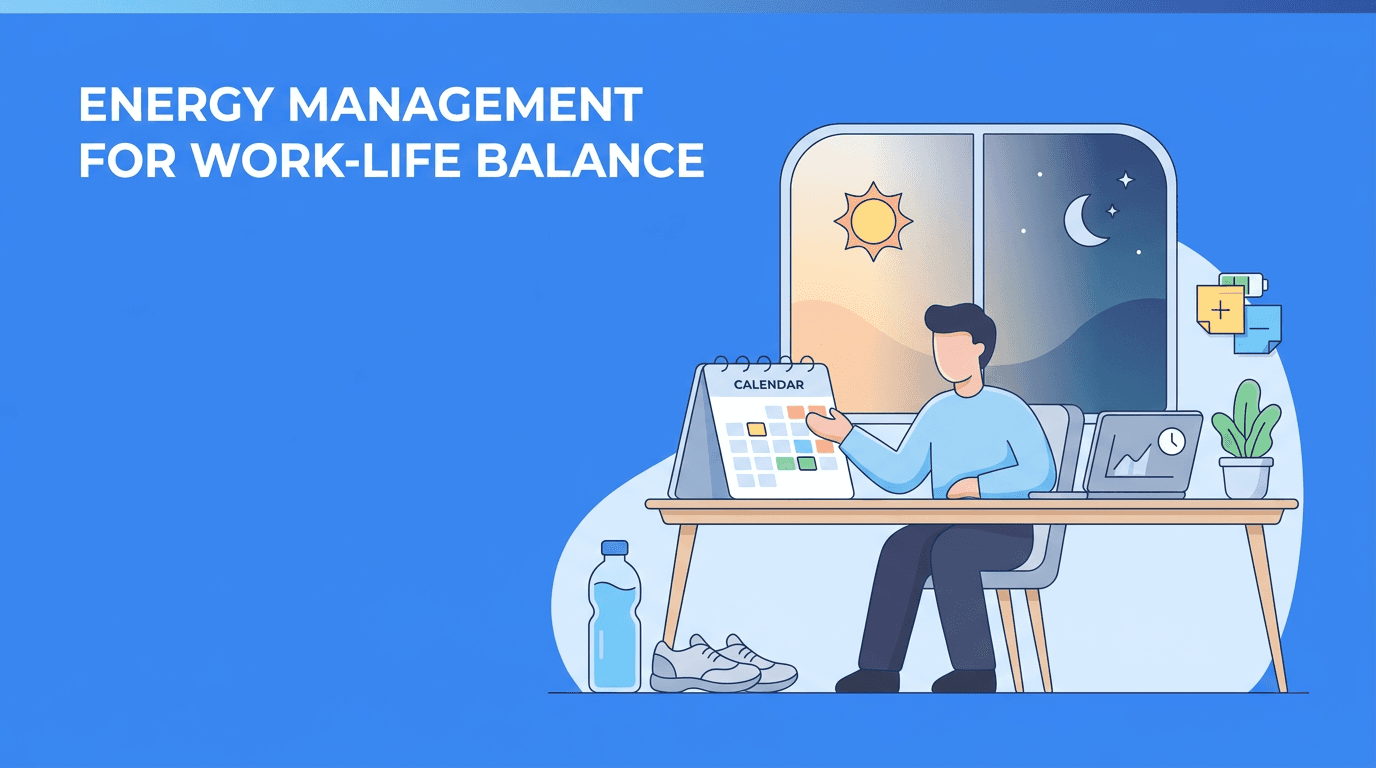
Time is fixed, but your capacity changes across the day. Some hours support deep thinking. Others are better for admin, meetings, or recovery. When you ignore those shifts, even simple tasks can feel heavy. When you respect them, sustainable productivity becomes much more realistic.
- High-energy periods are ideal for strategy, writing, analysis, and problem-solving.
- Medium-energy periods work well for meetings, collaboration, and review work.
- Low-energy periods are better for email, filing, simple updates, and transitions.
- Recovery periods are not wasted time. They protect performance and help prevent burnout.
"You do not need to become more machine-like to get more done. You need a work rhythm that respects that you are human."
The hidden signs your energy system is out of sync
You may not notice the problem at first because it often looks like a motivation issue. But the real issue is often poor alignment between your workload and your natural energy. That mismatch quietly damages both performance and well-being.
- You do your hardest work late, after your attention is already spent.
- You rely on caffeine or urgency to start important tasks.
- You finish the day mentally exhausted but feel unsure what truly moved forward.
- Your evenings are filled with recovery, not real rest, which hurts work-life balance.
- You feel productive on paper, yet emotionally close to burnout.
A simple energy management framework for the workday
1. Map your energy patterns for one week
For five working days, note your energy at three or four points: morning, midday, afternoon, and evening. Use a simple scale from 1 to 5. Also write down what kind of work felt easy or difficult. This creates a personal pattern you can actually use.
2. Match tasks to energy, not urgency alone
After you spot your pattern, group your tasks by mental demand. Save your top energy window for the work that creates the most value. This is where energy management becomes practical, not theoretical.
- Deep work tasks: writing, planning, coding, design, decision-making
- Moderate tasks: meetings, feedback, research, coordination
- Light tasks: inbox cleanup, scheduling, expense logs, status checks
3. Build recovery into your schedule
Most professionals plan tasks but forget recovery. A short walk, breathing reset, lunch away from the screen, or a no-meeting buffer can restore more focus than pushing through. Better energy management depends on planned renewal.
4. Create a shutdown ritual
A clear end-of-day routine helps your brain stop carrying unfinished work into personal time. Try this: review loose ends, choose tomorrow's top three priorities, close extra tabs, and write one sentence that marks the day as done. This small habit strongly supports work-life balance.
How to protect work-life balance without lowering your standards
Many ambitious people assume balance means caring less. In practice, it often means working with clearer boundaries and better timing. Protecting your energy lets you stay effective for longer, which is the heart of sustainable productivity.
- Set a latest stop time for mentally demanding work.
- Avoid filling every open space with reactive tasks.
- Use one daily priority list instead of several competing systems.
- Schedule at least one transition ritual between work and home life.
- Say no to low-value urgency that steals your best attention.
Want help building a personalized productivity rhythm?
Haply is an AI life coaching app for iOS and Android that helps you create better routines with chat-based coaching, a Focus Timer, Task Planner, daily reminders, and a personalized Today Dashboard. If you want more structure without more pressure, it is a practical place to start.
Try Haply FreeSmall changes that reduce burnout risk over time
You usually do not prevent burnout with one dramatic fix. You reduce it through repeated, protective choices. Think of these as tiny load-management habits that keep work from expanding into every part of life.
- Batch meetings into specific windows when possible.
- Keep one screen-free break in the middle of the day.
- Turn your top priority into the first meaningful task, not the fifth.
- Use a simple weekly review to notice overload early.
- Track streaks for sleep, movement, and focus habits to support energy management over time.
If you like digital support, Haply's Productivity coaches, habit tracker, and mini-apps such as Meditation/Breathe and the Focus Timer can help you test these habits in a realistic way. The goal is not perfect discipline. The goal is a repeatable system you can live with.
What a realistic week of sustainable productivity looks like
A healthier week does not mean every day feels equally strong. It means your schedule allows for intensity, maintenance, and recovery. You plan for human variation instead of treating it as failure.
- Monday: protect a high-focus block for your most important project.
- Tuesday: place collaborative work and meetings in your medium-energy window.
- Wednesday: check capacity before adding new commitments.
- Thursday: preserve one recovery gap after demanding work.
- Friday: review what drained you, what restored you, and what to adjust next week.
Frequently Asked Questions
What is energy management at work?
Energy management at work means planning tasks around your mental and physical capacity, not just your available hours. It helps you focus better and reduces exhaustion.
How does energy management improve work-life balance?
When you match demanding work to your strongest hours and protect recovery time, you finish with less spillover into evenings and personal time.
Can energy management help prevent burnout?
Yes. It lowers chronic overload by adding recovery, improving boundaries, and reducing the habit of forcing deep work when your capacity is low.
What is the difference between time management and energy management?
Time management organizes when work happens. Energy management organizes what kind of work you do based on your capacity during different parts of the day.