Exercise Snacks: A Smart Workout Routine for Busy Days
Exercise snacks are short bursts of movement that make fitness more realistic for busy schedules. Learn how to build a simple workout routine with walking, physical activity, and recovery in mind.

By Haply Team
Haply Editorial Team
If long workouts keep falling off your calendar, exercise snacks might be the wellness shift you actually stick with. These short bursts of physical activity help you build fitness in small pockets of time, making a consistent workout routine feel possible even on your busiest days.
Why exercise snacks work for real life
Most people do not struggle because they dislike movement. They struggle because the all-or-nothing version of fitness feels hard to maintain. Exercise snacks solve that problem by shrinking the barrier to entry. Instead of needing 45 free minutes, you only need 2 to 10.
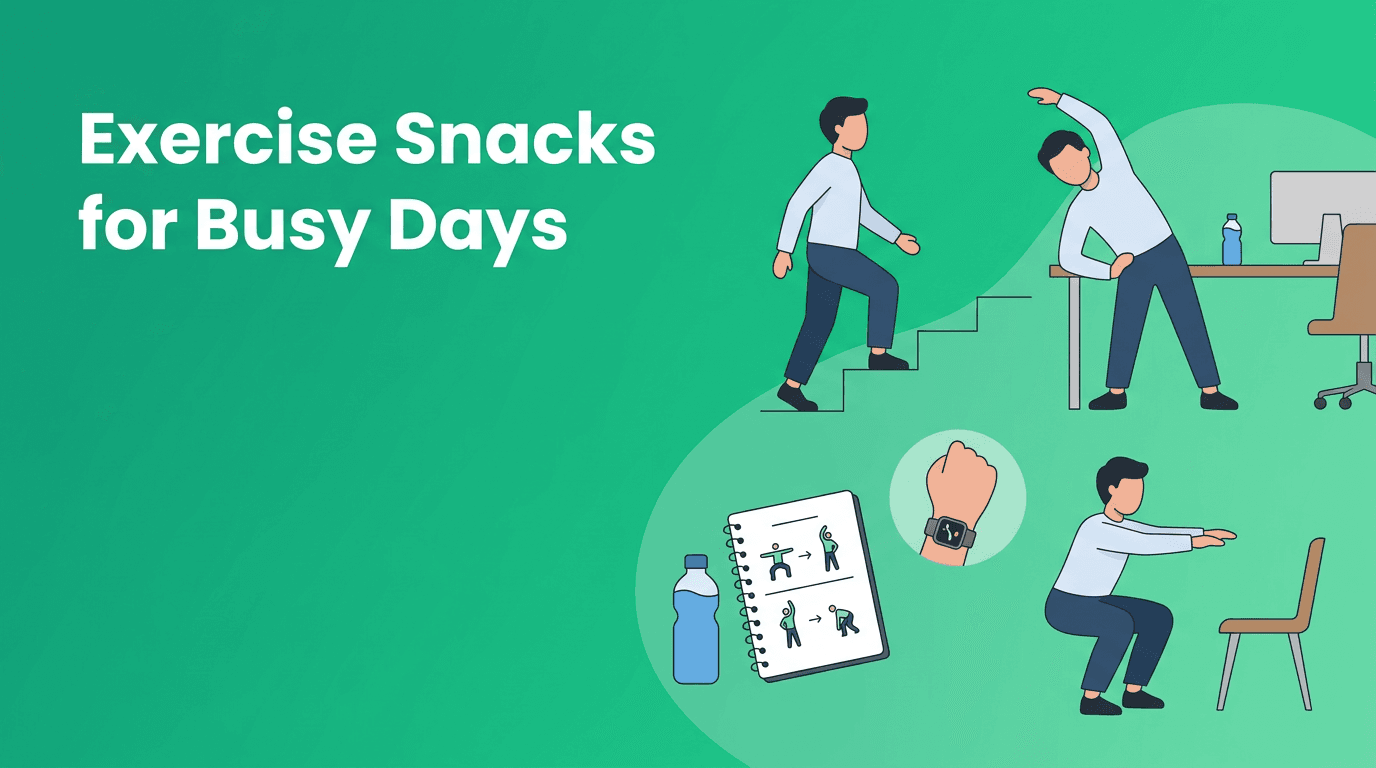
- Take a 5-minute walking break after lunch
- Do 10 bodyweight squats while your coffee brews
- Climb stairs for 3 minutes between meetings
- Add light stretching before bed to support recovery
- March in place during a phone call to increase daily physical activity
Small actions, repeated often, can change how your body feels and how your day flows.
How to build a workout routine with movement breaks
A sustainable workout routine does not need to live only at the gym. It can live inside your day. Think of your schedule as a map with natural openings: before emails, after meals, between tasks, or during afternoon energy dips. These moments are perfect for exercise snacks.
Use the 3-part daily movement formula
- Morning activation: 2 to 5 minutes of mobility, such as arm circles, hip openers, or a short walking loop
- Midday fitness boost: 5 to 10 minutes of brisk walking, stairs, or a quick circuit of squats, wall push-ups, and lunges
- Evening recovery: 3 to 8 minutes of gentle stretching, deep breathing, or slow movement to help your body reset
This approach keeps movement spread across the day, which can feel easier than forcing one intense session. It also supports energy, focus, and mood, not just fitness goals.
Want help turning movement into a daily habit?
Haply is an AI life coaching app for iOS and Android that helps you create personalized wellness routines with chat-based coaching, habit tracking, reminders, and mini-apps like Focus Timer and Meditation/Breathe. It is a supportive tool for building consistency, not a replacement for professional care.
Try Haply FreeThe best exercise snacks for beginners
At your desk
- Chair squats for 1 minute
- Calf raises while standing
- Seated twists for gentle mobility
- Shoulder rolls to release upper body tension
At home
- A 7-minute walking circuit around your home or block
- A simple bodyweight round: squats, wall push-ups, glute bridges
- A short mobility flow for hips, back, and ankles
On a busy workday
- Walk during one meeting each day
- Do 30 seconds of movement every hour
- Pair a bathroom break with stairs or a hallway lap
- Use a timer to remind yourself to stand and reset
The goal is not to crush yourself. The goal is to make movement automatic. That is what turns random effort into a real workout routine.
Do exercise snacks count as fitness?
Yes, they do. While longer workouts can be valuable, short sessions of physical activity still contribute to your overall health and can improve consistency. For many people, frequent walking and mini strength sets are the bridge between being mostly sedentary and feeling genuinely active.
You can also layer them. Three 10-minute movement breaks may feel more doable than one 30-minute workout, and they still support your fitness goals. If you are rebuilding energy after stress or burnout, this gentler approach can feel especially sustainable.
Do not skip recovery
A strong routine includes recovery, too. Hydrate after movement, change positions often, and include a few minutes of stretching or slow breathing at the end of your day. Recovery helps your body adapt and lowers the chances that soreness or fatigue will interrupt your progress.
- Drink water consistently through the day
- Add protein and fiber to meals that support your energy
- Aim for enough sleep to help muscle and mood recovery
- Keep intensity moderate when you are just getting started
A simple 1-week exercise snacks plan
- Monday: 5-minute morning mobility, 10-minute walking break, evening stretch
- Tuesday: 3 stair breaks, 1 minute each, plus 5 chair squats every few hours
- Wednesday: 8-minute brisk walk after lunch, 5-minute recovery flow before bed
- Thursday: 10-minute bodyweight circuit, plus one walking meeting
- Friday: 5-minute mobility, 5-minute walk, gentle stretching
- Saturday: Longer enjoyable movement like walking in a park or light cycling
- Sunday: Easy recovery day with stretching and a relaxed walk
If you want extra structure, Haply's Today Dashboard, streak tracking, and goal-based onboarding can help you stay accountable without making wellness feel heavy. Its Wellness coaching tools can support your motivation and planning one small step at a time.
Frequently Asked Questions
What are exercise snacks?
Exercise snacks are short bursts of movement done throughout the day, usually lasting from 2 to 10 minutes. They help you increase physical activity without needing a long workout session.
Do exercise snacks really improve fitness?
Yes, exercise snacks can improve fitness, especially if they help you move more consistently. Walking, stairs, and bodyweight exercises all add up over time.
How often should I do movement breaks during the day?
A simple starting point is one movement break every 1 to 3 hours. Even a few minutes of walking or stretching can make a difference.
Is walking enough for a workout routine?
Walking can be a great foundation for a workout routine, especially for beginners or busy people. You can add strength and mobility work for a more balanced plan.
What helps with recovery after daily exercise?
Hydration, sleep, gentle stretching, and manageable intensity all support recovery. Consistent recovery habits make it easier to stay active without burning out.