A 5-Minute Gratitude Pause for Mindful Living in Busy Days
A simple gratitude pause can support mindful living without adding more to your schedule. Learn how this tiny practice deepens presence, supports intentional living, and helps you savor ordinary moments.

By Haply Team
Haply Editorial Team
If your days feel full before they even begin, a gratitude pause can be one of the easiest ways to return to yourself. Unlike routines that demand extra time, this tiny practice fits inside the life you already have. It supports mindful living, strengthens intentional living, and helps you notice what is still good, even on rushed days.
Why a gratitude pause works when life is busy
Many people assume gratitude has to be a journal, a morning ritual, or a long reflection practice. But the real power of a gratitude pause is its simplicity. You stop for a moment, notice one thing that is already here, and let your attention rest there a little longer than usual.
That small shift matters. Attention shapes experience. When you regularly turn toward what is supportive, beautiful, or quietly steady, your day begins to feel less automatic. This is where slow living becomes realistic, not as a lifestyle overhaul, but as a series of small moments of awareness.
"The ordinary moments we rush past are often the ones that quietly hold us together."
What a gratitude pause actually looks like
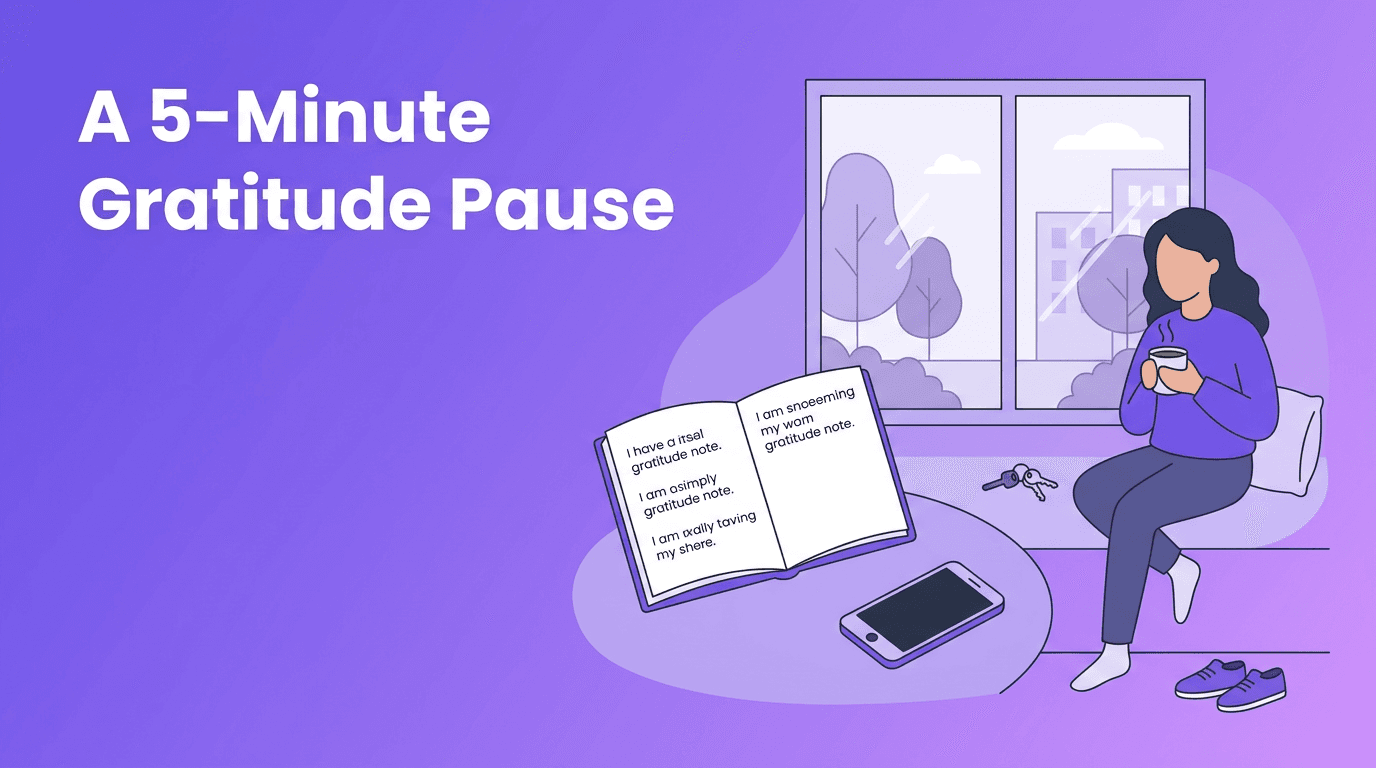
A gratitude pause is not about pretending everything is perfect. It is about naming one real thing you appreciate in this exact moment. It could be the warmth of water on your hands, a friend who texted back, a deep breath before a meeting, or the comfort of sitting down after standing all day.
- Pause for 10 to 60 seconds
- Notice one thing that feels supportive, comforting, meaningful, or beautiful
- Name it in a simple sentence, like "I am grateful for this quiet cup of coffee"
- Stay with it for one full breath, so your mind has time to register it
- Return to your day with slightly more presence
The hidden skill behind the practice: savoring
This practice works because it builds savoring, the ability to stay with a positive moment long enough to actually feel it. Many pleasant moments pass by without landing because we are already thinking about the next thing. A gratitude pause trains your mind to receive the moment instead of skimming over it.
In that sense, gratitude is not separate from mindful living. It is one doorway into it. The more you practice noticing what is already here, the easier it becomes to experience your life from the inside instead of racing past it.
How to use gratitude pause in real life
1. Attach it to moments you already have
The easiest way to remember a new habit is to place it next to something familiar. Try your gratitude pause while waiting for the kettle, locking your front door, opening your laptop, or getting into bed. This keeps the practice light and sustainable.
2. Keep it specific, not dramatic
Grand statements are not necessary. In fact, small details are often more grounding. Be grateful for the clean shirt, the patch of sunlight on the floor, the sound of rain, or the fact that your body carried you through another day. Specificity makes gratitude feel honest.
3. Use it during stressful transitions
One of the best times to practice is right before a switch in roles, like ending work and starting family time. Gratitude can soften the nervous system and make these transitions less jagged. It becomes a bridge back to intentional living instead of reactive living.
- Before checking your phone in the morning, name one thing you appreciate
- Before meals, notice one element of the food, effort, or company around you
- After finishing a task, acknowledge one thing that helped you complete it
- At night, recall one ordinary moment worth remembering
Want a simple way to stay consistent?
Haply is an AI life coaching app for iOS and Android that helps you build gentle routines for wellness and presence. You can use its Wellness coaching, daily reminders, and Meditation/Breathe mini-app to support a gratitude pause without turning it into another chore.
Try Haply FreeGratitude, slow living, and intentional living
People often imagine slow living as moving to the countryside, doing less, or escaping modern life. But for most people, slow living begins in attention, not geography. It is the decision to fully inhabit a moment instead of abandoning it mentally.
That is why a gratitude pause fits so well with intentional living. It asks, "What do I want to notice more of?" Over time, your answer shapes your days. You may begin to value rest more clearly, speak more gently, or protect a few minutes of quiet because you have remembered what those things give you.
A practical reframe for busy people
You do not need to become a different person to live more mindfully. You only need a few returning points of awareness. A gratitude pause is one of those points. It helps you savoring everyday life without creating a new self-improvement project.
If you like structure, apps can help. Some people use Haply's Today Dashboard and habit tracker to set a gentle reminder for one gratitude pause each day. Others open the Meditation/Breathe mini-app for a minute of calm before naming what they appreciate. The goal is not perfection. The goal is remembering.
A one-week gratitude pause experiment
If you want to test this practice, keep it very small for seven days. Choose one anchor moment and use the same cue each day. This makes the habit easier to repeat and easier to notice.
- Day 1-2: Practice after your first sip of a drink
- Day 3-4: Practice before opening messages or email
- Day 5: Practice after completing one task
- Day 6: Practice during a short walk or while looking out a window
- Day 7: Practice before sleep and recall one moment worth savoring
At the end of the week, ask yourself: Did I feel slightly more present? Did I notice more ordinary good? Did I move through any part of the day with less rush? Those subtle shifts are often the first signs that mindful living is becoming real.
Frequently Asked Questions
What is a gratitude pause?
A gratitude pause is a brief moment when you stop and notice one thing you appreciate right now. It usually takes 10 to 60 seconds and helps bring you back to the present moment.
How do I practice gratitude when I am busy?
Attach the practice to something you already do, like making coffee, opening your laptop, or getting into bed. Keep it short and specific so it feels easy to repeat.
Is gratitude part of mindful living?
Yes. Gratitude helps train attention toward the present moment, which is a core part of mindful living. It can also make ordinary experiences feel more meaningful.
Can gratitude help with intentional living?
It can. Regularly noticing what matters to you makes it easier to align your choices with your values, which is a key part of intentional living.
What is the difference between gratitude and savoring?
Gratitude is appreciation for something meaningful or supportive, while savoring is the skill of staying with a positive moment long enough to feel it. They often work well together.