Love Language Mismatch: How Couples Can Feel Closer Without Guessing
A love language mismatch can make a healthy romantic relationship feel confusing. Learn how couples can navigate dating, intimacy, and partnership with clearer habits.

By Haply Team
Haply Editorial Team
A love language mismatch can make a strong romantic relationship feel strangely off. You care, your partner cares, but the way love is expressed during dating or long-term partnership may not land the way either of you hopes. The good news is that this is not a sign that couples are doomed. It is usually a sign that your communication style around affection and intimacy needs an upgrade.
Why love language mismatch happens so often
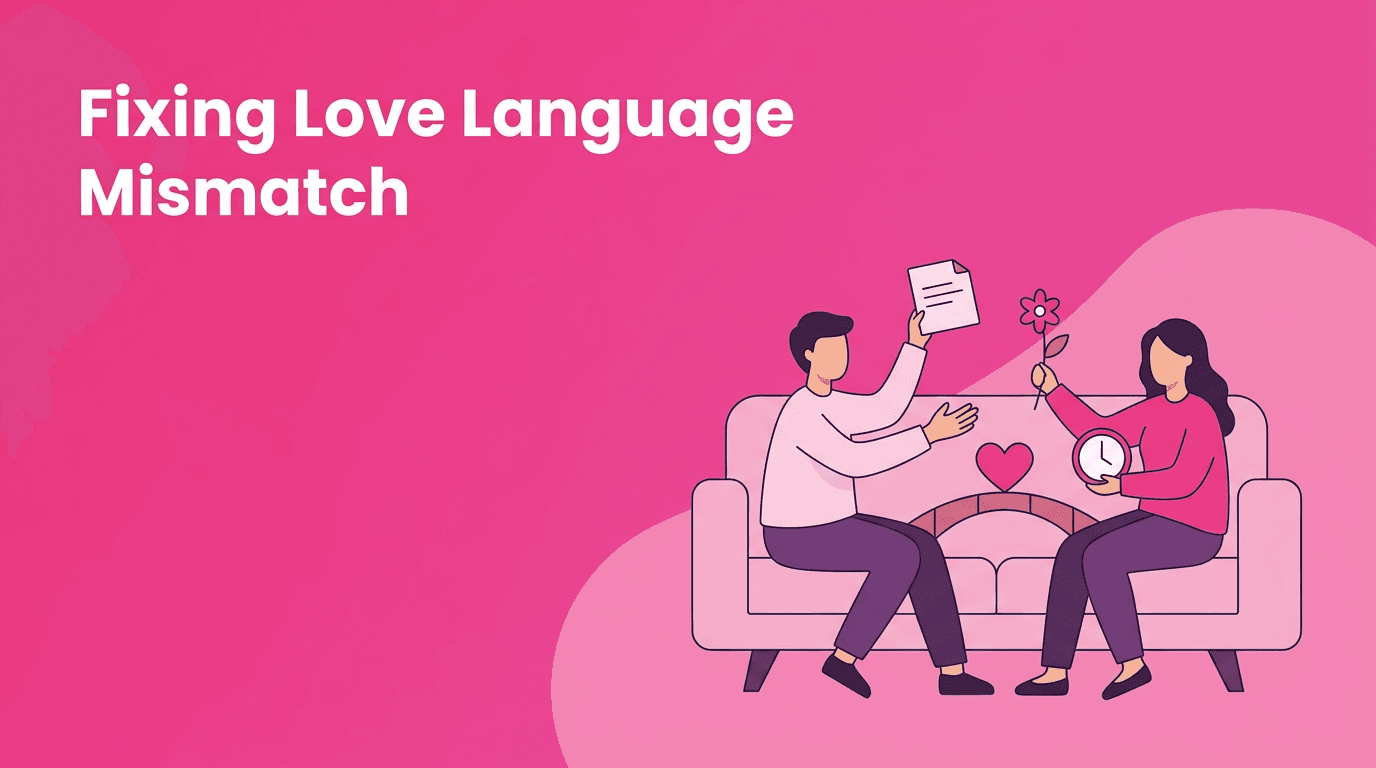
Most people do not enter relationships with a shared manual. We learn what love looks like from family, past relationships, culture, and personality. One person says "I love you" through helpful actions. Another says it through quality time or physical closeness. In a love language mismatch, both people may be trying hard, but missing each other emotionally.
- You give love the way you naturally want to receive it
- Your partner may value consistency more than intensity
- Stress can shrink emotional bandwidth and make effort less visible
- Early dating chemistry can hide communication gaps that show up later
- Unspoken expectations can turn small disappointments into bigger resentment
"Being loved well is not just about effort. It is also about learning how your partner can actually feel it."
What a mismatch looks like in a romantic relationship
A mismatch is rarely dramatic at first. It often shows up as recurring thoughts like, "Why do I still feel unseen?" or "Why is nothing I do enough?" In a romantic relationship, this can create confusion because there may be real affection underneath the frustration.
Common patterns couples notice
- One partner wants more verbal reassurance, while the other shows love through practical help
- One person plans dates and shared experiences, while the other craves touch and physical affection
- One partner buys thoughtful gifts, while the other mainly wants undistracted time
- One person feels close through service and reliability, while the other needs emotional openness to feel intimacy
- Both partners start keeping score because they do not recognize each other's efforts
This is where many couples get stuck. They stop asking, "What helps you feel loved?" and start assuming the other person should already know.
How to talk about love languages without sounding critical
Conversations about love languages can quickly become blamey if they sound like performance reviews. A better approach is to describe your inner experience, not your partner's failures. Focus on what helps you feel connected in the relationship.
- Say, "I feel most connected when we have uninterrupted time together" instead of "You never make time for me"
- Try, "Physical affection helps me feel safe and close" instead of "You are too distant"
- Use examples from recent moments that felt good, not only examples that hurt
- Ask, "What actions from me help you feel cared for lately?"
- Keep the goal on understanding, not winning
Want help translating needs into better relationship habits?
Haply offers AI life coaching on iOS and Android, including Relationships coaches that help you communicate needs, build habits, and improve connection with personalized support.
Try Haply FreeA simple 4-step reset for dating and long-term partnership
1. Name your top two signals of care
Instead of debating all five love languages at once, each person should name the top two actions that currently matter most. Keep them concrete. For example: "A 10-minute check-in after work" or "Holding hands when we walk" is easier to act on than "Be more loving."
2. Choose one daily and one weekly habit
Small consistency beats occasional grand gestures. In partnership, reliable signals of care build trust faster than random romantic highs. Pick one tiny daily habit and one slightly bigger weekly habit that match each person's preferences.
- Daily: a goodbye kiss, a kind text, a 5-minute debrief before bed
- Weekly: a planned date, shared coffee without phones, a chore swap that reduces stress
- Monthly: revisit what is working and what feels flat
3. Notice effort out loud
If your partner is trying in a new way, name it. Appreciation helps new habits stick. This is especially important in a love language mismatch, because unfamiliar efforts can feel awkward before they feel natural.
4. Update the plan as life changes
Needs shift with stress, parenting, work pressure, health, and season of life. What created intimacy during early dating may not be what supports closeness now. Healthy couples revisit the conversation instead of assuming it is solved forever.
When love languages are not the whole issue
Sometimes a love language mismatch is real, but it is not the only problem. If one partner is dismissive, chronically unavailable, or unwilling to respond to reasonable needs, the issue may be deeper than preference. Love languages can improve communication, but they cannot replace respect, accountability, or emotional safety.
- If conflict always gets avoided, work on conflict skills too
- If trust has been broken, repair and transparency come first
- If one person keeps overfunctioning, rebalance emotional labor
- If resentment is high, start with calmer conversations and smaller requests
Build intimacy with better pattern recognition
The real goal is not to memorize a label. It is to become more fluent in your partner's emotional cues. In a healthy romantic relationship, intimacy grows when both people get curious instead of defensive. You do not need perfect compatibility. You need a repeatable way to notice, ask, and respond.
Frequently Asked Questions
What is a love language mismatch in a relationship?
A love language mismatch happens when partners express and receive care in different ways, so affection does not always feel understood or satisfying.
Can couples with different love languages still be happy?
Yes. Many couples build strong relationships by learning each other's preferences and creating small, consistent habits that match them.
How do I talk to my partner about love languages?
Use specific, non-blaming language about what helps you feel connected, and ask what actions make them feel cared for too.
Do love languages improve intimacy?
They can. Love languages help partners express affection more clearly, which often supports emotional and physical intimacy when both people participate.