Meeting Recovery Time: The Missing Link in Sustainable Productivity
Meeting recovery time is a practical way to protect work-life balance, reduce burnout, and support sustainable productivity without sacrificing performance.


By Haply Team
Haply Editorial Team
If your day feels busy but strangely unproductive, meeting recovery time may be the missing piece. For many professionals, the real problem is not only the number of meetings, but the lack of space between them to think, reset, and return to meaningful work. Protecting that space can improve work-life balance, lower the risk of burnout, and make sustainable productivity feel possible again.
Why meeting recovery time matters more than most people think
A 30-minute meeting rarely costs just 30 minutes. It also creates context switching, emotional residue, follow-up tasks, and a subtle drop in mental energy. Without a buffer, your brain carries one conversation into the next task. Over time, that pattern chips away at clarity, motivation, and decision quality.
- Meetings consume attention twice: once during the conversation, and again while your mind processes what happened.
- No buffer means no reset: you jump from listening mode into execution mode without transition.
- Calendar density affects health: constant urgency can quietly undermine sleep, mood, and recovery.
- Energy management is not optional: a packed day can look efficient on paper while draining your actual capacity.
"Productivity is not about filling every minute. It is about protecting enough clarity to do what matters well."
The hidden cost of back-to-back meetings
Back-to-back meetings create a false sense of accomplishment. You may feel fully booked, yet end the day with your most important work untouched. This is where meeting recovery time becomes a strategic tool, not a luxury. It gives you a chance to capture action items, breathe, reprioritize, and decide what deserves your best energy next.
How this affects work-life balance and burnout
When your calendar leaves no room to recover, unfinished tasks often spill into evenings. That is how a meeting-heavy day turns into after-hours catch-up. Repeating this cycle can harm work-life balance and slowly increase burnout risk, especially for professionals already juggling leadership, caregiving, or remote collaboration.
- You work later because deep work never got a real slot.
- You feel mentally tired even when the day looked "productive."
- You become more reactive and less intentional.
- You start each morning already behind.
How to build meeting recovery time into a real workday
The goal is not to reject every meeting. The goal is to create small recovery windows that support sustainable productivity. Even 5 to 15 minutes can make a noticeable difference when used intentionally.
1. Shorten standard meeting lengths
If your default meeting is 30 minutes, make it 25. If it is 60, make it 50. Those extra minutes become built-in meeting recovery time for notes, water, stretching, or a quick reset before the next task.
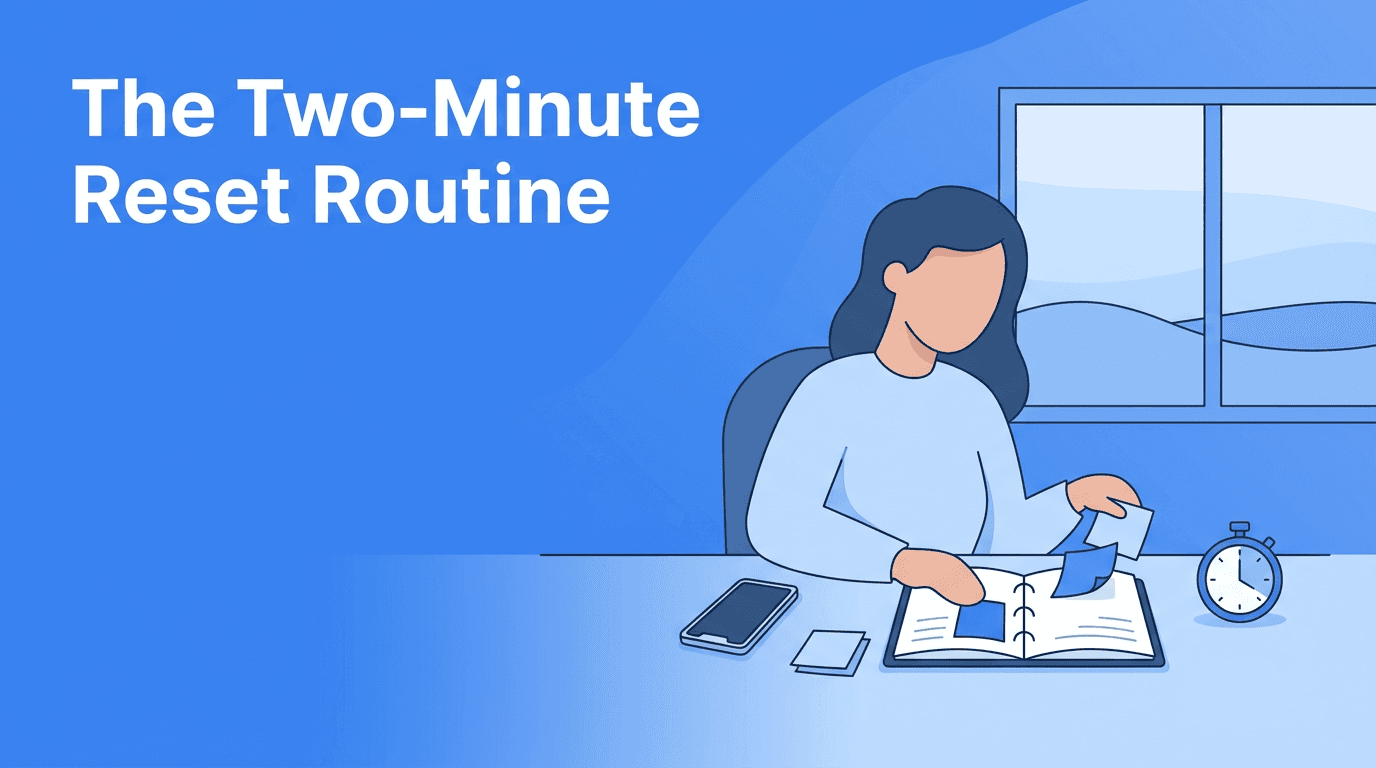
2. Create a post-meeting reset ritual
- Write down one decision, one action item, and one open question.
- Stand up and take 5 slow breaths.
- Check whether your next task still matches your top priority.
- Avoid opening messages immediately unless truly urgent.
3. Protect one no-meeting zone each day
A single 60 to 90-minute focus block can change the emotional tone of your day. It reduces the feeling that work is happening to you. This is especially useful for people trying to improve energy management and regain a sense of control.
4. Use tools that support intentional transitions
Digital support can help if it reduces friction instead of adding more noise. In Haply, the AI life coaching app for iOS and Android, you can use the Focus Timer, Task Planner, and Productivity coaching sessions to create short reset routines between meetings. The app's Today Dashboard and reminders can also help you notice when your schedule is pushing you toward overload.
Want a calmer, more sustainable workday?
Use Haply to build better reset rituals, protect focus blocks, and turn productivity into a practice that supports your health.
Try Haply FreeA simple template for meeting recovery time
Try this 10-minute buffer after important meetings:
- Minute 1-2: close tabs and clear visual clutter.
- Minute 3-4: write key notes and next actions.
- Minute 5-6: assess your energy level, high, medium, or low.
- Minute 7-8: choose the next task based on current capacity.
- Minute 9-10: begin with one small step, not the whole project.
This approach connects productivity with reality. Instead of forcing constant output, you respond to your actual attention and energy. That is the heart of sustainable productivity.
What to say when you need more space on your calendar
- "I can join, but I will need 10 minutes after for follow-up before taking the next item."
- "Could we make this 25 minutes so I can capture actions and stay on schedule?"
- "I do better work when I have a short buffer between meetings. Can we shift this slightly?"
- "If this can be async, I can respond with more clarity by the end of the day."
These phrases are simple, professional, and clear. They help you advocate for better work-life balance without sounding disengaged.
Small changes that reduce burnout over time
You do not need a perfect calendar to feel better. Often, a few repeatable boundaries make the biggest difference. Start by auditing one week of meetings and notice where your attention drops, where follow-up piles up, and where stress spills into personal time. Then add buffers where they will help most.
- End at least one recurring meeting 5 minutes early.
- Block a daily reset window after your most draining meeting.
- Move low-value updates to async communication.
- Review your calendar every Friday and remove one unnecessary commitment.
Frequently Asked Questions
What is meeting recovery time?
Meeting recovery time is a short buffer between meetings or tasks used to process notes, reset attention, and prepare for the next priority.
How much meeting recovery time do I need?
Even 5 to 10 minutes can help. Longer or more complex meetings may need 15 minutes, especially if they create decisions or emotional strain.
Can meeting recovery time improve work-life balance?
Yes. Buffers reduce task spillover and help you finish key work during normal hours, which supports healthier work-life balance.
How does meeting recovery time help prevent burnout?
It lowers constant cognitive strain, reduces reactivity, and creates room for energy management throughout the day. Over time, that can reduce burnout risk.