Meeting Recovery Time: The Overlooked Habit for Better Work-Life Balance
Meeting recovery time can improve work-life balance by reducing burnout, protecting focus, and creating a more realistic way to manage energy at work.


By Haply Team
Haply Editorial Team
If your day looks productive on paper but still leaves you drained, meeting recovery time may be the missing piece. Many professionals do not struggle because they are lazy or disorganized. They struggle because back-to-back conversations quietly consume attention, increase stress, and make work-life balance harder to protect.
Why meeting recovery time matters more than people think
A full calendar can create the illusion of progress. But meetings often leave behind mental leftovers: decisions to process, notes to organize, emotions to regulate, and tasks to clarify. Without space to reset, your brain carries that load into the next task. Over time, this pattern fuels burnout, weakens concentration, and disrupts healthy energy management.
Productivity is not just about how much fits on your calendar. It is also about how much recovery your mind needs to do meaningful work well.
- Meetings create hidden work like follow-ups, task sorting, and context rebuilding.
- Mental recovery affects output just as much as planning or prioritization.
- Tiny calendar buffers can support more realistic, sustainable performance.
- Work-life balance improves when your workday stops feeling like one long reaction loop.
What meeting recovery time actually looks like
Meeting recovery time is a short buffer after a meeting, usually 5 to 15 minutes, reserved for closing open loops before you switch tasks. It is not wasted time. It is the bridge between conversation and execution.
A simple 3-step recovery ritual
- Capture: Write the 1 to 3 key decisions, next actions, and deadlines before details fade.
- Clear: Ask yourself what can be deleted, delegated, or scheduled later instead of holding it in your head.
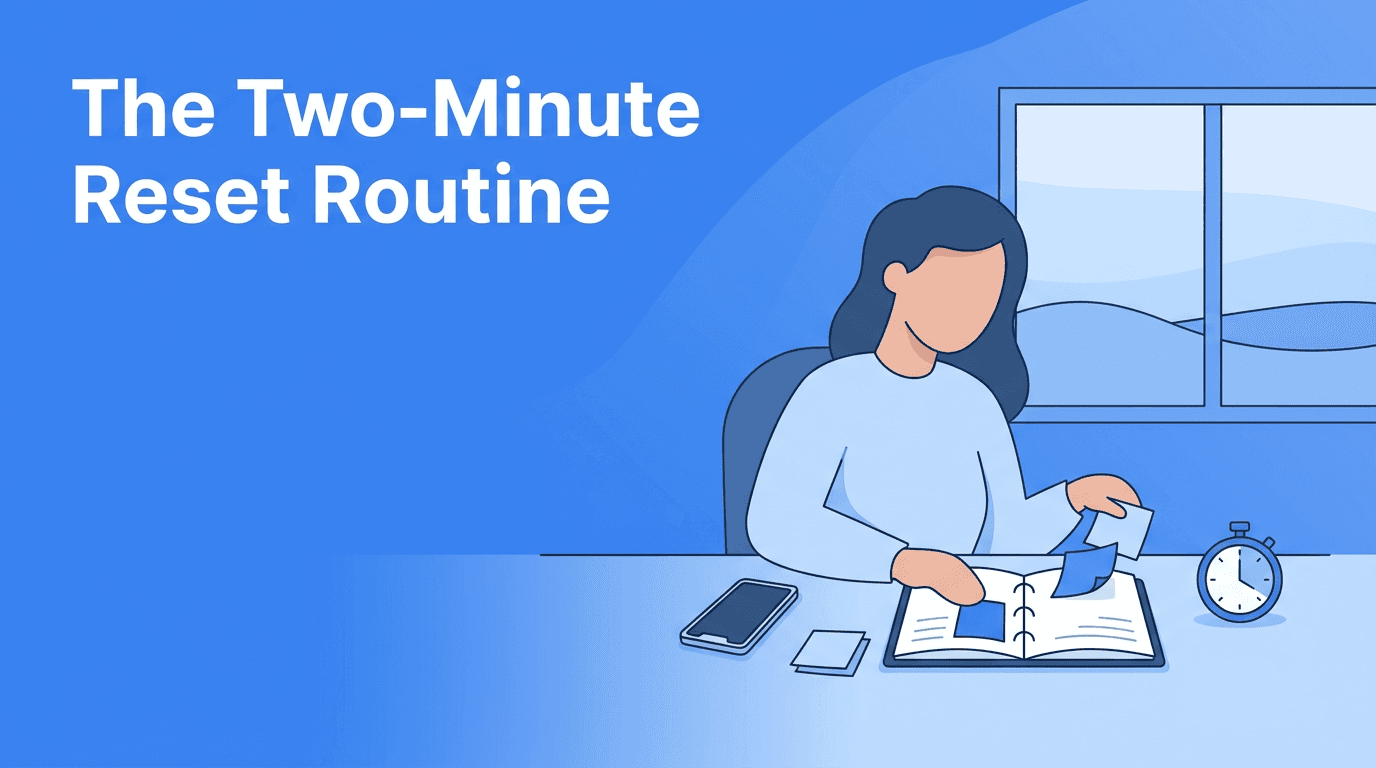
- Reset: Take one minute to breathe, stretch, get water, or use a timer before starting the next task.
This small ritual supports energy management because it lowers cognitive friction. Instead of dragging unfinished thoughts into the next hour, you give your brain a clean handoff.
How back-to-back meetings damage work-life balance
The cost of nonstop meetings usually appears later. You finish the day with real work still untouched, then push into the evening to catch up. That is where work-life balance erodes. Not from a lack of ambition, but from a schedule that leaves no room for thinking, processing, or recovery.
- You stay online later to complete focused tasks that never fit between calls.
- You feel busy all day but struggle to name what actually moved forward.
- You become more reactive, which increases mistakes and emotional exhaustion.
- You start each morning already behind, which raises the risk of burnout.
Want help building a calmer workday?
Haply is an AI life coaching app for iOS and Android that can help you create a more realistic productivity rhythm. Use chat-based coaching, the Focus Timer, and the Task Planner to protect recovery time and follow through on what matters.
Try Haply FreeHow to add meeting recovery time without changing your whole job
1. Shorten standard meeting lengths
If you usually book 30-minute meetings, try making them 25 minutes. If you book 60, try 50. This creates built-in meeting recovery time without reducing how many conversations happen in a day.
2. Protect one processing block daily
Reserve one block on your calendar for meeting notes, follow-ups, and task planning. This is especially useful for managers, client-facing professionals, and remote workers whose days are fragmented.
3. Use a post-meeting template
Keep a short template in your notes app: What was decided? What is my next action? What needs a deadline? What can wait? Templates reduce mental load and support more consistent sustainable productivity habits, even though that exact phrase is not your target system.
4. Notice which meetings drain you most
Not all meetings cost the same. Decision-heavy, emotionally tense, or poorly led meetings often require more reset time. Tracking this can improve your personal energy management and help you schedule deep work more intelligently.
A realistic weekly practice to prevent burnout from meetings
At the end of each week, review your calendar and ask three questions: Which meetings led to clear action? Which could have been an email? Where did I need more recovery time? This quick audit can help prevent burnout by making your schedule more honest and less automatic.
- Keep meetings that create clarity or speed up important decisions.
- Reduce recurring meetings that no longer serve a clear purpose.
- Recover by adding buffers around your most demanding conversations.
- Rebuild your week around focused work, not just available slots.
The goal is not a perfect calendar
A healthier workday is rarely created by working harder. More often, it comes from respecting the real cost of attention. Meeting recovery time is a small habit, but it can reduce overload, support work-life balance, and make productivity feel more human again. When your calendar includes room to think, your work becomes clearer and your evenings become easier to protect.
Frequently Asked Questions
What is meeting recovery time?
Meeting recovery time is a short buffer after a meeting used to capture notes, clarify next steps, and mentally reset before the next task.
How much meeting recovery time should I schedule?
Most professionals benefit from 5 to 15 minutes depending on the complexity or emotional intensity of the meeting.
Can meeting recovery time improve work-life balance?
Yes. It reduces the need to finish follow-up work late in the day, which helps protect personal time and lower stress.
How do I prevent burnout from too many meetings?
Shorten default meeting lengths, add calendar buffers, review recurring meetings weekly, and protect focused work blocks for execution.