Mental Contrasting: A Smarter Personal Development Practice for Real Behavior Change
Mental contrasting is a powerful personal development tool that helps you build a growth mindset, strengthen self-belief, and turn your daily routine into real behavior change.

By Haply Team
Haply Editorial Team
Most people do not fail at personal development because they lack ambition. They fail because motivation alone cannot carry behavior change through busy weeks, low-energy days, and real-life distractions. Mental contrasting is a practical method that helps you connect a meaningful goal to the obstacle most likely to stop you, so your growth mindset becomes something you actually live.
What Is Mental Contrasting?
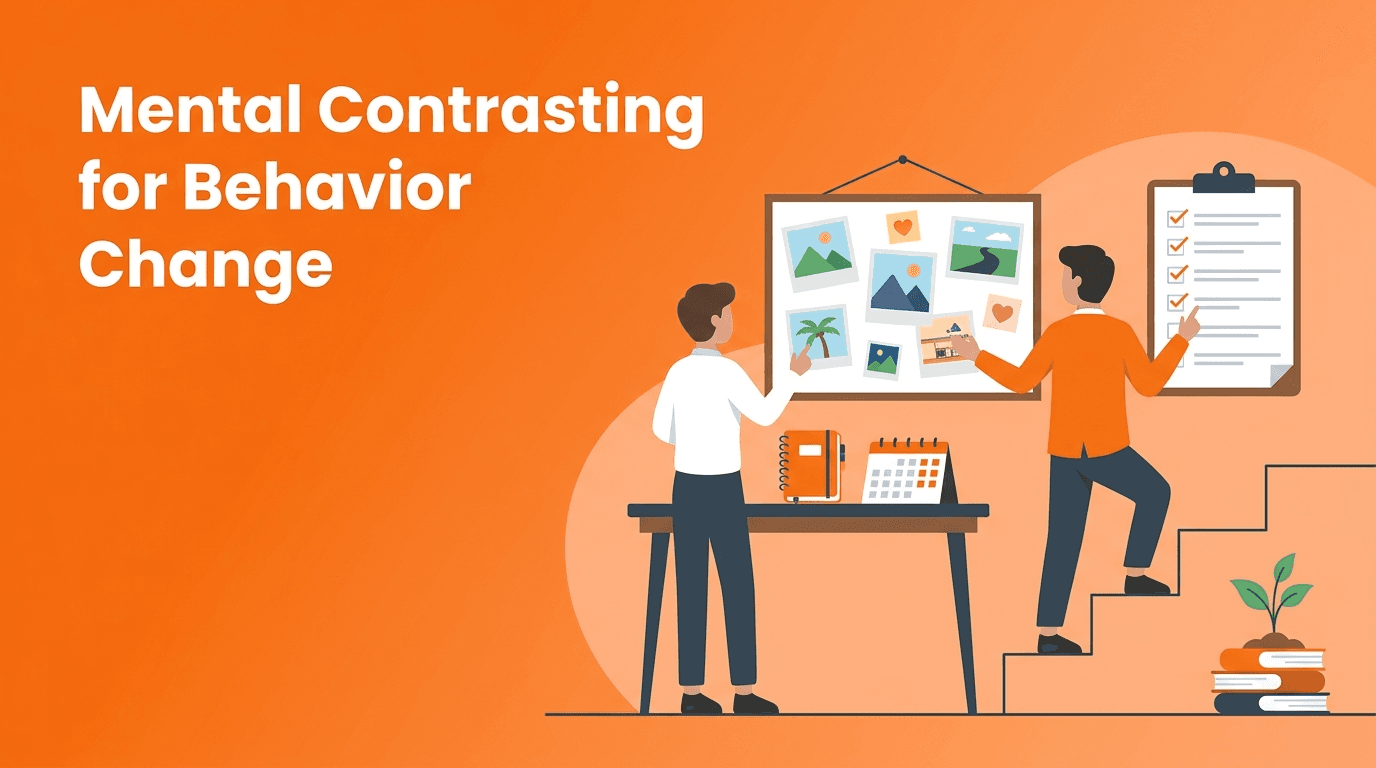
Mental contrasting is a simple mental exercise: first, you imagine the positive future you want, then you identify the inner obstacle standing in the way. That second step is what makes it powerful. Instead of getting lost in wishful thinking, you train your brain to connect dreams with action.
Why it works better than pure positive thinking
Positive thinking can feel good, but by itself it often stays vague. Mental contrasting creates tension between where you are and where you want to go. That gap can spark focused effort, stronger planning, and more honest self-awareness, all of which support lasting personal development.
"A goal becomes more powerful when you stop romanticizing it and start preparing for what will challenge it."
How Mental Contrasting Supports a Growth Mindset
A real growth mindset is not just believing you can improve. It is believing you can improve through strategy, reflection, and repeated effort. Mental contrasting strengthens that mindset because it teaches you to expect friction without seeing it as failure.
- You stop treating obstacles as signs you are not capable
- You learn to name the habits, thoughts, and situations that block progress
- You build self-belief by following through on realistic plans
- You make your daily routine more intentional instead of reactive
A 4-Step Mental Contrasting Practice for Your Daily Routine
1. Choose one meaningful goal
Pick one goal that matters right now, such as studying consistently, exercising after work, or reducing procrastination. Keep it specific enough to fit into your daily routine.
2. Visualize the best outcome
Spend a minute picturing what success would feel like. Focus on concrete benefits: calmer mornings, better grades, more energy, stronger confidence, or a clearer sense of progress. This step feeds self-belief and reminds you why the goal matters.
3. Identify the real obstacle
Now ask: what inside me usually gets in the way? Maybe it is perfectionism, scrolling, fear of doing things badly, or assuming you need the perfect mood to begin. Honest answers create the foundation for real behavior change.
4. Turn the obstacle into a response plan
Create one simple action tied to the obstacle. Example: "If I want to avoid starting because the task feels too big, I will work for just five minutes." This is where mental contrasting becomes practical instead of abstract.
Common Mistakes That Weaken Behavior Change
- Choosing too many goals at once instead of focusing on one area of personal development
- Naming external problems only, while ignoring inner patterns like avoidance or self-doubt
- Making plans that are too big for your current daily routine
- Expecting instant consistency instead of gradual behavior change
- Confusing one bad day with proof that you cannot grow
Make reflection easier with Haply
If you want support turning insight into action, Haply can help. The AI life coaching app offers personalized coaching, habit tracking, reminders, and tools like a Focus Timer and Task Planner to support your self-growth goals.
Try Haply FreeHow to Use Mental Contrasting With Haply
You can use Haply to make mental contrasting part of everyday life. Start with a chat-based coaching session to clarify a goal, track the habit with streaks and reminders, and use the Today Dashboard to keep your next step visible. For students and young professionals, this reduces the mental load of trying to remember everything alone.
- Use the AI coach to name your goal and obstacle clearly
- Track one small action daily to build momentum and self-belief
- Use the Focus Timer when resistance shows up
- Review progress weekly to strengthen your growth mindset
The Real Win: Better Self-Trust
The biggest benefit of mental contrasting is not perfect discipline. It is self-belief rooted in evidence. Every time you notice an obstacle and respond intentionally, you prove to yourself that growth is not random. It is a skill you can practice.
Frequently Asked Questions
What is mental contrasting in psychology?
Mental contrasting is a self-regulation technique where you imagine a desired future and then identify the inner obstacle that could block it. This helps turn goals into more realistic action.
How does mental contrasting help behavior change?
It improves behavior change by helping you prepare for obstacles before they appear. Instead of relying on motivation, you build a response plan you can use in daily life.
Is mental contrasting better than positive thinking?
It is often more effective than positive thinking alone because it combines optimism with realism. You stay hopeful while also preparing for what might get in the way.
Can mental contrasting improve self-belief?
Yes. When you repeatedly handle obstacles with intention, you build self-belief based on action, not just encouragement.