Mindful Transitions: A Gentle Ritual for Returning to the Present Moment
Mindful transitions can turn rushed, distracted days into calmer ones. Learn a simple practice that builds mindfulness, meditation, awareness, and more inner peace in everyday moments.

By Haply Team
Haply Editorial Team
Mindful transitions are one of the simplest ways to bring mindfulness, meditation, and steady awareness into real life. Instead of waiting for a perfect quiet hour, you learn to return to the present moment in the small spaces between one activity and the next. That is often where inner peace quietly begins.
Why the moments between tasks matter
Many people imagine calm as something that happens during a long meditation session. But for most of us, daily life moves through dozens of transitions: waking up, opening email, leaving work, entering home, starting dinner, getting into bed. When these moments are rushed, your nervous system stays in a state of carryover. Stress from one part of the day follows you into the next.
A mindful transitions practice interrupts that momentum. It creates a small bridge between activities so your mind does not have to sprint everywhere your body goes. With a few breaths and a little intention, you can reset your attention and gently re-enter the present moment.
"You do not need more time to be mindful. You often need a gentler way to enter the moment you are already in."
What mindful transitions look like in everyday life
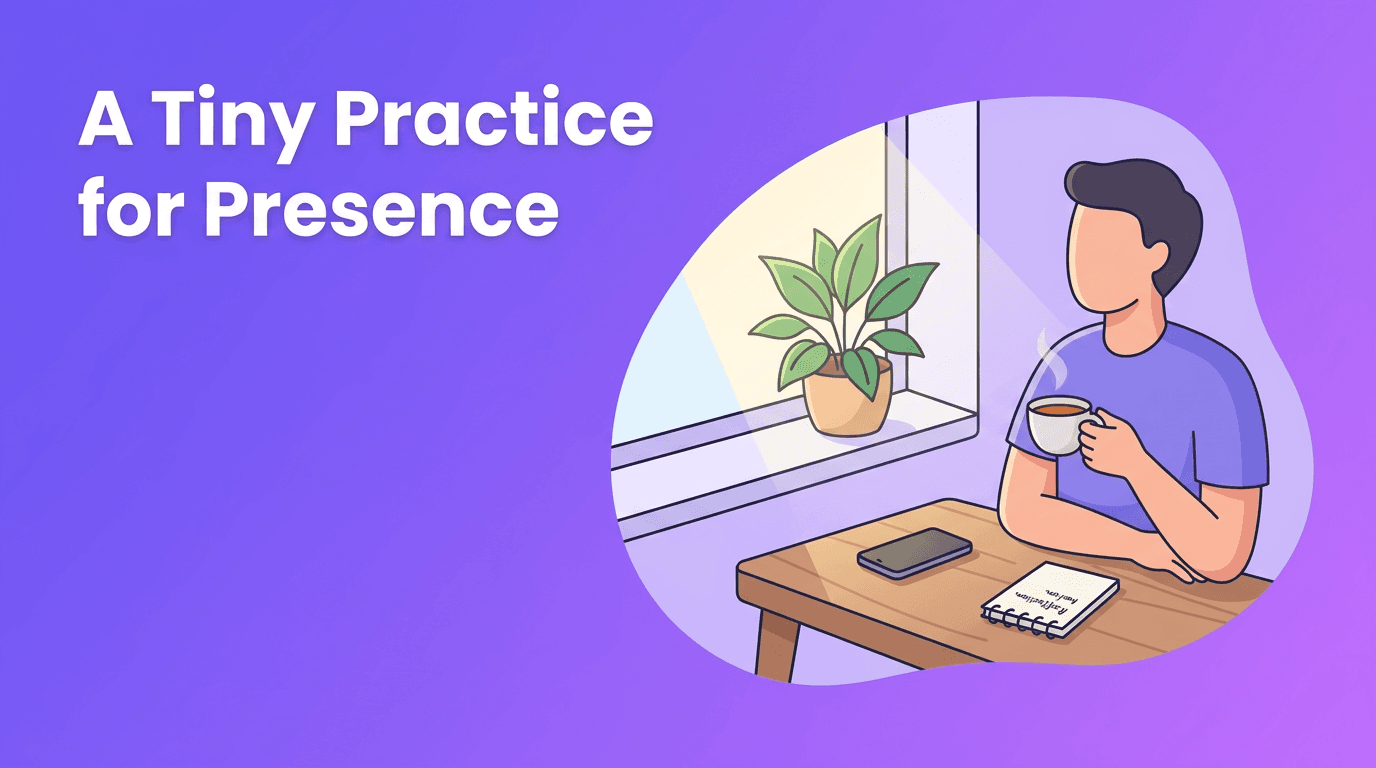
This practice is not complicated. A transition ritual can take 30 seconds to 3 minutes. The goal is not perfection. The goal is to notice that one moment is ending and another is beginning.
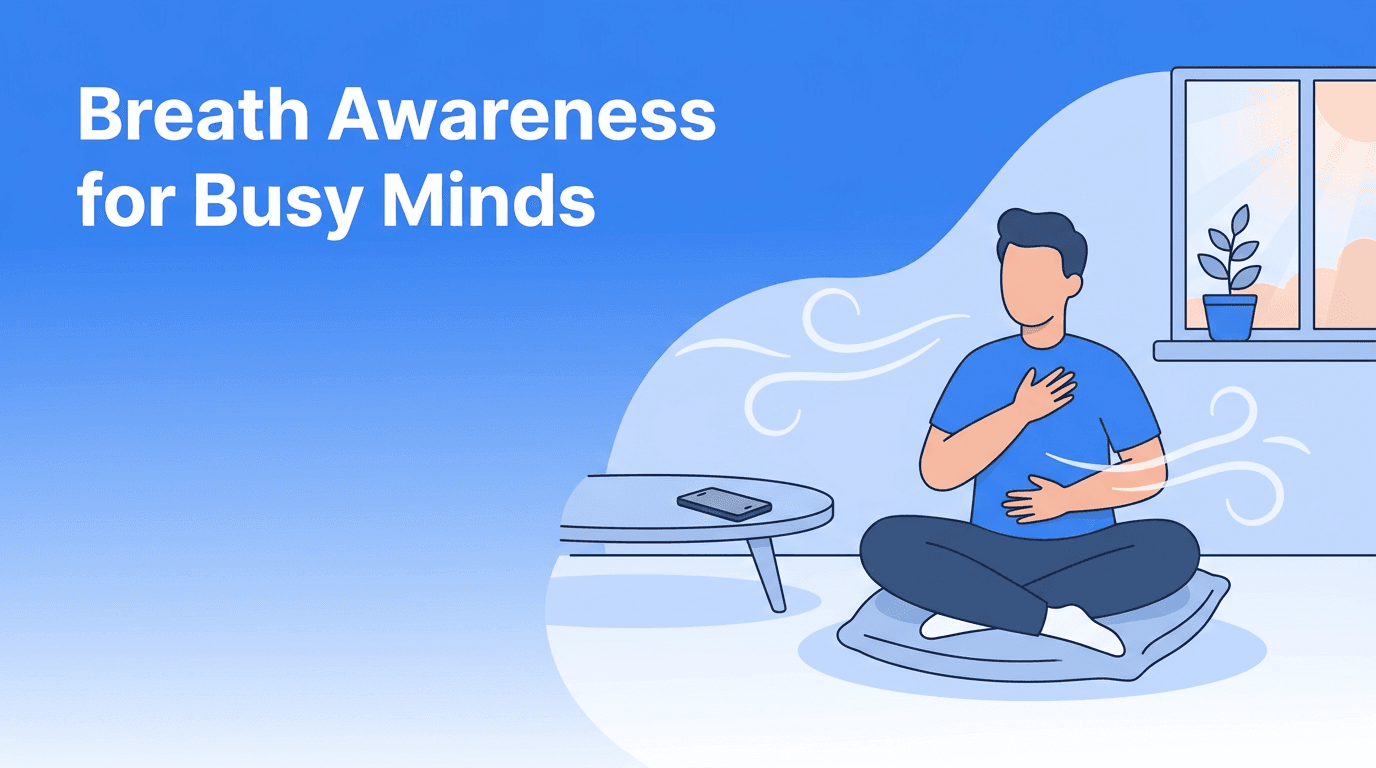
- Before opening your laptop, place one hand on your chest and take three slow breaths.
- After finishing a meeting, look away from the screen and ask, "What do I need before the next thing?"
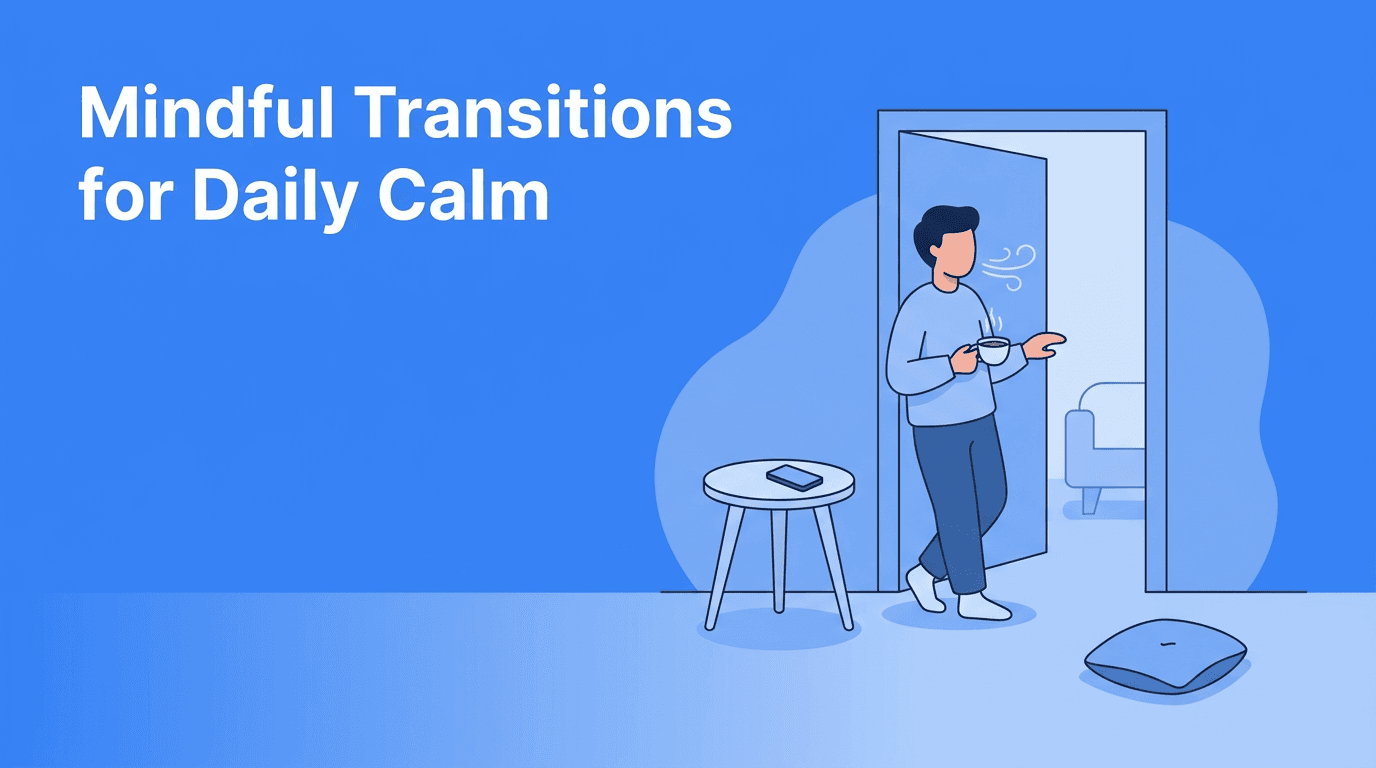
- When you arrive home, pause at the door and soften your shoulders before stepping inside.
- Before meals, take one breath, notice the aroma, and thank yourself for pausing.
- At bedtime, sit on the edge of the bed for a minute and feel your exhale lengthen.
The hidden power of a pause
These small rituals train your brain to stop living only on autopilot. Over time, mindfulness stops feeling like a separate task and starts becoming a way of moving through the day. This is especially helpful if traditional meditation feels hard to maintain.
A 4-step mindful transitions ritual
If you want a simple method, try this short sequence whenever you switch contexts. Use it between work blocks, before conversations, or after stressful moments.
- Stop - Notice that one activity has ended. Do not rush to fill the gap immediately.
- Breathe - Take 3 to 5 slow breaths and feel your feet on the ground.
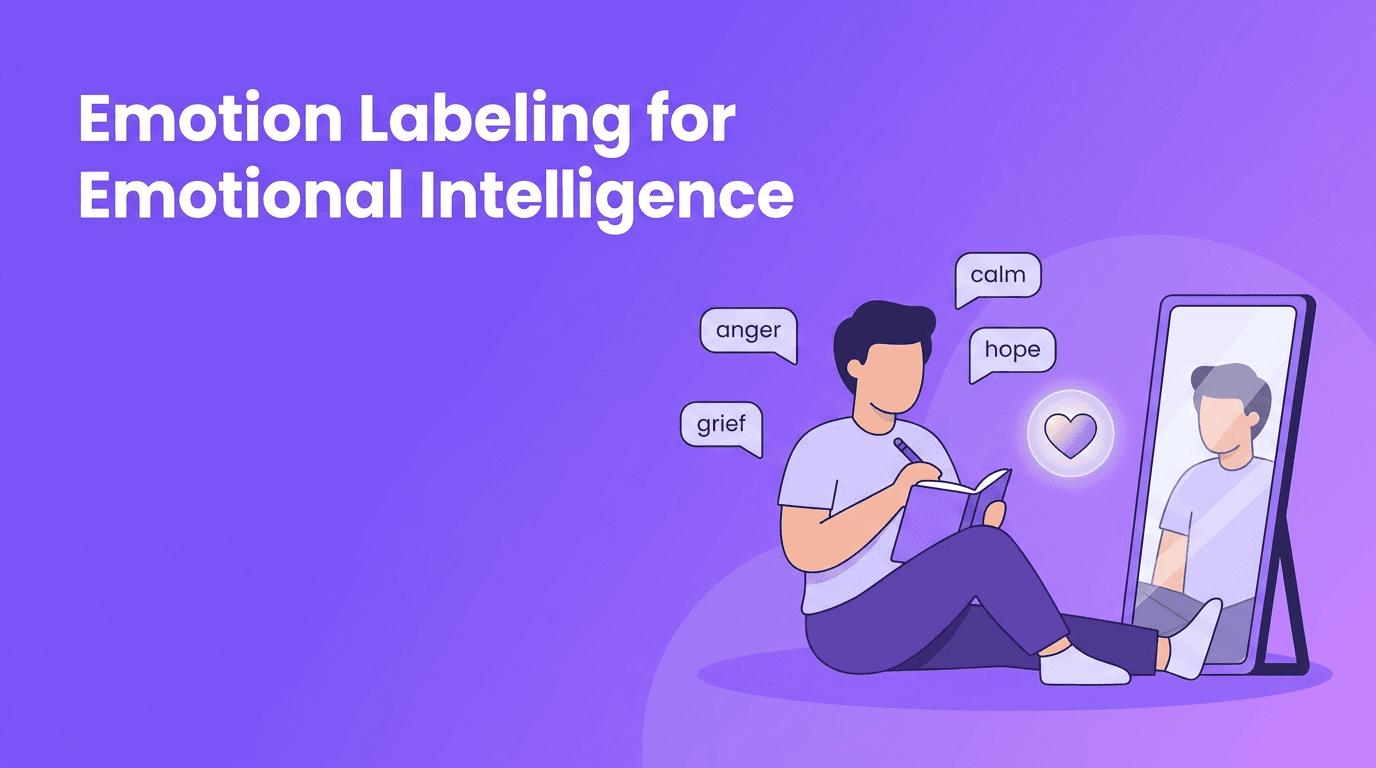
- Name - Silently label what is here: "thinking," "tension," "fatigue," or "calm." This strengthens awareness without judgment.
- Choose - Ask, "How do I want to enter the next moment?" Then begin with that intention.
This four-step rhythm brings you back to the present moment without forcing anything. It is a form of mini meditation hidden inside daily life.
Want support building a calmer daily rhythm?
Haply is an AI life coaching app for iOS and Android that helps you build mindful habits with personalized Wellness coaching, daily reminders, and tools like the Meditation/Breathe mini-app.
Try Haply FreeHow to make the habit stick without pressure
The best mindful transitions practice is attached to moments that already happen. You do not need a full routine overhaul. You just need reliable anchors.
- Choose two daily transitions to start, such as before lunch and after work.
- Keep the ritual so small that it feels easy on busy days.
- Use visual cues like a doorway, a mug, or closing a notebook as reminders.
- Track consistency, not perfection. Even one conscious pause changes the tone of a day.
- If you use Haply, set a gentle reminder and use the habit tracker to build streaks over time.
When your mind feels too busy
Sometimes the transition itself feels messy. That is okay. You are not trying to create instant silence. You are simply practicing return. Even noticing distraction is a form of awareness. Even one complete exhale can support a little more inner peace.
Mindful transitions for emotional regulation
One reason this practice works so well is that emotions often spill across activities. A hard message can affect your next conversation. A stressful commute can shape the whole evening. Mindful transitions give your emotions a place to land before they spread.
Try asking these questions during a pause: "What am I carrying right now?" "What can I set down for the next ten minutes?" This kind of gentle reflection supports emotional regulation while keeping you rooted in the present moment.
A quieter way to practice intentional living
Intentional living is not always about major decisions. Often, it is about how you enter ordinary moments. Mindful transitions help you bring more choice into the day, instead of reacting from momentum alone. That is where mindfulness becomes lived, not just studied.
If you have been looking for a softer path to meditation, begin here. Pause before the next task. Feel one breath. Notice what is here. Then continue, a little more awake than before.
Frequently Asked Questions
What are mindful transitions?
Mindful transitions are short pauses between activities that help you reset your attention, breathe, and enter the next moment with more awareness.
How do mindful transitions help with stress?
They reduce mental carryover from one task to the next, which can calm the nervous system and create more inner peace during the day.
Can mindful transitions replace meditation?
They may not fully replace longer meditation for everyone, but they are a practical form of mini meditation that makes mindfulness easier to practice daily.
How long should a mindful transition be?
A mindful transition can be as short as 30 seconds. Even three slow breaths can make a noticeable difference.
What app can help me build a mindful transitions habit?
Haply can help with personalized coaching, reminders, habit tracking, and guided tools like the Meditation/Breathe mini-app.