Mindful Transitions: A 5-Minute Reset Ritual for Better Stress Management
Mindful transitions are a simple wellness practice that supports stress management, mental health, and self-care. Learn a 5-minute reset ritual that fits real life and makes healthy living feel more doable.

By Haply Team
Haply Editorial Team
Mindful transitions are one of the most overlooked wellness habits in modern life. Most people move from email to meeting, errand to dinner, or stress to sleep without a pause. That nonstop switching can quietly drain mental health, raise tension, and make self-care feel impossible. A short reset between tasks can support stress management and make healthy living more realistic.
Why mindful transitions matter for wellness
A transition is the space between one part of your day and the next. When you rush through that space, your body often carries the stress of the last moment into the next one. That is how a hard work call follows you into family time, or how morning anxiety shapes your whole afternoon. Mindful transitions help you close one chapter before opening another.
- They create a small buffer that lowers mental overload.
- They support wellness by giving your nervous system a moment to settle.
- They make stress management practical, even on busy days.
- They turn self-care into a repeatable habit instead of a big event.
- They help you make more intentional choices around food, movement, and rest, all key parts of healthy living.
"You do not need a perfect routine to feel better. Sometimes you just need a gentle pause before the next thing begins."
The 5-minute mindful transitions ritual
This ritual is designed for real life. You can use it after work, before bed, after school drop-off, before entering your home, or between any two demanding tasks. The goal is not to empty your mind. The goal is to help your body and attention catch up with your schedule.
Minute 1: Stop and notice
Pause where you are. Put your phone down if you can. Unclench your jaw, lower your shoulders, and ask yourself, "What am I carrying from the last moment?" Name it simply: tension, frustration, hurry, sadness, pressure, or mental noise.
Minute 2: Breathe out longer than you breathe in
Try a simple pattern such as inhaling for 4 and exhaling for 6. A longer exhale can help your body shift out of high alert. Keep it gentle. This is not about doing breathing perfectly. It is about creating a signal of safety.
Minute 3: Reset your body
Take a sip of water, stretch your arms, walk to a different room, or step outside for fresh air. Small physical actions are powerful because they tell your brain that one state is ending and another is beginning.
Minute 4: Choose your next intention
Ask, "How do I want to enter the next part of my day?" Pick one word such as calm, present, steady, kind, or focused. This keeps mindful transitions from becoming passive. You are actively shaping what comes next.
Minute 5: Start small
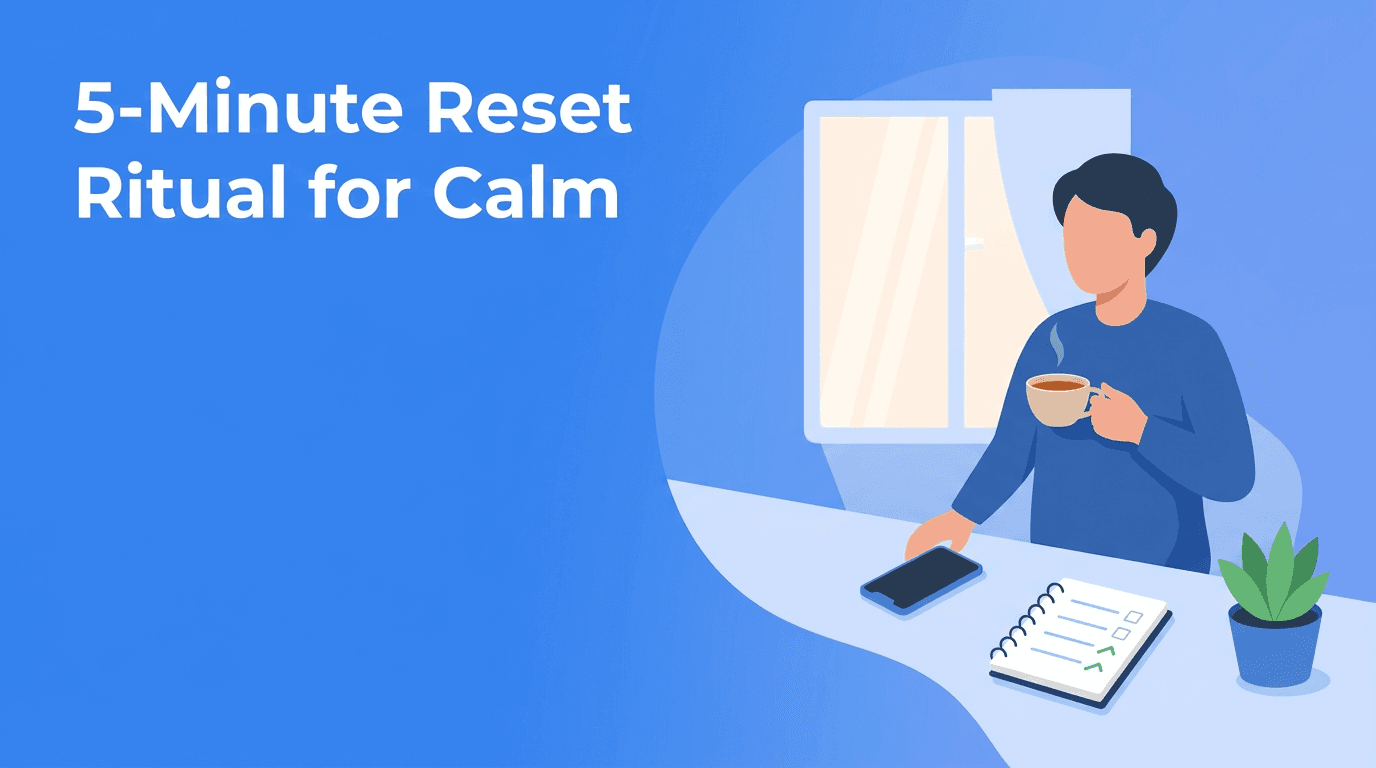
Begin the next task with one grounded action. Light a candle before dinner, wash your face before your evening routine, open your planner before work, or sit down before replying to messages. Tiny actions help the reset stick.
When to use mindful transitions during the day
- Before work to avoid starting the day in a reactive state.
- After work to create separation between job stress and home life.
- Before meals to slow down and support digestion and mindful eating.
- Before sleep to ease the jump from stimulation to rest.
- After difficult conversations to reduce emotional spillover.
- Before exercise or therapy to arrive with more awareness.
Common mistakes that make self-care harder
Many adults think self-care has to be long, expensive, or deeply relaxing to count. That belief can keep you from using simple tools that actually work. Another common mistake is waiting until you are overwhelmed. Mindful transitions are most helpful as a preventive practice, not just an emergency response.
- Do not turn the ritual into another performance goal.
- Do not judge yourself if your mind stays busy.
- Do not try to fix every feeling in five minutes.
- Do focus on consistency over intensity.
- Do let the ritual stay simple enough to repeat.
Build your reset habit with Haply
If you want gentle support, Haply can help you turn mindful transitions into a daily wellness routine. The app offers AI life coaching, habit tracking, daily reminders, and mini-apps like Meditation/Breathe and Focus Timer. It is a supportive tool for mental health and stress management, and it can work alongside professional care, not replace it.
Try Haply FreeHow this ritual supports healthy living over time
The biggest benefit of this practice is not just feeling calmer for five minutes. Over time, it can improve how you move through your whole day. You may react less impulsively, notice your needs earlier, and create more room for healthy choices. That is the quiet power of small wellness rituals. They help healthy living feel sustainable.
If you like structure, try tracking one daily transition for a week. You can use a notebook or an app like Haply, which includes a Today Dashboard, streaks, and personalized coaching prompts. This kind of visibility often makes a new habit easier to keep.
Frequently Asked Questions
What are mindful transitions?
Mindful transitions are short pauses between activities that help you reset mentally and physically before moving into the next part of your day.
How do mindful transitions help with stress management?
They reduce the buildup of tension by creating a buffer between stressful moments, which can help your body and mind settle more quickly.
Can mindful transitions improve mental health?
They can support mental health by increasing awareness, reducing reactivity, and making small self-care actions easier to repeat. They are supportive, but not a replacement for professional help.
How long should a mindful transition be?
Even 1 to 5 minutes can help. The best length is the one you can use consistently in everyday life.