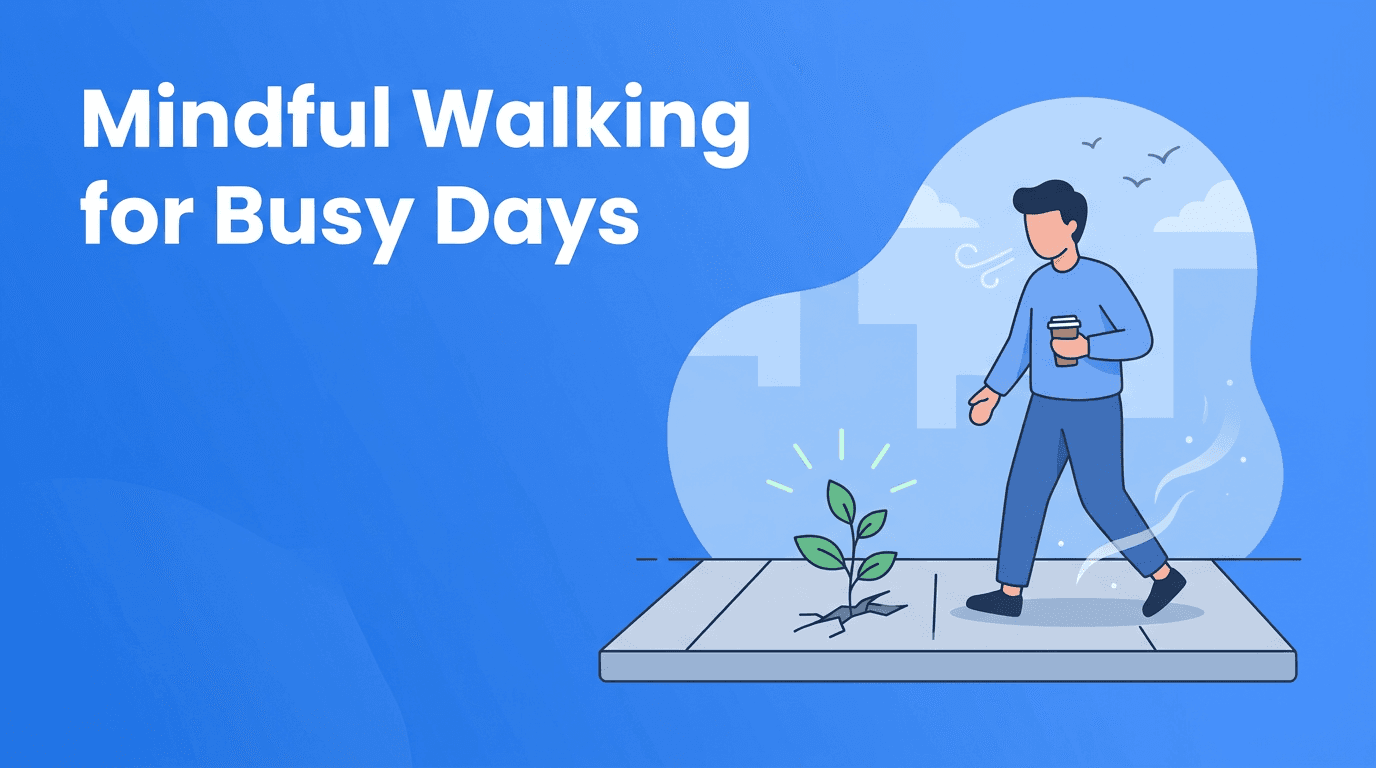
Mindful Walking: The Easiest Way to Practice Intentional Living on a Busy Day
Mindful walking is a simple way to bring gratitude, mindful living, and intentional living into a full schedule. Learn how to use short walks to slow down, start savoring, and feel more present.

By Haply Team
Haply Editorial Team
Mindful walking might be the most realistic mindfulness practice for people who do not want one more item on their to-do list. You are already walking to the kitchen, the car, the train, the office, or the mailbox. The shift is not about adding time. It is about changing how you move through time. With a few small cues, mindful walking can support mindful living, deepen gratitude, and make intentional living feel practical instead of aspirational.
Why mindful walking works when meditation feels hard
Many people picture mindfulness as sitting still in silence for twenty minutes. That can be helpful, but it is not the only path. Mindful walking meets you in motion, which makes it especially useful on crowded mornings, between meetings, or during the mental blur of late afternoon. It gives your attention one job: notice the next step.
- Feel the contact of your feet with the ground
- Notice one full inhale and one full exhale
- Look for three details you usually miss
- Relax your jaw and drop your shoulders
- Let your pace become slightly less rushed, even for thirty seconds
"You do not need a new life to feel present. You need a new relationship with the moments you already have."
A 3-minute mindful walking practice
1. Start with an ordinary route
Choose a path you already take, such as from your front door to the car or from your desk to the restroom. This keeps the practice grounded in real life and supports intentional living without requiring extra planning.
2. Use your body as the anchor
Instead of trying to clear your mind, place attention on physical sensations. Feel your heel land, your weight shift, and your toes push off. When your thoughts drift, gently return to the feeling of walking. That is the practice.
3. Add one moment of savoring
To bring in savoring, pause internally for one pleasant detail: sunlight on a wall, warm coffee in your hand, cool air on your face, a tree moving in the wind. This tiny act trains your mind to register life as it happens, which is a core part of slow living.
4. End with gratitude
Before the walk ends, name one thing you appreciate right now. Keep it specific. Not "my life," but "this quiet hallway," "my strong legs," or "the fact that I made it outside today." Gratitude becomes more believable when it is concrete.
How mindful walking supports slow living without slowing your whole life
Slow living is often misunderstood as doing everything at half speed. In reality, it is about doing at least some things with full attention. You can still have deadlines, kids, errands, and a packed calendar. The point is to stop moving on autopilot every minute of the day. Mindful walking creates tiny islands of awareness inside a fast life.
- It interrupts stress spirals before they build momentum
- It helps transition between tasks with less mental residue
- It turns dead time into grounding time
- It makes mindful living easier because it attaches awareness to an existing habit
- It encourages savoring instead of constant rushing toward the next thing
Want guided support for mindful living?
Haply is an AI life coaching app for iOS and Android that helps you build realistic wellness habits. You can use its Wellness coaches, Meditation/Breathe mini-app, and daily reminders to turn short grounding practices into a routine that fits your actual life.
Try Haply FreeCommon mistakes that make mindful walking less helpful
- Trying to feel calm immediately. The goal is awareness, not instant serenity.
- Treating it like performance. There is no perfect way to notice your steps.
- Using only long walks. Short, repeatable moments are often more effective.
- Staying in your head. Return to sensations, sounds, and sights.
- Skipping the enjoyable details. Savoring is not fluff, it helps balance your attention.
Make mindful walking part of intentional living
If you want intentional living to feel less abstract, connect mindful walking to daily transitions. Try one mindful walk before opening email, after lunch, or when work ends. In Haply, you can pair this with a habit streak, a Today Dashboard check-in, or a short breathing session so the practice stays visible even on busy weeks.
A simple reset for real life
You do not need the perfect morning routine, a silent home, or extra free time to become more present. Mindful walking offers a quieter, more forgiving approach to mindful living. Step by step, it helps you practice gratitude, choose intentional living, and remember that even a busy life can contain moments worth savoring.
Frequently Asked Questions
What is mindful walking?
Mindful walking is a form of meditation where you pay attention to the physical experience of walking, your breath, and your surroundings. It helps you become more present during an activity you already do every day.
How long should a mindful walking practice be?
It can be as short as one to three minutes. A brief practice done consistently is often more useful than waiting for a long, perfect walk.
Is mindful walking the same as walking meditation?
They are very similar. Walking meditation may be more formal, while mindful walking often refers to using everyday walking as a mindfulness practice.
Can mindful walking help with stress?
Yes. It can reduce stress by shifting your attention from racing thoughts to physical sensations and the present environment.