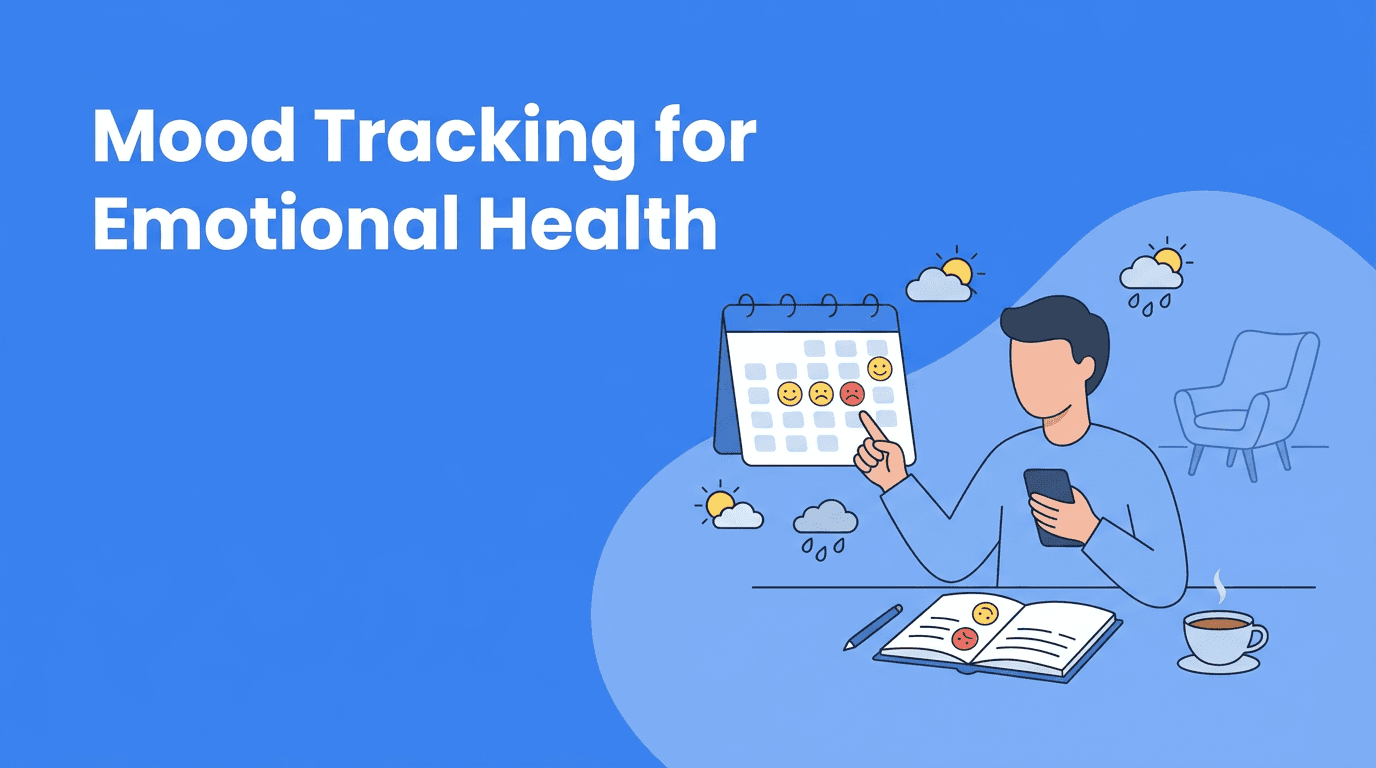
Mood Tracking for Emotional Health: A Gentle Habit That Builds Depression Awareness
Mood tracking can support emotional health, strengthen depression awareness, and help you prepare for therapy conversations while improving daily wellbeing.

By Haply Team
Haply Editorial Team
Mood tracking is one of the simplest ways to understand your inner world without judging it. If you live with anxiety, low motivation, emotional ups and downs, or want better wellbeing, this gentle habit can help you notice patterns, build depression awareness, and bring useful clarity into therapy or self-reflection.
Why mood tracking matters for emotional health
Many people move through the day reacting to stress without pausing to ask, "What am I actually feeling right now?" Over time, that disconnect can make emotional health harder to manage. Mood tracking creates a small moment of awareness. It helps you name feelings, spot triggers, and see whether sleep, food, social time, movement, or work pressure are affecting your mood.
- It turns vague stress into specific information
- It supports depression awareness by helping you notice persistent patterns
- It can make therapy sessions more focused because you have real examples to discuss
- It encourages a more compassionate view of your daily wellbeing
- It helps you catch early signs of overwhelm before they grow
What mood tracking is, and what it is not
Mood tracking is not about forcing yourself to feel positive all the time. It is also not a diagnosis tool. Instead, it is a practical way to observe your experiences with honesty. Think of it as collecting emotional data so you can respond with more care. If you already work with a therapist, this habit can complement professional support, not replace it.
"Awareness is the first step toward change. What you notice, you can begin to understand."
A simple framework to start
- Rate your mood once or twice a day on a scale from 1 to 10
- Choose 1 to 3 words that describe how you feel, such as calm, numb, restless, hopeful, or drained
- Note possible influences like sleep quality, caffeine, conflict, exercise, social connection, or screen time
- Write one sentence about what you needed in that moment
- Review the week for patterns, not perfection
How mood tracking can support anxiety and depression awareness
When anxiety is high, emotions can feel fast, messy, and difficult to explain. When energy is low, it may be hard to tell whether you are tired, sad, disconnected, or simply overloaded. Mood tracking slows the moment down. Over days and weeks, it can reveal whether certain routines consistently help or hurt your state of mind. That is where stronger depression awareness can begin - not through self-criticism, but through observation.
For example, you might notice that your mood drops after poor sleep, too much isolation, skipped meals, or constant notifications. You may also see that short walks, structured mornings, therapy homework, or reaching out to a friend improve your wellbeing more than you realized.
What to watch for in your notes
- Repeated low mood for many days in a row
- Loss of interest in activities you usually enjoy
- Strong spikes in anxiety around specific situations or times
- Feeling emotionally flat, irritable, or disconnected
- Changes linked to sleep, appetite, focus, or social withdrawal
Want extra support building the habit?
Haply is an AI life coaching app for iOS and Android that can help you build a consistent mood tracking routine with Wellness coaching, reminders, and helpful mini-apps. It can support your self-reflection between therapy sessions and alongside other healthy routines.
Try Haply FreeHow to make mood tracking stick without overthinking it
The best system is the one you will actually use. You do not need a complicated chart or a long journal entry every night. Keep it small. A note in your phone, a paper calendar, or an app check-in can be enough. If you enjoy digital tools, Haply offers chat-based coaching, a habit tracker with streaks and reminders, and wellness mini-apps that can help you stay consistent with self-care goals.
- Anchor the habit to an existing routine, like morning coffee or bedtime
- Use the same 5 to 8 mood words often so tracking feels easier
- Set a reminder that feels supportive, not demanding
- Review your entries weekly instead of analyzing every note immediately
- Bring patterns into therapy if you want help understanding them more deeply
When mood tracking becomes especially useful
This habit can be especially helpful during stressful life changes, after burnout, while starting or returning to therapy, or when you are trying to improve overall wellbeing. It can also support people who want better emotional health but do not know where to begin. Small observations often lead to meaningful change.
A kind reminder about support
If your notes show persistent distress, worsening hopelessness, or daily functioning becoming harder, reaching out for professional help is a strong next step. Mood tracking can be a useful companion to therapy, but it is not a replacement for mental health care. You deserve support that fits your needs.
Frequently Asked Questions
How do I start mood tracking for anxiety?
Start with one brief check-in a day. Rate your mood, name a few emotions, and note possible triggers or helpful habits.
Can mood tracking help with depression awareness?
Yes, it can help you notice ongoing low mood, loss of interest, and daily patterns that may be important to discuss with a professional.
Is mood tracking useful before therapy?
Yes. It gives you concrete examples, emotional patterns, and specific situations to bring into therapy sessions.
What is the best app for mood tracking and wellbeing habits?
The best app is one you will use consistently. Some people prefer a simple notes app, while others benefit from guided tools like Haply that combine coaching, habit tracking, and wellness support.