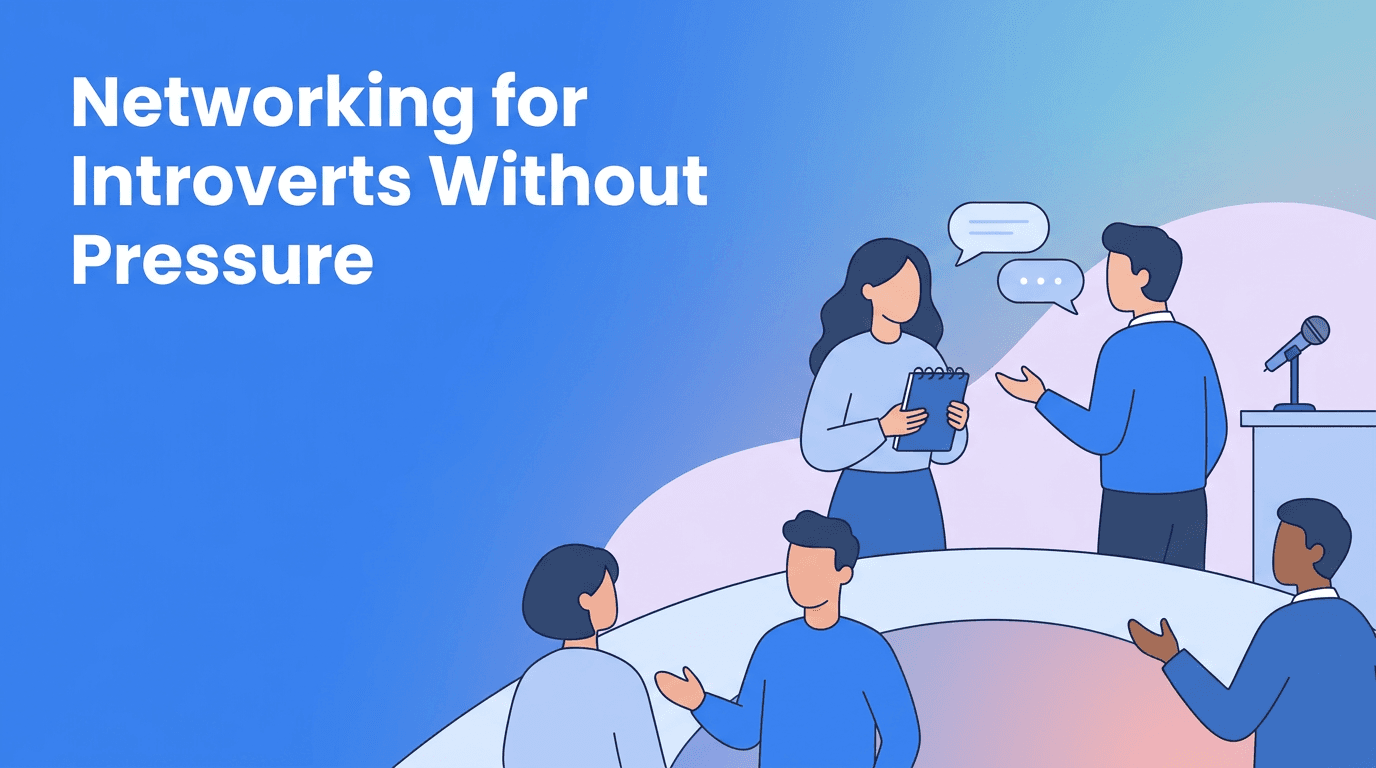
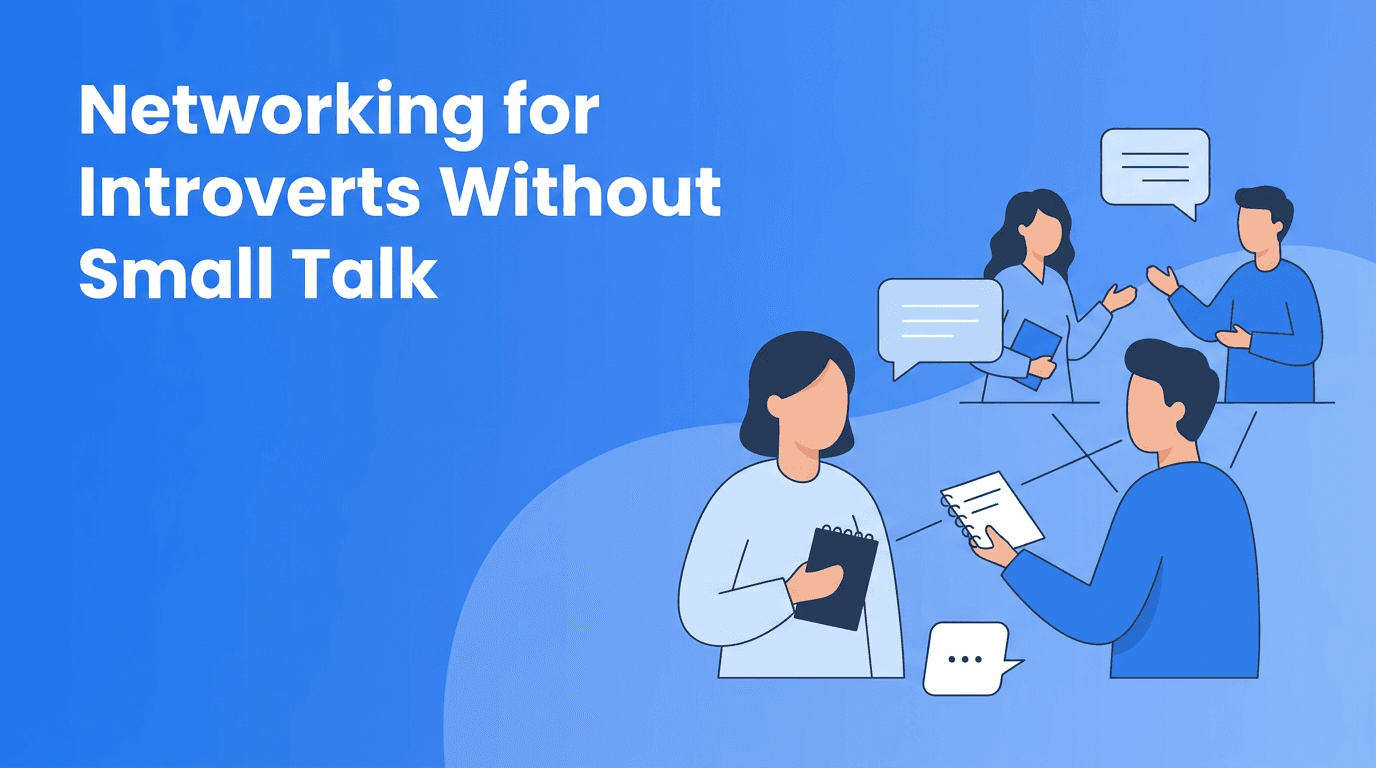
Networking for Introverts: A Low-Pressure Plan to Build Rapport Without Small Talk
Networking for introverts can feel exhausting, especially with social anxiety in the mix. Learn a low-pressure way to build rapport, improve social skills, and speak with more confidence.

By Haply Team
Haply Editorial Team
Networking for introverts does not have to mean becoming louder, more outgoing, or magically good at small talk. If you deal with social anxiety, dread awkward pauses, or freeze during public speaking, the real goal is simpler: learn a repeatable way to start conversations, build rapport, and leave with one meaningful connection.
Why networking feels harder when you are introverted
Many introverts are not bad at connection. They are often thoughtful, observant, and good listeners. The challenge is that traditional networking advice rewards speed, volume, and constant social energy. That can make you feel like your natural style is wrong, even when it is actually a strength.
- Social anxiety can make every interaction feel high-stakes.
- Open-ended mingling often lacks structure, which drains many introverts.
- Pressure to impress can make your best social skills disappear in the moment.
- If you dislike self-promotion, it may feel hard to explain what you do clearly.
"Confidence in connection is not about saying more. It is about making the other person feel seen."
A better goal: rapport over performance
Instead of trying to be the most memorable person in the room, aim to create one or two moments of genuine rapport. This shift matters. Performance is about impressing everyone. Rapport is about understanding one person. That is a far more realistic and effective strategy for networking for introverts.
What rapport actually looks like
- You ask a question that invites a real answer.
- You notice a detail and respond with genuine curiosity.
- You reflect back something meaningful they said.
- You share a brief personal detail that makes you relatable.
- You end the conversation with a clear next step.
The 3-part conversation formula for introverts
When your brain goes blank, structure helps. Use this simple formula: observe, ask, connect. It works in professional events, casual meetups, and even before public speaking situations when you are trying to warm up socially.
1. Observe
Start with something concrete. Comment on the event, the setting, the speaker, or a shared experience. Examples: "That last point about remote work was interesting" or "This is my first time at this meetup." Observations remove pressure because they do not require instant charm.
2. Ask
Follow with a question that is easy to answer but not boring. Try: "What brought you here?" "What kind of projects are you focused on lately?" or "How do you know the host?" Good questions reduce awkwardness and strengthen social skills naturally.
3. Connect
Now add a short bridge between their answer and your experience. This is where rapport grows. For example: "That makes sense. I have been trying to improve that too" or "I relate to that. I recently started learning more about it." You do not need a perfect story. A simple point of overlap is enough.
How to handle social anxiety before and during networking
If social anxiety spikes before events, prepare your nervous system, not just your talking points. A calm body makes conversation easier.
- Arrive early so you can adjust before the room gets loud.
- Set a tiny goal, like having two conversations instead of "working the room."
- Use a grounding cue, such as feeling both feet on the floor before speaking.
- Prepare three go-to questions so you do not rely on spontaneous confidence.
- Take short breaks to reset your energy without leaving entirely.
Practice confidence privately first
Haply is an AI life coaching app for iOS and Android that can help you rehearse conversations, manage social anxiety, and build relationship habits with personalized chat-based coaching. You can also use mini-apps like Breathe and the Today Dashboard to stay steady before social events.
Try Haply FreeWhy public speaking can improve networking
It may sound surprising, but public speaking practice can make one-on-one conversations easier. Why? Because it teaches you to organize thoughts under pressure, tolerate being seen, and recover when you lose your place. Those are the same skills you need in networking.
- Practice introducing yourself in 30 seconds.
- Record yourself answering common questions about your work or interests.
- Focus on speaking slower, not smarter.
- Learn one recovery phrase, like "Let me say that more simply."
- Remember that pauses often sound calmer than you think.
The follow-up habit that matters more than charisma
A lot of people assume successful networking happens in the first conversation. In reality, the follow-up is where trust begins. If you are an introvert, this is good news because thoughtful follow-up often beats flashy first impressions.
- Send a short message within 24 hours.
- Mention one specific thing you enjoyed discussing.
- Offer one relevant resource, article, or introduction if helpful.
- Suggest a simple next step, like coffee or staying in touch on LinkedIn.
- Keep it warm and brief. Overthinking usually makes follow-up harder, not better.
A realistic weekly plan to build networking confidence
You do not need to transform overnight. Use a weekly system that strengthens networking for introverts over time.
- Monday: Write two conversation starters you can use this week.
- Wednesday: Practice your self-introduction out loud for two minutes.
- Thursday: Send one follow-up message to an existing contact.
- Weekend: Attend one low-pressure event or start one short conversation in a familiar place.
- Any day: Reflect on what felt easier than expected and what you want to improve next time.
If you want extra support, Haply's Relationships coaches can help you work through anxious thought patterns, create exposure goals, and build steady confidence with personalized prompts, habit tracking, and small daily wins.
Frequently Asked Questions
How can introverts get better at networking?
Introverts get better at networking by using simple conversation structures, setting small goals, and focusing on rapport instead of performance. Consistent low-pressure practice works better than forcing big social leaps.
What are the best networking tips for social anxiety?
Start with a small target, prepare a few questions, arrive early, and take short breaks when needed. Managing your nervous system is just as important as knowing what to say.
How do you build rapport without small talk?
Use observation, curiosity, and brief personal connection. Ask thoughtful questions, listen closely, and respond to what matters to the other person.
Can public speaking help with social skills?
Yes. Public speaking can improve clarity, confidence, and your ability to stay calm while being observed, which supports better social skills in conversations too.