Networking for Introverts: How to Build Rapport Without Small Talk Scripts
Networking for introverts can feel draining, especially with social anxiety in the mix. Learn how to build rapport naturally, use gentle social skills, and connect without performing.


By Haply Team
Haply Editorial Team
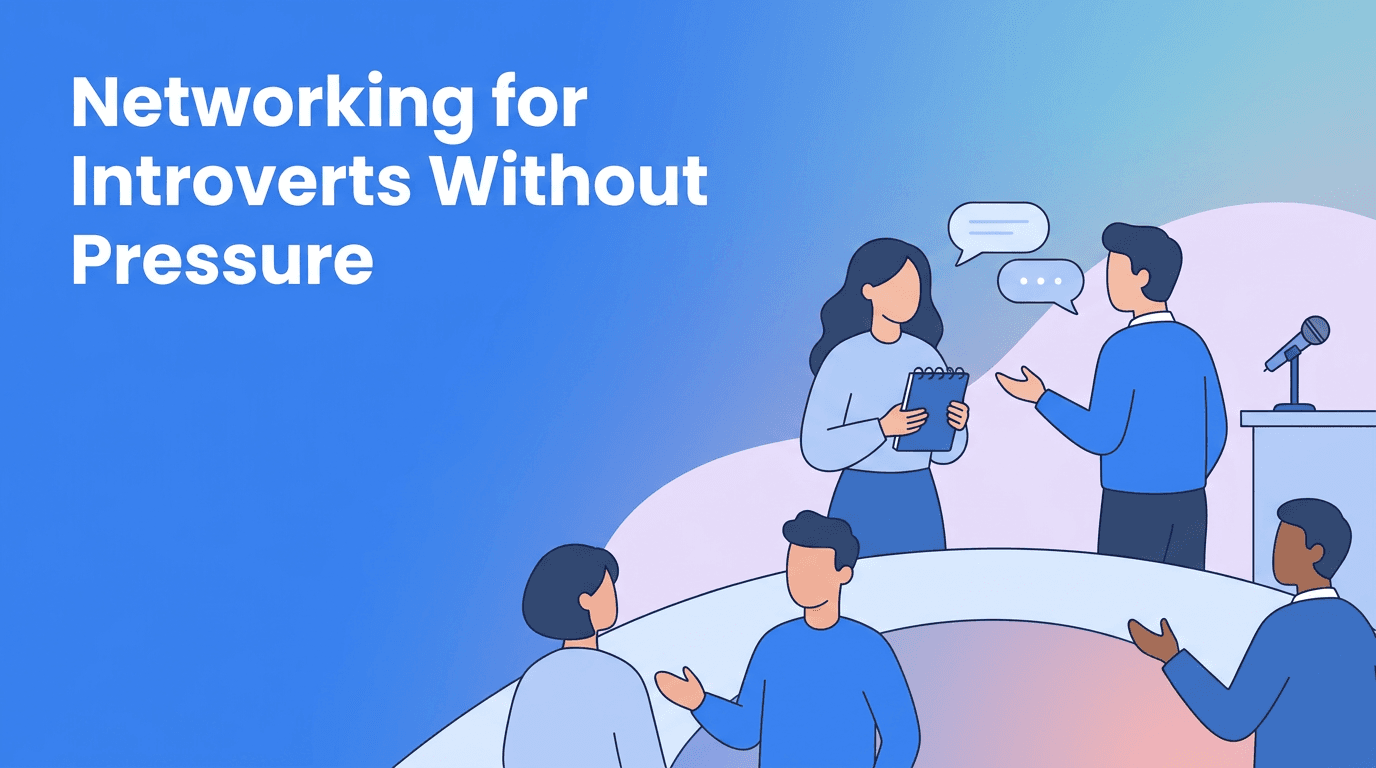
Networking for introverts is often framed like a performance: work the room, perfect your pitch, and say something clever fast. But if you are an introvert, or you deal with social anxiety, that advice can make connection feel harder. The good news is that strong social skills do not require becoming louder. They require a calmer way to build rapport, one honest conversation at a time.
Why traditional networking advice fails introverts
A lot of networking advice assumes you enjoy high stimulation, fast banter, and constant self-promotion. Many introverts do not. That does not mean you are bad at connecting. It means your strengths show up differently. You may listen closely, notice details, ask thoughtful questions, and create trust faster in one-on-one conversations than in big groups.
- You do not need to impress everyone. You only need a few meaningful conversations.
- Rapport grows from attention, not performance.
- Social skills improve when you use a style that matches your nervous system.
- If public speaking makes you tense, you can still network effectively in smaller, lower-pressure settings.
A better goal: connection over collection
Instead of measuring success by how many people you meet, measure it by whether one person felt easy to talk to. This shift lowers pressure and helps with social anxiety. When your goal is connection, not collecting contacts, you stop trying to sound impressive and start trying to be present.
Use the 3-part rapport method
- Start with context: comment on the event, setting, talk, or shared situation.
- Move to curiosity: ask an open question that invites a real answer.
- End with continuity: find one reason to follow up, like a shared interest, challenge, or goal.
Example: "What brought you to this event?" can work, but "What part of today has been most useful so far?" often creates better rapport because it feels specific and grounded.
How to handle networking with social anxiety
If networking for introverts is already hard, adding anxiety can make your mind go blank. The answer is not to force confidence. It is to reduce uncertainty before the event and recover gently during it.
Prepare for the first 5 minutes
- Choose a simple opening line you can repeat, such as "Hi, how do you know the host?" or "What did you think of that session?"
- Set a tiny goal, like having two real conversations instead of staying for the whole event.
- Arrive 10 minutes early if possible. Smaller crowds feel easier to enter.
- Keep a reset action ready, like stepping outside, getting water, or taking one slow breath in and out.
"Confidence is not having no fear. It is knowing you can stay kind to yourself while you feel it."
This is especially useful if your fear shows up around public speaking, introductions, or group conversations. You do not need to eliminate nerves before you speak. You only need a steady next step.
Social skills that feel natural for quiet people
Some of the best social skills are subtle. They help other people feel safe, seen, and understood. That is the foundation of real rapport.
- Use specific follow-up questions: "How did you get into that?" is better than jumping to your own story.
- Reflect a key word they used, such as "You said the transition was unexpected. What made it that way?"
- Share one small personal detail to create mutuality without oversharing.
- Pause before answering. A calm pause signals thoughtfulness, not weakness.
- Leave conversations with a clear close, like "I enjoyed talking with you. I would love to stay in touch."
What if networking leads to public speaking?
Sometimes networking includes introducing yourself in a group, asking a question after a talk, or giving a short self-description. If public speaking feels intense, keep your structure simple: who you are, what you care about, and one thing you are exploring right now. That is enough.
For example: "I work in design, and lately I have been interested in how teams communicate better. I am here to learn how others approach collaboration." Short, clear, and human beats polished and robotic.
Build confidence between social events
Haply is an AI life coaching app for iOS and Android that can help you practice social confidence in small steps. Use chat-based coaching, habit tracking, and daily reminders to strengthen relationship goals at your own pace.
Try Haply FreeA simple follow-up system introverts can actually use
Many people think networking ends at the event. In reality, the follow-up is where trust begins. Networking for introverts gets easier when you rely less on live charm and more on thoughtful follow-through.
- Send a short message within 24 hours mentioning your conversation.
- Reference one specific detail so your note feels personal.
- Suggest a low-pressure next step, like sharing an article or scheduling a brief coffee chat.
- Use a simple tracker so names do not disappear. Haply's habit tracker and reminders can help you stay consistent without overthinking.
The quiet advantage you might be underestimating
If you are an introvert, your biggest strength may be depth. You may notice when someone is nervous, ask better questions, and create a more memorable conversation because you are not trying to dominate it. Those are not backup strengths. They are powerful relationship skills.
So if networking has felt like a test you keep failing, try a different frame. Think of it as a practice in curiosity, pacing, and trust. The goal is not to become someone else. The goal is to let your own style work better for you.
Frequently Asked Questions
How can introverts get better at networking?
Start with smaller events, aim for one or two meaningful conversations, and use simple follow-up messages. Introverts often network best through depth, not volume.
What are the best social skills for people with social anxiety?
Grounding yourself, asking open questions, listening closely, and using prepared opening lines can reduce pressure. Focus on staying present instead of sounding perfect.
How do you build rapport without small talk?
Use context-based questions, ask about the other person's experience, and respond to specific details they share. Rapport grows faster when the conversation feels real and relevant.
Can networking help if I hate public speaking?
Yes. Most networking happens in short one-on-one or small-group conversations, not formal speaking situations. You can build confidence socially without becoming a polished speaker first.