Non-Sleep Deep Rest: A Science-Backed Reset for Energy, Stress, and Healthy Habits
Non-sleep deep rest can support sleep, stress relief, energy, and healthy habits. Learn how to use this simple practice to improve physical health and recovery.

By Haply Team
Haply Editorial Team
If your sleep is inconsistent, your energy crashes by midafternoon, or your routine feels too scattered for lasting healthy habits, non-sleep deep rest may be the missing piece. This guided recovery practice is gaining attention because it helps you slow down without needing a nap, and it can complement nutrition, exercise, and other foundations of physical health.
Why non-sleep deep rest matters for modern wellness
Many people think wellness is only about doing more, more workouts, stricter meal plans, more productivity hacks. But the body also needs intentional recovery. Non-sleep deep rest is a structured way to downshift your nervous system, giving your mind and body a chance to recover from constant stimulation, mental overload, and physical effort.
- It can support stress management by reducing mental noise and helping your body settle.
- It may help restore energy when you feel wired but tired.
- It fits into a broader wellness plan that includes sleep, nutrition, exercise, and hydration.
- It is accessible for beginners because it does not require advanced meditation skills.
Rest is not a reward for finishing everything. Rest is a resource that helps you do what matters better.
What is non-sleep deep rest?
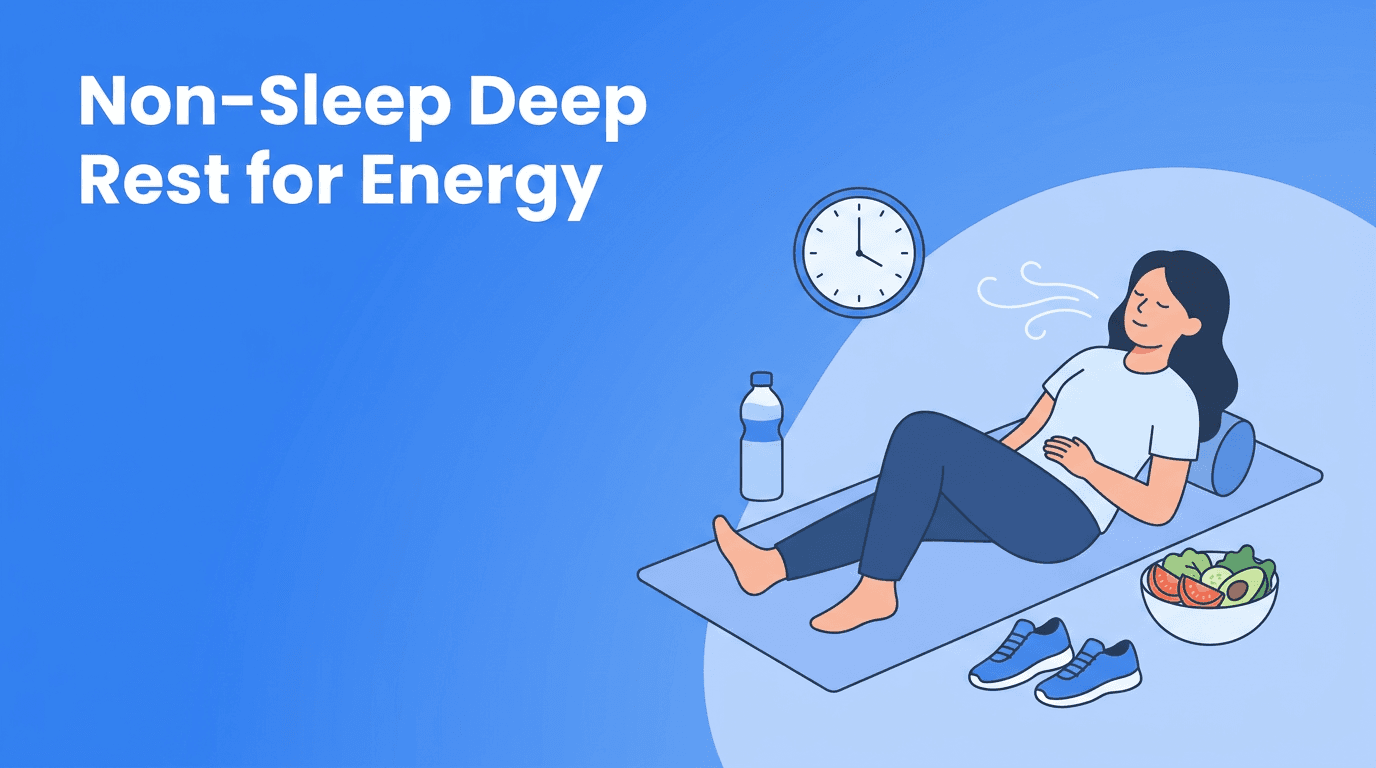
Non-sleep deep rest refers to guided practices that bring you into a deeply relaxed state while you remain awake or drift lightly near sleep. It often includes lying down, closing your eyes, following a voice prompt, and moving attention through the body or breath. The goal is not perfect concentration. The goal is recovery.
How it differs from a nap
A nap is actual sleep, or an attempt to sleep. Non-sleep deep rest is different because you are intentionally practicing relaxation without expecting full sleep. That can be useful if naps leave you groggy, interfere with nighttime sleep, or simply do not fit your schedule.
How it differs from meditation
Some meditation styles ask you to observe thoughts while sitting upright. Non-sleep deep rest is usually more body-based and passive. You are often lying down and following a script designed to create calm, which can feel easier when your energy is low.
The science-backed link between deep rest, sleep, and energy
Research on relaxation, breathwork, yoga nidra, and nervous system regulation suggests that deep rest practices can help lower stress arousal and improve perceived recovery. While non-sleep deep rest is not a cure or a replacement for medical care, it may support better sleep quality, steadier energy, and improved readiness for daily tasks.
- Lower stress activation can make it easier to unwind before bed.
- A calmer nervous system may reduce the feeling of being constantly 'on'.
- Recovery periods can improve consistency with exercise by making effort feel more sustainable.
- Feeling less depleted can make healthy habits easier to repeat, including meal prep, walking, and hydration.
How non-sleep deep rest fits with nutrition and exercise
Wellness habits work best as a system, not as isolated tasks. If you are under-recovered, even the best nutrition plan or exercise routine can feel harder to maintain. Deep rest helps create the internal conditions for follow-through.
After exercise
After a tough workout or a long day on your feet, a 10 to 20 minute session can help your body shift out of high alert. This does not replace post-workout nutrition, hydration, or mobility work, but it can complement them by supporting recovery and reducing mental fatigue.
When your eating habits feel off
Stress can drive mindless snacking, skipped meals, or cravings for quick-energy foods. Deep rest is not a nutrition strategy by itself, but reducing stress load can make mindful choices easier. That is one reason non-sleep deep rest can indirectly support better nutrition and more stable energy.
A simple 15-minute non-sleep deep rest routine
- Find a quiet place where you can lie down or recline comfortably.
- Set a timer for 10 to 15 minutes, or use a guided audio track.
- Loosen your jaw, drop your shoulders, and let your hands rest naturally.
- Take slow breaths, extending the exhale slightly without forcing it.
- Move your attention through your body, from toes to head, noticing tension without trying to fix everything.
- If thoughts appear, gently return to the guide, your breath, or body sensations.
- When the session ends, sit up slowly and notice whether your energy or mood shifted.
Build recovery into your daily wellness plan
Haply is an AI life coaching app for iOS and Android that can help you turn recovery into real healthy habits. Use Wellness coaching, reminders, streaks, and mini-apps like Meditation/Breathe to support better sleep, stress relief, and daily consistency. Haply complements professional help, it does not replace it.
Try Haply FreeBest times to use deep rest for physical health
- Midday reset: useful when your focus drops but you do not want a long nap.
- Post-exercise recovery: a calming add-on after training or a long walk.
- Pre-bed wind-down: can help transition into a quieter evening routine that supports sleep.
- Stress spikes: helpful after intense meetings, caregiving, travel, or overstimulating screen time.
Used consistently, non-sleep deep rest can become one of those small but powerful healthy habits that make the rest of your wellness routine more realistic.
Common mistakes that make deep rest less effective
- Expecting instant results after one session. Like other wellness practices, benefits often build with repetition.
- Using it as a way to push through chronic exhaustion without addressing bigger lifestyle issues.
- Practicing in a noisy environment that keeps your body on alert.
- Doing it too late in the day if you know it disrupts nighttime sleep.
- Treating it as a replacement for essentials like nutrition, movement, hydration, or medical support.
How to make it a lasting habit
Start small. Pair non-sleep deep rest with an existing routine, such as after lunch, after exercise, or before your evening shower. Track how you feel afterward, especially your energy, mood, and ability to stick to other healthy habits. In Haply, you can use the Today Dashboard, reminders, and habit tracking to make this kind of recovery practice easier to remember.
Frequently Asked Questions
What is non-sleep deep rest and how does it work?
Non-sleep deep rest is a guided relaxation practice that helps your body and mind enter a deeply restful state without requiring full sleep. It typically uses breath awareness and body scanning to reduce stress and support recovery.
Can non-sleep deep rest replace sleep?
No. It can support recovery and help you feel refreshed, but it does not replace the biological need for regular sleep.
How long should a non-sleep deep rest session be?
Most people start with 10 to 20 minutes. Shorter sessions are often easier to maintain consistently and can still improve energy and calm.
Is non-sleep deep rest good after exercise?
Yes, it can be a helpful recovery tool after exercise, especially when combined with hydration, nutrition, and adequate sleep. It may help you feel calmer and less mentally drained.
Can non-sleep deep rest help with stress and healthy habits?
It can. When stress is lower and energy feels steadier, many people find it easier to follow through on healthy habits like meal planning, movement, and bedtime routines.