Phone-Free Evenings: A Wellness Routine for Burnout Recovery
A phone-free evenings practice can support self-care, burnout recovery, digital wellbeing, and deeper rest. Learn a simple wellness routine busy professionals can actually keep.

By Haply Team
Haply Editorial Team
Phone-free evenings are one of the simplest ways to protect self-care, reduce overstimulation, and create more real rest after a demanding workday. If your brain feels wired but tired, this small shift can become a practical wellness routine that supports burnout prevention and steady recovery.
Why phone-free evenings work for busy professionals
Many people finish work, then move straight into a second shift of messages, headlines, videos, and low-level urgency. Your body may be home, but your attention is still on call. Phone-free evenings create a boundary between performance mode and recovery mode, which matters if you spend all day reacting to notifications, meetings, and decisions.
- Less cognitive spillover - your brain gets fewer inputs to process late at night.
- Better digital wellbeing - you are not constantly pulled back into work, news, or comparison loops.
- More intentional self-care - small offline habits become easier to notice and repeat.
- Stronger rest cues - dim light, quiet, and slower activities help signal that the day is ending.
"Rest is not a reward for finishing everything. Rest is a resource that helps you do what matters better."
The real link between burnout and constant connectivity
Burnout is not only about working too many hours. It is also about too little genuine recovery. When every spare moment gets filled with scrolling, inbox checks, or background stimulation, your nervous system gets fewer chances to downshift. That is why digital wellbeing matters. Reducing evening screen exposure is not about being anti-tech. It is about giving your mind a cleaner runway into rest.
What counts as recovery after work?
Real recovery usually includes lower stimulation, some physical ease, and a sense of choice. That might look like stretching, reading, taking a shower, making a simple meal, doing light cleanup, journaling, or talking with someone you care about. The key is that the activity helps you feel more settled, not more activated.
A 30-minute phone-free evening wellness routine
You do not need a perfect night ritual. Start with 30 minutes of phone-free evenings before bed or after dinner. The goal is consistency, not performance.
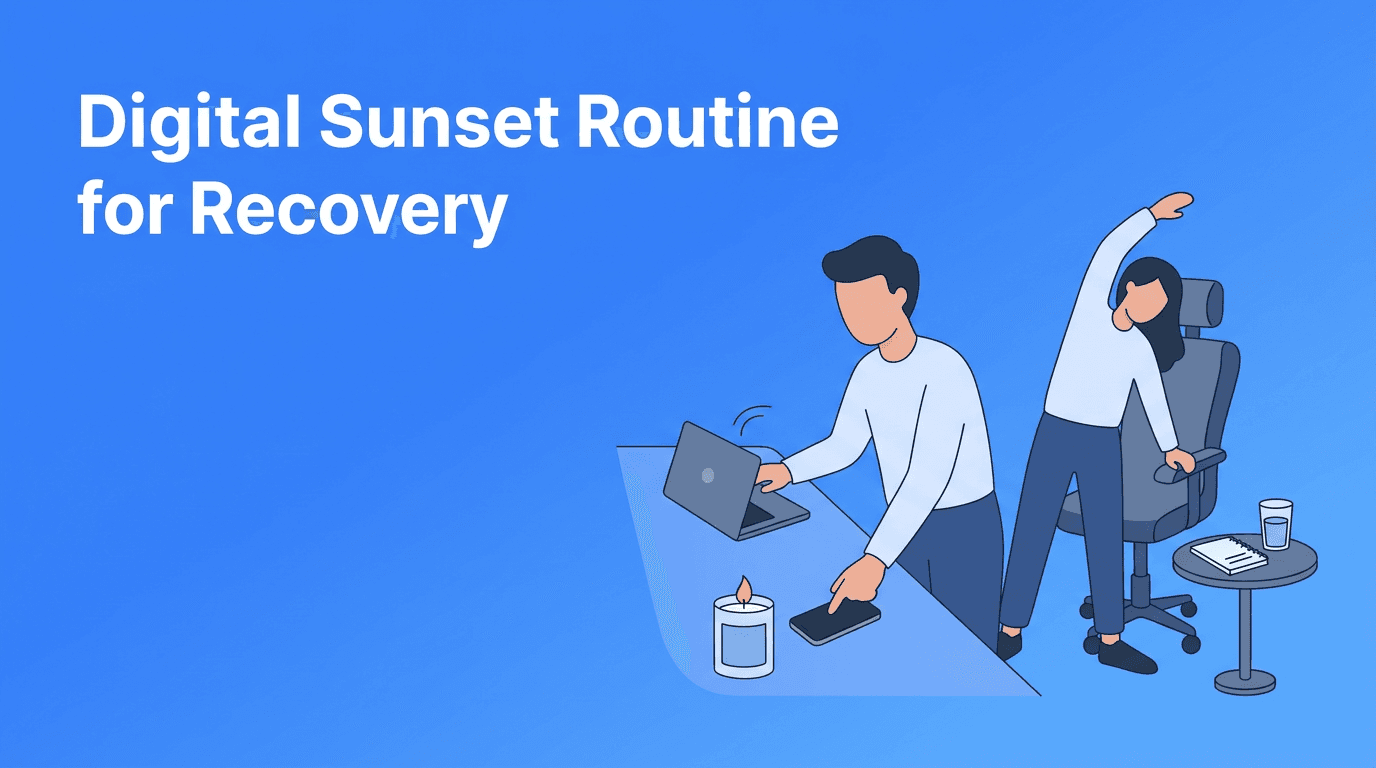
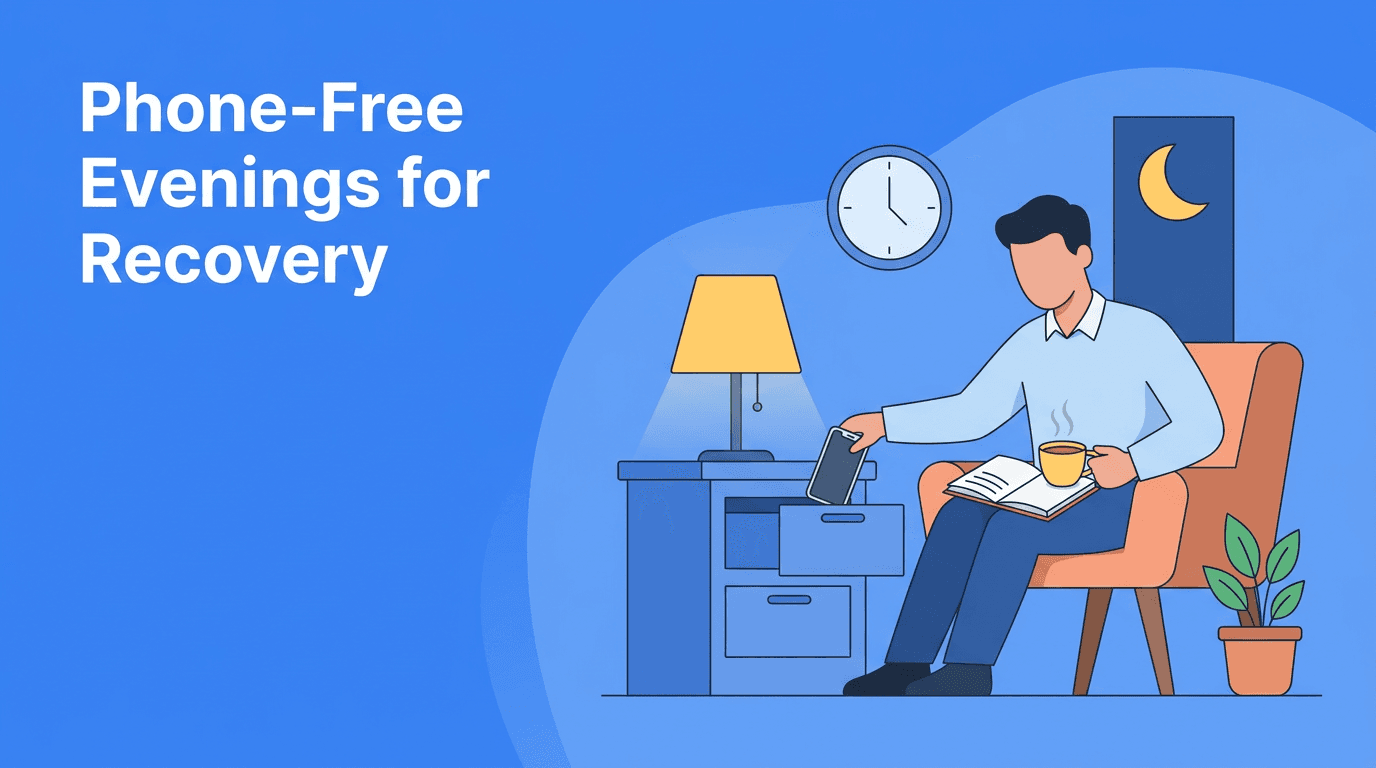
- Minute 1-5: Put the phone away - place it in another room, a drawer, or on a charger outside reach.
- Minute 5-10: Reset your body - take a few slow breaths, stretch your shoulders, or wash your face.
- Minute 10-20: Choose one calming activity - read a few pages, prep tomorrow's clothes, make tea, or write down three thoughts.
- Minute 20-30: Lower the signal - dim lights, reduce noise, and avoid adding new information to your brain.
If you resist the routine, make it easier
Most people do not fail at self-care because they are lazy. They fail because the plan asks too much at the wrong time of day. Remove friction. Keep a book on the table. Put your charger away from the couch. Decide your default evening activity before the day gets busy. Make the healthy choice the easy choice.
Want help building a recovery habit?
Haply is an AI life coaching app for iOS and Android that helps you build practical routines for wellness, focus, and balance. You can use chat-based coaching, habit tracking, reminders, and mini-apps like Meditation/Breathe and Sleep Stories to support a phone-light evening routine. Haply can complement your self-care practice, but it is not a replacement for professional care.
Try Haply FreeCommon mistakes that make rest feel impossible
- Waiting until you are exhausted - if you start your routine only when you are depleted, everything feels harder.
- Using your phone as your only reward - scrolling can feel easy, but it often leaves you less restored.
- Trying to optimize the whole night - one repeatable habit beats an elaborate plan.
- Confusing numbing with recovery - distraction can help briefly, but it does not always create real rest.
A useful test is simple: after the activity, do you feel slightly clearer, calmer, or more grounded? If yes, it likely supports recovery. If you feel more scattered, tense, or time-lost, it may be draining more than it gives.
How to keep phone-free evenings realistic
Treat this as a flexible boundary, not a purity challenge. Some nights will include family logistics, urgent messages, or practical tasks. That is fine. What matters is protecting a small pocket of lower stimulation most days. A sustainable wellness routine is one you can return to quickly after interruptions.
- Start with 3 nights a week instead of every night.
- Use app limits or focus modes to reduce temptation.
- Tell one person your cutoff time if work messages tend to spill over.
- Pair the habit with an existing cue like dinner, a shower, or changing clothes.
A gentler way to think about self-care
For busy professionals, self-care is often framed as one more task to complete. A better frame is protection. You are protecting attention, energy, and mood so that tomorrow does not start with an empty tank. Phone-free evenings are not about doing less with your life. They are about making more room for the kind of rest that helps you live it well.
Frequently Asked Questions
Do phone-free evenings really help with burnout recovery?
They can help by reducing stimulation and creating a clearer transition from work to rest. They are not a cure, but they can support better recovery habits.
How long should a phone-free evening be?
Start with 20 to 30 minutes. If it feels helpful, you can gradually extend it based on your schedule and energy.
What can I do instead of scrolling at night?
Try reading, light stretching, journaling, meal prep, a shower, or a brief breathing exercise. Choose activities that help you feel calmer, not more stimulated.
Is digital wellbeing the same as quitting screens completely?
No. Digital wellbeing is about using technology more intentionally so it supports your life rather than constantly interrupting it.