Mindful Transitions: A 5-Minute Meditation for the Present Moment
Present moment meditation can turn ordinary transitions into anchors of mindfulness, awareness, and inner peace. Learn a simple 5-minute practice for calmer, more intentional days.

By Haply Team
Haply Editorial Team
Most people think mindfulness has to happen on a cushion, in silence, with plenty of time. But present moment meditation can begin in the small spaces you already move through every day, before a meeting, after washing dishes, while sitting in the car, or when you step through your front door. These tiny pauses can become a reliable path back to awareness, steadiness, and inner peace.
Why transitions are powerful moments for mindfulness
A transition is any shift from one activity, role, or environment to another. You finish work and become a partner or parent. You close one tab and open another task. You wake up and move from sleep into decision-making. These moments often pass unnoticed, yet they are rich with possibility. When you practice present moment meditation during transitions, you stop carrying the full weight of the last moment into the next one.
The hidden cost of rushing from one moment to another
Without a pause, stress tends to spill forward. Your body may leave one place, but your attention stays behind. This is why even short meditation practices can feel surprisingly restorative. They help your nervous system catch up with your life. Instead of reacting automatically, you create room to choose how you want to enter the next moment.
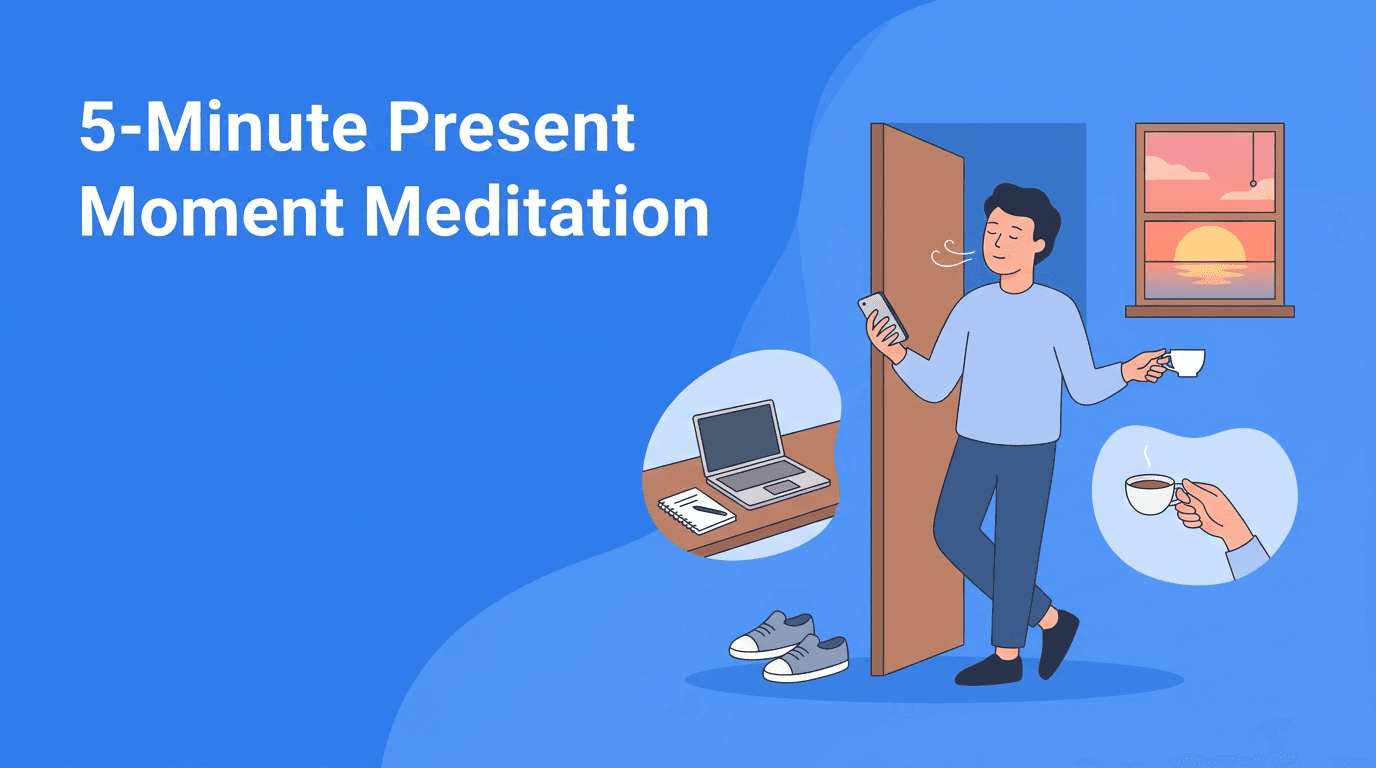
"Between what just happened and what happens next, there is a small doorway. Mindfulness teaches us how to walk through it awake."
A simple present moment meditation for everyday life
This practice takes about five minutes, though even one minute can help. The goal is not to empty your mind. The goal is to gently return to what is here now, with kindness.
- Pause physically. Stop walking, sit down, or place one hand on a surface. Let your body know you are no longer rushing.
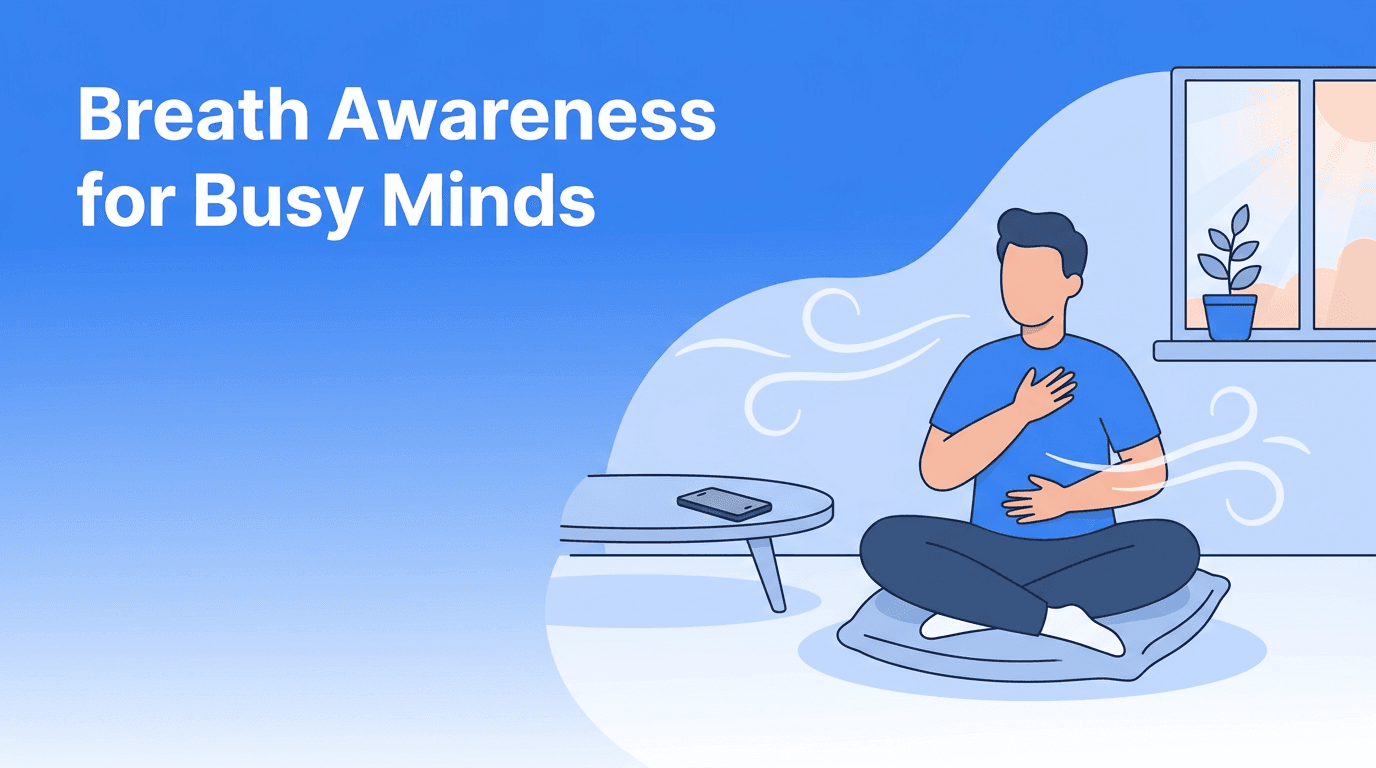
- Take three slower breaths. Do not force them. Simply notice the inhale, the exhale, and the brief stillness between them.
- Name what is present. Silently notice: "thinking," "tightness," "warmth," "sound," or "tired." This strengthens awareness without judgment.
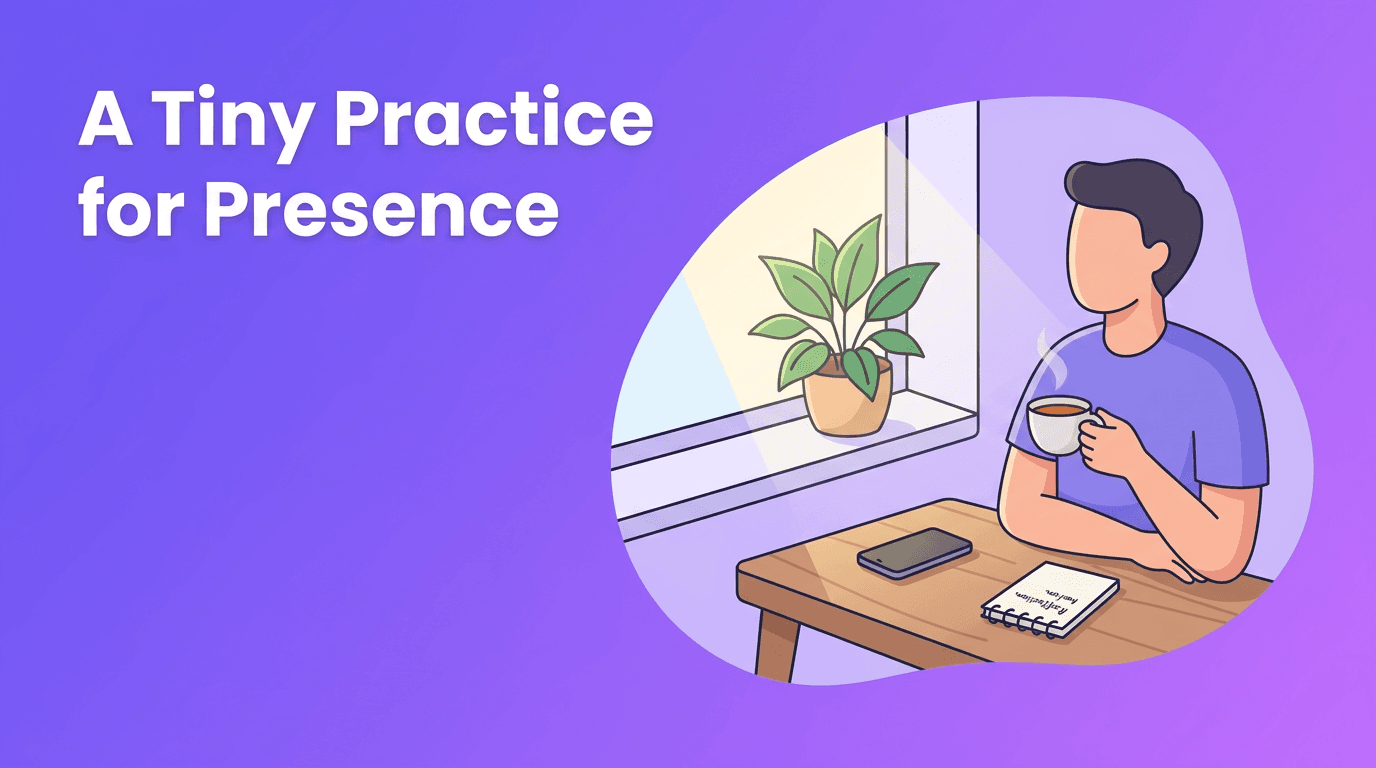
- Feel one point of contact. Your feet on the floor, your hand on a mug, your back against a chair. Let sensation anchor you in the present moment.
- Set a gentle intention. Ask, "How do I want to enter the next moment?" Choose one word such as calm, clarity, or patience.
This is present moment meditation in its most practical form. It does not ask you to leave your life. It helps you meet your life more fully.
Bring mindfulness into your daily routine
If you want guided support, Haply offers chat-based AI coaching, Wellness support, and a Meditation/Breathe mini-app to help you build a steady mindfulness practice with reminders and simple daily rituals.
Try Haply FreeWhere to use this meditation practice
You do not need the perfect setting. In fact, this practice works best when attached to moments that already happen.
- Before opening your laptop in the morning
- After finishing a difficult conversation
- When arriving home from work
- Before eating lunch
- While waiting for water to boil or coffee to brew
- Right before bed, as a signal to slow down
How this supports inner peace over time
Inner peace rarely arrives as one dramatic breakthrough. More often, it grows through repeated moments of returning. Each small pause teaches your mind and body that rest, presence, and choice are available now, not only after your to-do list is complete. This is one of the quiet gifts of mindfulness: peace becomes a practice, not a prize.
Common mistakes in present moment awareness
- Waiting to feel calm before you begin. The practice is for busy, distracted, emotionally full moments too.
- Trying to do it perfectly. Mindfulness is not performance. Noticing distraction and returning is the practice.
- Making it too long. A short pause you actually keep is more powerful than an ideal routine you avoid.
- Judging your mind. A busy mind does not mean you are failing at meditation. It means you are human.
Making present moment meditation a gentle habit
Habit change becomes easier when it is specific and visible. Pair this practice with an existing cue, like sitting in your car, washing your hands, or closing your notebook. If you enjoy digital support, Haply can help you create a personalized routine through goal-based onboarding, habit tracking, streaks, and daily reminders. Its Today Dashboard also offers a calming place to reconnect with your intentions.
You do not need to redesign your entire life to become more present. Start with one doorway, one breath, one conscious pause. Over time, these small acts of awareness can reshape the tone of your day and deepen your relationship with the present moment.
Frequently Asked Questions
What is present moment meditation?
Present moment meditation is a simple practice of bringing your attention to what is happening right now, often through the breath, body sensations, or sounds around you.
How do I practice mindfulness during a busy day?
Use brief pauses between tasks to notice your breath, body, and thoughts. Even one minute of awareness can help you reset.
Can a 5 minute meditation really reduce stress?
Yes. Short meditation practices can calm the nervous system, reduce reactivity, and help you feel more grounded when done consistently.
What is the difference between mindfulness and meditation?
Mindfulness is the quality of paying attention with awareness, while meditation is a structured way to practice that skill.