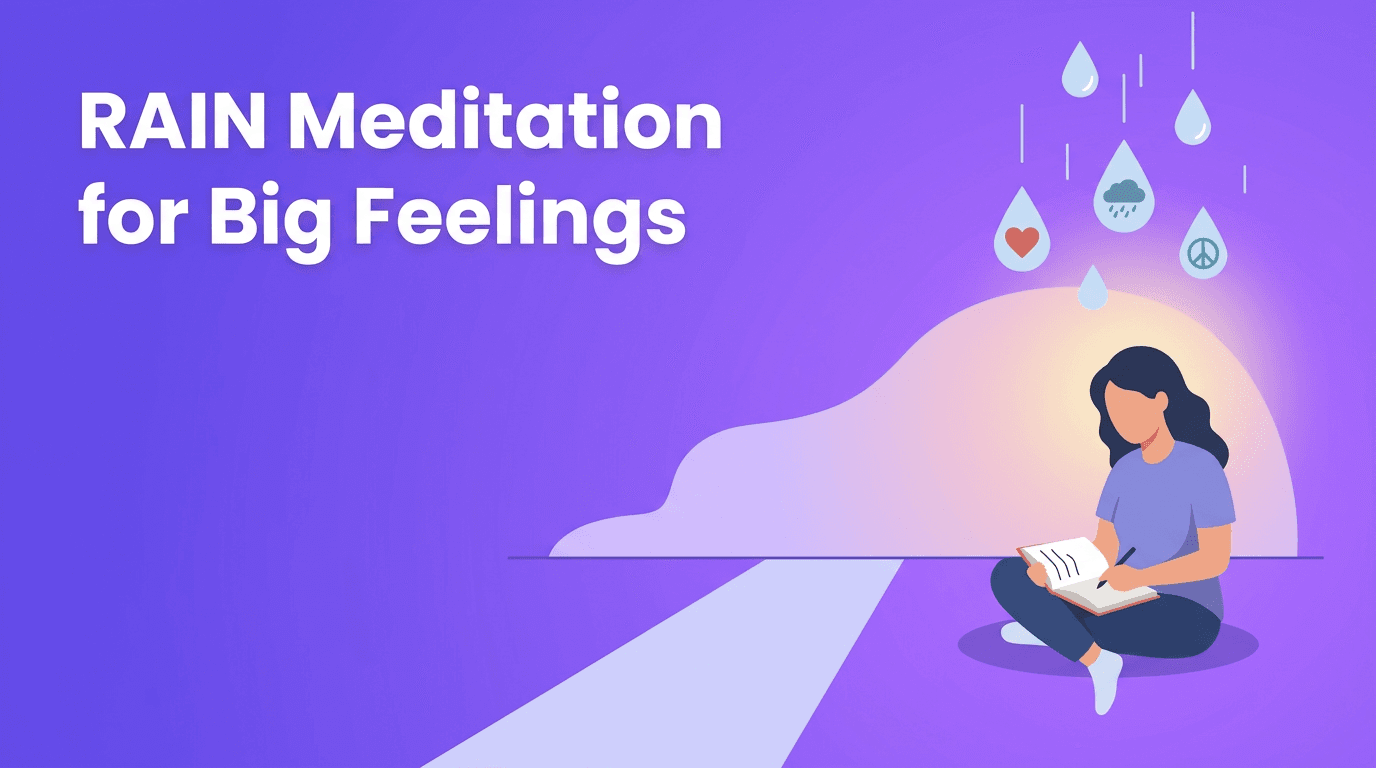
RAIN Meditation for Big Feelings: A Gentle Practice for Self-Awareness
RAIN meditation is a simple mindfulness practice for meeting big feelings with more self-awareness, emotional intelligence, and calm. Learn how to use it in real life.

By Haply Team
Haply Editorial Team
RAIN meditation offers a compassionate way to meet difficult feelings without getting swept away by them. If you want more self-awareness, stronger emotional intelligence, and a calmer relationship with your emotions, this simple mindfulness method can help.
What is RAIN meditation?
RAIN meditation is a four-step mindfulness practice often described as: Recognize, Allow, Investigate, and Nurture. Instead of pushing away discomfort, you pause and gently turn toward your inner experience. This can deepen emotional awareness and help you respond, rather than react.
- Recognize what you are feeling right now
- Allow the experience to be there, without immediately trying to fix it
- Investigate with curiosity, noticing where the feeling lives in your body and what it may need
- Nurture yourself with kindness, reassurance, or supportive action
"The moment you notice what you are feeling, you create space to choose your next step."
Why RAIN meditation builds emotional intelligence
When you practice RAIN meditation, you train yourself to notice your internal world with honesty and care. That is the heart of emotional intelligence. You become more skilled at naming emotions, understanding triggers, and interrupting automatic patterns like avoidance, shutdown, or overthinking.
It helps you move from reaction to response
Many of us were taught to judge or hide our feelings. RAIN offers another path. By slowing down, you build self-awareness and learn that an emotion is information, not a command. Anger might point to a boundary. Sadness might reveal a loss. Anxiety might signal uncertainty or unmet needs.
It supports emotional awareness in the body
Emotions often show up physically before they become clear mentally. You might notice a tight chest, a clenched jaw, or a heavy stomach. Emotional awareness grows when you learn to listen to those signals instead of ignoring them.
How to practice RAIN meditation in 5 minutes
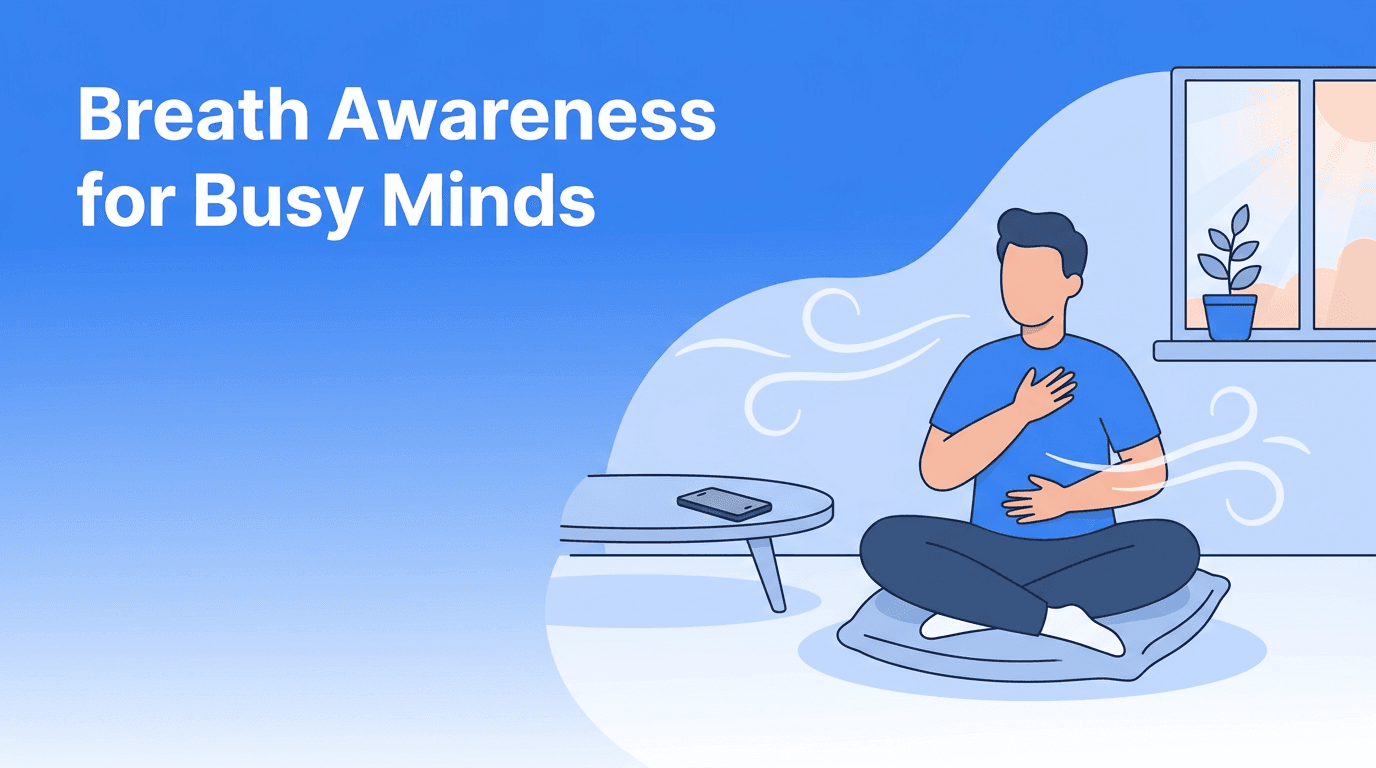
You do not need a perfect setting. You can practice at your desk, in your car before going inside, or while sitting on the edge of your bed. The key is to bring gentle attention to what is here.
- Pause and breathe. Take one slow inhale and one longer exhale.
- Recognize. Name the main emotion as simply as you can: "I feel overwhelmed" or "I notice frustration."
- Allow. Say to yourself, "This is here right now." Let the feeling exist for a moment without fighting it.
- Investigate. Ask: Where do I feel this in my body? What thoughts are attached to it? What might this feeling be trying to tell me?
- Nurture. Place a hand on your chest, soften your shoulders, and offer a kind phrase such as, "I am allowed to feel this" or "I can care for myself right now."
Want support for your mindfulness practice?
Haply is an AI life coaching app for iOS and Android with Wellness coaches, chat-based guidance, and a Meditation/Breathe mini-app that can help you build a steady mindfulness routine. You can also use daily reminders and streaks to stay consistent.
Try Haply FreeUsing RAIN meditation in everyday life
During conflict
If a conversation gets heated, excuse yourself for two minutes and do a quick inner check-in. RAIN meditation can help you notice hurt, fear, or defensiveness before those emotions spill out as blame.
When anxiety spikes
If your mind is racing, skip deep analysis and focus first on Recognize and Allow. Sometimes the most regulating move is simply admitting, "I am anxious right now," and staying with the breath for a few moments.
After emotional numbness
Not all emotional work starts with intensity. Sometimes the challenge is feeling disconnected. In that case, use RAIN to notice subtle signals, low energy, irritation, or emptiness. This supports emotional awareness even when your inner world feels muted.
Common mistakes to avoid
- Trying to make the feeling disappear. The goal is not instant relief, but a kinder relationship with what is present.
- Overanalyzing. Investigation should be curious, not harsh or obsessive.
- Judging yourself for having emotions. Your feelings are part of being human, not evidence that you are failing.
- Waiting for a crisis. Short, regular practice builds the most lasting self-awareness.
A simple journaling prompt after RAIN meditation
After your practice, write for three minutes: What emotion did I notice, what did it seem to need, and what is one caring action I can take next? This small reflection helps connect mindfulness to real behavior change.
The goal is not to feel perfect
Mindfulness is not about becoming calm all the time. It is about meeting your inner life with more honesty, steadiness, and care. Over time, RAIN meditation can help you trust yourself around difficult moments and build a more grounded relationship with your feelings.
Frequently Asked Questions
What is RAIN meditation used for?
RAIN meditation is used to meet difficult emotions with mindfulness and self-compassion. It can improve self-awareness, emotional regulation, and your ability to respond calmly.
How do you do RAIN meditation step by step?
The steps are Recognize, Allow, Investigate, and Nurture. You notice the feeling, let it be present, explore it with curiosity, and respond with kindness.
Can RAIN meditation help with anxiety?
Yes, RAIN meditation can help with anxiety by helping you name the experience, soften resistance, and stay grounded in the present moment. It is especially useful for interrupting reactive spirals.
How long should RAIN meditation take?
A RAIN meditation can take as little as 3 to 5 minutes or longer if you want a deeper practice. Consistency matters more than length.