Reading Apps for Better Focus: Which Digital Tools Actually Help You Finish More Books?
The best reading apps do more than store ebooks. They help you focus, build a routine, and turn spare minutes into real progress. Here is a practical guide to choosing tools that support better reading habits.
By Haply Team
Haply Editorial Team
If you have ever downloaded several reading apps and still finished fewer books than you wanted, the problem is usually not motivation. It is usually friction. The right app can reduce that friction by making it easier to start, track progress, and protect your attention.
This guide takes a practical angle: not the biggest app library, but the tools that actually help different kinds of readers. Whether you want deeper concentration, more consistent reading sessions, or a better way to combine books with daily routines, these picks can help.
What makes reading apps genuinely useful?
Most people do not need more content. They need better systems. The most effective reading apps usually do at least one of these jobs well:
- Reduce starting friction with quick access, synced progress, and clean interfaces
- Support consistency through reminders, streaks, or simple reading goals
- Improve retention with highlights, notes, summaries, or spaced review
- Protect focus by limiting distractions and encouraging single-task reading
- Fit real life with audio options, offline access, and cross-device syncing
"The best app is not the one with the most features. It is the one you will open again tomorrow."
4 types of reading apps worth using
1. Ebook apps for low-friction reading
If your main goal is to read more pages, dedicated ebook reading apps are often the simplest answer. Apps like Kindle, Apple Books, and Kobo make it easy to continue where you left off, adjust fonts, and read across devices. For busy adults, that convenience matters more than people expect.
- Choose Kindle if you want the largest ebook ecosystem and strong syncing
- Choose Apple Books if you prefer a smooth built-in experience on Apple devices
- Choose Kobo if you want format flexibility and a reader-first feel
2. Reading habit apps for accountability
Some readers do not need another bookstore. They need consistency. That is where tools connected to habit tracker apps can help. A simple daily goal like 10 minutes after lunch often works better than a vague goal like read more this year.
This is also where Haply fits naturally. While it is not only for reading, Haply combines AI coaching, streaks, reminders, and a Today Dashboard that can help you turn reading into a repeatable daily habit. If your challenge is follow-through rather than access to books, this kind of support can be more useful than a standalone reader.
3. Audio and hybrid reading tools
For people with packed schedules, audiobook and read-listen tools can dramatically increase reading time. Audible, Speechify, and other hybrid tools work well for commutes, walks, or chores. If you often say you do not have time to read, audio may be your easiest win.
4. Focus companions that protect attention
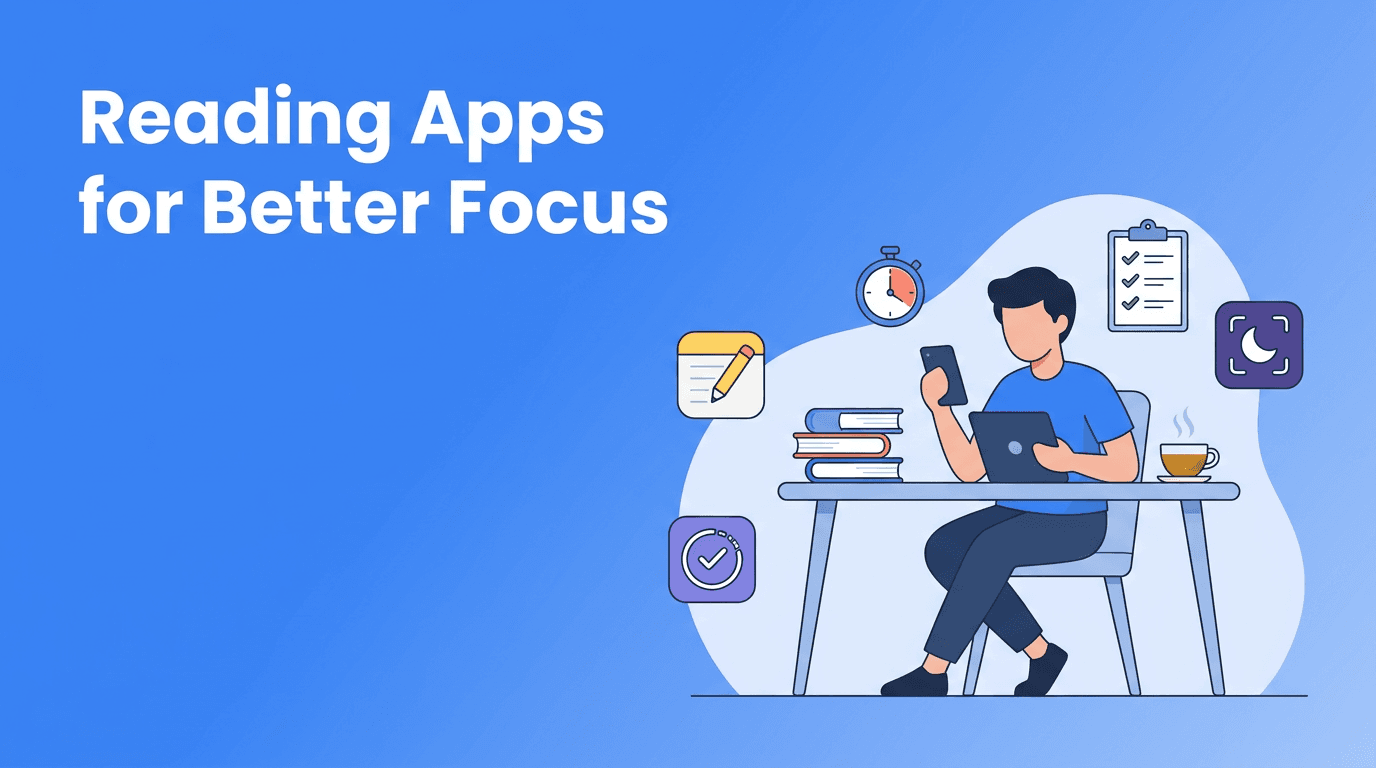
Sometimes the issue is not the book. It is your phone. Pairing reading apps with selected focus tools can improve completion rates. This may include a simple timer, notification blocking, or even selected meditation apps before a reading session to calm mental noise.
How reading apps compare with other personal growth tools
Reading rarely happens in isolation. It competes with work, messages, social feeds, and fatigue. That is why the best setup often combines categories instead of relying on one app to do everything.
- Reading apps help you access and continue books easily
- Habit tracker apps help you show up consistently
- Meditation apps help you settle your mind before deep reading
- Selected AI apps help you plan routines, reflect on takeaways, and stay accountable
- Some of the best productivity apps can support reading blocks, but they can also become another layer of complexity if overused
A useful rule is this: keep one app for reading, one app for accountability, and one optional support tool. More than that often creates digital clutter.
Want one app to support the habit around reading?
Haply is an AI life coaching app for iOS and Android with personalized coaching, habit tracking, reminders, and mini-tools like Focus Timer and Task Planner. It can help you build a reading routine that actually sticks.
Try Haply FreeA simple stack for different kinds of readers
For the distracted reader
- Primary tool: Kindle or another clean ebook app
- Support tool: a focus timer
- Optional add-on: short session from one of your preferred meditation apps before reading
For the inconsistent reader
- Primary tool: your favorite ebook or audiobook platform
- Support tool: habit tracker apps or Haply for reminders and streaks
- Optional add-on: weekly review of progress and barriers
For the growth-focused reader
- Primary tool: an app with notes and highlights
- Support tool: one of the more reflective AI apps for summarizing ideas and setting goals
- Optional add-on: a reading log for lessons applied to real life
How to choose the right reading app in 5 minutes
- Ask what is blocking you most: time, focus, retention, or consistency
- Choose one app that solves your biggest problem first
- Test it for 7 days, not 7 minutes
- Set a tiny rule, such as read 5 pages after breakfast
- Review whether the app helped you read more, not just organize more
The best reading apps are the ones that quietly support your behavior. If an app makes reading feel heavier, more complicated, or more performative, it is probably the wrong fit.
Frequently Asked Questions
What are the best reading apps for adults who want to read more?
The best option depends on your main obstacle. Kindle is strong for convenience, audiobook apps help with time, and habit-based tools like Haply can help if consistency is the real issue.
Can habit tracker apps help me finish more books?
Yes. Habit tracker apps work well when your challenge is showing up regularly. A small daily reading goal is often more effective than setting a large yearly target.
Do meditation apps help with reading focus?
They can. A short breathing or meditation session before reading may reduce mental noise and make it easier to stay with the text.
Are AI apps useful for building a reading habit?
Yes, especially for planning, accountability, and reflection. AI apps can help you create routines, review progress, and connect reading goals to your wider personal growth system.