Repair Attempts: The Small Communication Skill That Saves Relationships
Repair attempts are a powerful communication skill that helps relationships recover from tension faster, rebuild connection, and strengthen empathy in everyday conflict.

By Haply Team
Haply Editorial Team
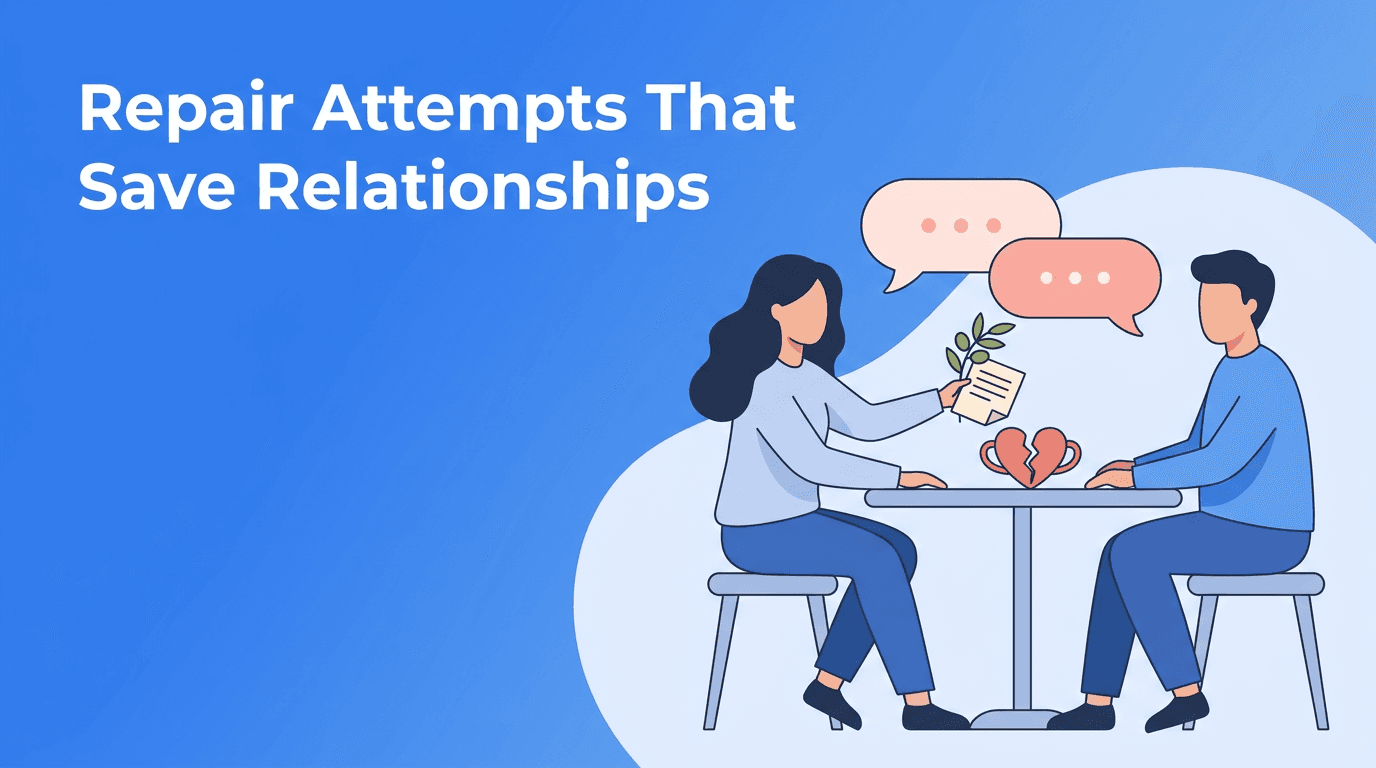
In many relationships, conflict is not the biggest threat. Disconnection is. That is why repair attempts matter so much. A repair attempt is a small word, gesture, or action that helps two people return to communication, rebuild connection, and stay grounded in empathy when emotions run high.
Most people are taught how to argue, defend, or withdraw. Far fewer learn how to reconnect in the middle of tension. Yet this one skill can change romantic relationships, friendships, family dynamics, and even everyday social skills at work or in community life.
What are repair attempts in relationships?
Repair attempts are the little moves that say, "I care more about us than about winning this moment." They can be verbal, emotional, or practical. Think of phrases like "Can we start over?" or "I see why that hurt you," or even a hand on the shoulder, a softer tone, or a sincere smile when the moment is right.
- Saying "I got defensive. Let me try again."
- Admitting "That came out harsher than I meant."
- Using light humor carefully to reduce tension
- Asking "Do you want me to listen or help problem-solve?"
- Pausing and offering water, space, or a calmer setting for the conversation
"A strong relationship is not one without conflict. It is one where both people know how to return to each other."
Why repair attempts improve communication and connection
When people feel misunderstood, their nervous system often shifts into protection mode. They may interrupt, shut down, criticize, or assume the worst. Repair attempts interrupt that cycle. They create a bridge back to safety, which makes honest communication possible again.
This is where empathy becomes practical. Instead of waiting until the conversation is perfect, you offer a small sign of care now. That signal can lower defensiveness and remind both people that the relationship itself is still secure.
What repair attempts are not
- They are not avoiding the issue
- They are not fake positivity
- They are not excuses for repeated harmful behavior
- They are not pressure to forgive instantly
- They are not a substitute for accountability
A healthy repair attempt works best when it is paired with honesty, accountability, and willingness to understand the other person's experience.
5 repair attempts you can practice this week
1. Name the tension early
Try saying, "I think we're getting off track, and I want to stay connected." Naming the moment early prevents small friction from turning into distance.
2. Reflect back what you heard
Before defending yourself, summarize the other person's point. For example: "You felt dismissed when I looked at my phone, right?" This simple habit improves both social skills and emotional safety.
3. Own your piece clearly
A short, direct apology can be more powerful than a long explanation. Try "You're right. I interrupted you, and that was unfair." Clear ownership helps restore trust.
4. Offer a reset question
Ask something that reopens connection, like "What would help you feel heard right now?" or "Can we try this conversation again more slowly?"
5. Follow up after the moment
Some people need time before they can reconnect. A later message like "I've been thinking about our talk, and I understand your point better now" can be a meaningful repair attempt too.
Why repair attempts matter beyond romantic relationships
Although the phrase is often used for couples, repair attempts help in friendships, family tension, and everyday relationships too. If you want deeper connection, this skill matters wherever emotions and expectations meet.
- In friendships, they prevent silent resentment from building
- In families, they soften old patterns and make room for new communication
- At work, they improve trust and respectful collaboration
- In community settings, they support stronger social skills and mutual understanding
Want help practicing healthier relationship habits?
Haply offers AI life coaching for relationships, including chat-based support for communication, empathy, and conflict repair. You can build habits with reminders, track progress, and reflect after difficult conversations.
Try Haply FreeA simple repair script for hard moments
If you freeze during conflict, keep this structure nearby: "I care about this relationship. I see that you're hurt. Here's what I understand. Here's what I regret. Can we talk about what would help next?" It does not need to sound polished. It just needs to be sincere.
How to make repair attempts a relationship habit
The best time to build this skill is not only during a crisis. Practice it in low-stakes moments. Notice when your tone sharpens. Notice when someone goes quiet. Use small resets often. Over time, repair attempts become part of the culture of your relationship, not just a rescue tool.
If you want support, Haply's Relationships coaches can help you prepare for difficult talks, reflect on recurring patterns, and create small daily habits through chat-based coaching, reminders, and guided tools. Sometimes growth starts with one better sentence at the right time.
Frequently Asked Questions
What are repair attempts in a relationship?
Repair attempts are small actions or phrases used to reduce tension, restore communication, and reconnect during or after conflict.
How do repair attempts improve communication?
They lower defensiveness and create emotional safety, which makes it easier to listen, clarify, and respond with empathy.
Can repair attempts help friendships too?
Yes. Repair attempts are useful in friendships, family relationships, and work dynamics whenever misunderstanding or tension creates distance.
What is an example of a repair attempt after an argument?
A simple example is, "I got reactive, and I want to understand your side better. Can we try again?" It shows accountability and care.