How to Say No Without Guilt: Boundaries That Build Self-Worth in Healthy Relationships
Learning to say no without guilt can strengthen boundaries, protect self-worth, and create healthy relationships. Here is a practical guide for people healing from people pleasing patterns.

By Haply Team
Haply Editorial Team
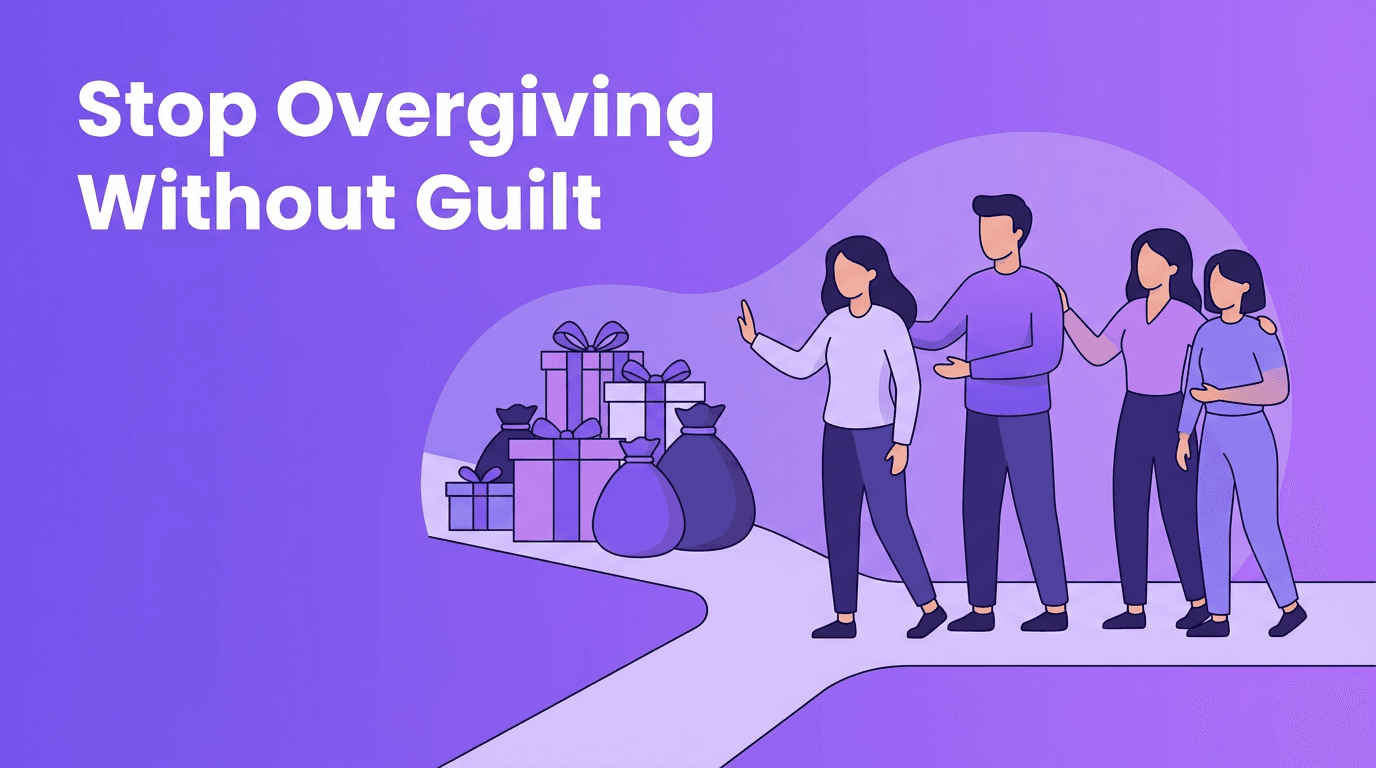
If you want to say no without guilt, you are not selfish, cold, or difficult. You are likely someone who has spent a long time prioritizing other people's comfort over your own needs. That pattern often grows from people pleasing, shaky self-worth, or fear of conflict. The good news is that learning to say no is a skill, and it can help you build calmer, more healthy relationships.
Why saying no feels so hard
Many people struggle with boundaries because they learned that being loved meant being available, agreeable, and easy to manage. Maybe you were praised for being the "nice one." Maybe conflict in your family felt unsafe. Maybe your worth started to depend on how useful you were to others. When that happens, saying no can feel emotionally dangerous, even when it is completely reasonable.
- You worry people will think you are rude or selfish.
- You feel responsible for other people's emotions.
- You say yes quickly, then feel resentment later.
- You overexplain your decisions to earn permission.
- You confuse being needed with being valued.
"A boundary is not a rejection of love. It is a clear instruction for how love can stay healthy."
The hidden link between boundaries and self-worth
At its core, self-worth is the belief that your time, energy, feelings, and limits matter. If that belief is weak, your boundaries often become negotiable. You may tell yourself, "It is not a big deal," while your body says otherwise through tension, dread, or exhaustion. To say no without guilt, you have to practice a new truth: your needs do not need a courtroom defense.
What healthy relationships actually do with boundaries
In healthy relationships, boundaries create clarity. They reduce guessing, resentment, and silent scorekeeping. The right people may not love every limit you set, but they can learn to respect it. A relationship that only works when you abandon yourself is not balance, it is burnout.
- Healthy relationships allow room for honesty.
- Respect grows when expectations are clear.
- A caring person can feel disappointed without making you responsible for fixing it.
- Boundaries protect connection by preventing chronic resentment.
- Your no makes your yes more genuine.
How to say no without guilt in real life
To say no without guilt, start small and stay simple. Most people-pleasing patterns get stronger when you overtalk, apologize excessively, or leave the door open out of fear. A clear no is kinder than a confusing maybe.
Use the 3-part boundary script
- Acknowledge: "I appreciate you thinking of me."
- State the limit: "I can't commit to that."
- Close gently: "I hope it goes well."
This structure works because it is respectful without inviting negotiation. You do not need a dramatic reason. You do not need to prove you are overwhelmed enough. You only need honesty.
Examples for common relationship situations
- With a friend: "I can't talk tonight, but I can check in tomorrow."
- With family: "I am not available for last-minute plans this weekend."
- With a partner: "I need 20 minutes to calm down before continuing this conversation."
- At work crossover with personal life: "I can't take that on right now."
- When someone pushes: "I have already answered, and my decision is still no."
Need help practicing boundaries?
Haply is an AI life coaching app for iOS and Android that can help you work through people pleasing, strengthen self-worth, and rehearse hard conversations. Its Relationships coaches offer personalized chat-based support, daily reminders, and habit tools that make boundary practice feel less overwhelming.
Try Haply FreeWhat guilt after saying no actually means
Guilt does not always mean you did something wrong. Sometimes it means you did something new. If you were trained to keep everyone happy, saying no may trigger discomfort simply because it breaks an old pattern. That feeling is not a stop sign. It is often part of growth.
Ask yourself these reality-check questions
- Did I lie, insult, or intentionally harm someone?
- Or did I simply disappoint them by having a limit?
- Am I abandoning them, or am I protecting my capacity?
- Would I expect someone else to say yes in this situation?
- What would respecting my self-worth look like here?
These questions help separate true wrongdoing from conditioned guilt. That distinction matters if you want boundaries that last.
How to stop people pleasing without becoming harsh
A lot of people fear that if they stop people pleasing, they will become uncaring. In reality, the goal is not hardness. It is honesty. You can be warm and firm at the same time. You can care deeply and still protect your peace.
- Replace overexplaining with one clear sentence.
- Pause before answering requests.
- Notice where resentment keeps appearing.
- Let silence happen after your no.
- Practice tolerating other people's disappointment.
If this feels difficult, use support systems that help you build consistency. Many people find it useful to track small wins, reflect on emotional triggers, and rehearse responses. Haply can support that process through chat-based coaching, habit streaks, and a daily dashboard that keeps your growth visible.
A 7-day practice to strengthen boundaries
- Day 1: Notice one moment when you wanted to say no but did not.
- Day 2: Write three short boundary phrases you can reuse.
- Day 3: Delay one non-urgent response by 10 minutes.
- Day 4: Say no to one small request without overexplaining.
- Day 5: Journal about the guilt that follows and what it reminds you of.
- Day 6: Ask for one need directly in a relationship.
- Day 7: Reflect on how your energy changes when your limits are respected.
The goal is not perfection. The goal is to teach your nervous system that healthy relationships can survive honesty. Every small act of self-respect makes the next one easier.
Frequently Asked Questions
How do I say no without guilt in a relationship?
Keep your message clear, kind, and brief. Guilt often appears because the boundary is new, not because it is wrong.
Is saying no a sign of healthy relationships?
Yes. In healthy relationships, both people can express limits, needs, and preferences without constant fear of punishment or shame.
How do boundaries improve self-worth?
Boundaries reinforce the belief that your time, energy, and emotions matter. Repeatedly honoring your limits strengthens self-trust and self-respect.
How can I stop people pleasing when someone gets upset?
Remind yourself that another person's disappointment is not automatically your responsibility. Stay calm, repeat your boundary if needed, and avoid overexplaining.