The Resentment Pause: How Saying No Early Protects Healthy Relationships
Saying no early is a powerful skill for boundaries, self-worth, and healthy relationships. Learn how to stop people pleasing before resentment builds.

By Haply Team
Haply Editorial Team
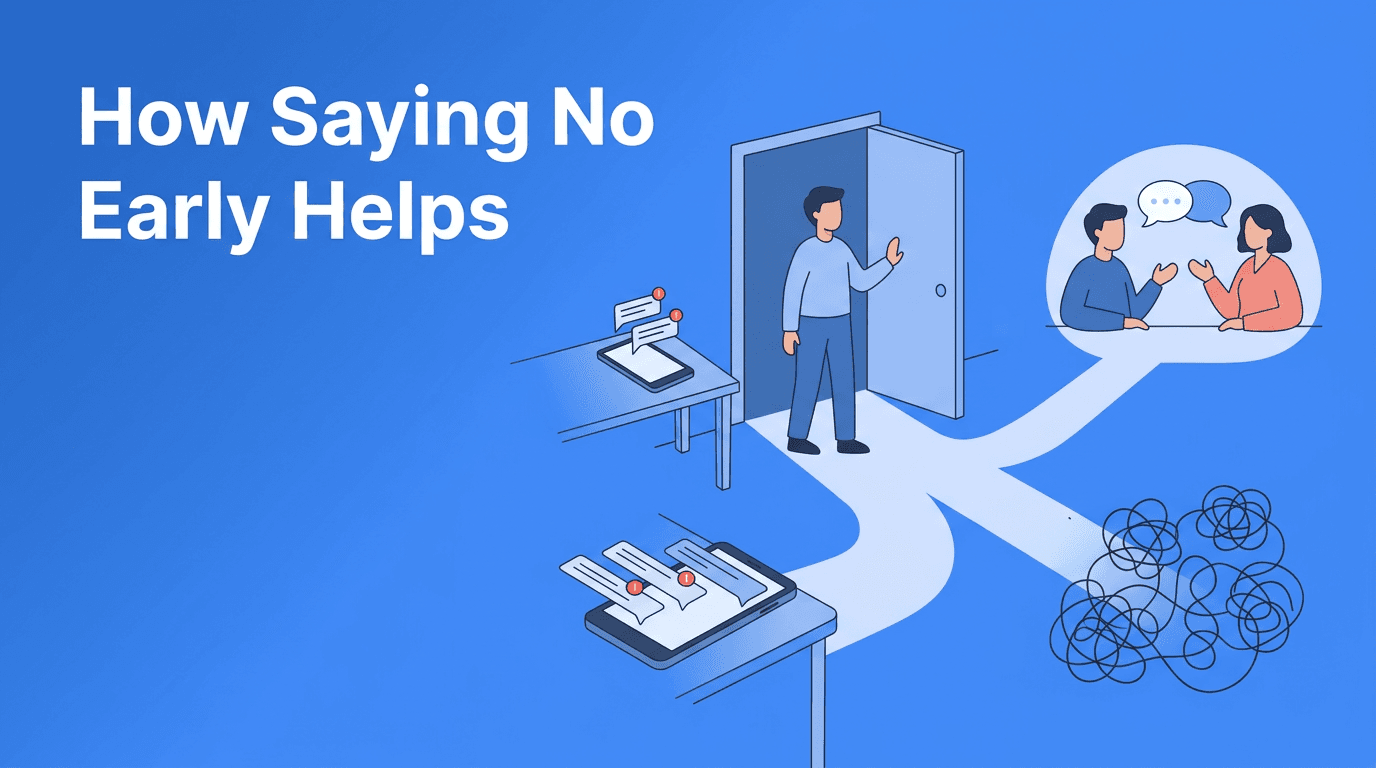
Saying no is often framed as rude, selfish, or harsh. In reality, it is one of the kindest skills you can build if you want stronger boundaries, more stable self-worth, and genuinely healthy relationships. When people pleasing takes over, many people say yes too quickly, then feel resentful, exhausted, or emotionally distant later.
This article explores a simple idea: the earlier you say no, the less damage you create for yourself and the relationship. Instead of waiting until frustration spills out, you can learn to respond with honesty, clarity, and respect.
Why people pleasing turns small yeses into big problems
Many forms of people pleasing begin with good intentions. You want to be easygoing. You want to avoid conflict. You want to be liked. But when your yes does not match your real capacity, that yes becomes expensive.
- You agree to plans you do not want, then show up drained.
- You take on emotional labor that was never yours to carry.
- You answer messages immediately, even when you need rest.
- You avoid disappointing others, but repeatedly disappoint yourself.
Over time, this weakens self-worth because you teach yourself that your limits matter less than other people's comfort. That pattern also harms healthy relationships, because closeness cannot grow on top of hidden resentment.
"A boundary is not a rejection of love. It is a structure that helps love stay honest."
The resentment pause: a tiny habit before you answer
If saying no feels hard, do not force yourself to become instantly bold. Start with a pause. Before replying to a request, invitation, favor, or emotional demand, ask yourself one question: Do I actually want to say yes, or do I just want to avoid discomfort?
What the pause helps you notice
- Your body tightens when you feel pressured.
- Your first thought is, "I should," not, "I want to."
- You feel guilty before you even answer.
- You are already calculating how to escape later.
That pause interrupts automatic people pleasing. It creates room for a response that reflects your values instead of your fear.
How saying no early supports self-worth
Each time you practice saying no with clarity, you send yourself an important message: my time, energy, and emotional space count too. This is how self-worth grows in real life, not only through affirmations, but through choices.
Healthy self-worth sounds like this
- "I can care about someone without agreeing to everything."
- "Discomfort is not the same as danger."
- "Someone else's disappointment does not mean I did something wrong."
- "Boundaries help me show up honestly in healthy relationships."
Need help practicing boundaries in real time?
Haply is an AI life coaching app for iOS and Android with personalized Relationships coaching, habit tracking, and daily reminders that can help you practice boundaries, reduce people pleasing, and build confidence one conversation at a time.
Try Haply Free4 practical scripts for saying no without guilt
You do not need a dramatic speech. Clear language is enough. The goal is not to sound perfect. The goal is to be honest and respectful.
- For plans: "Thanks for inviting me, but I can't make it this time."
- For favors: "I'm not able to take that on right now."
- For emotional overload: "I care about you, and I don't have the capacity to talk deeply tonight."
- For pressure: "I'm going to pass, but I appreciate you asking."
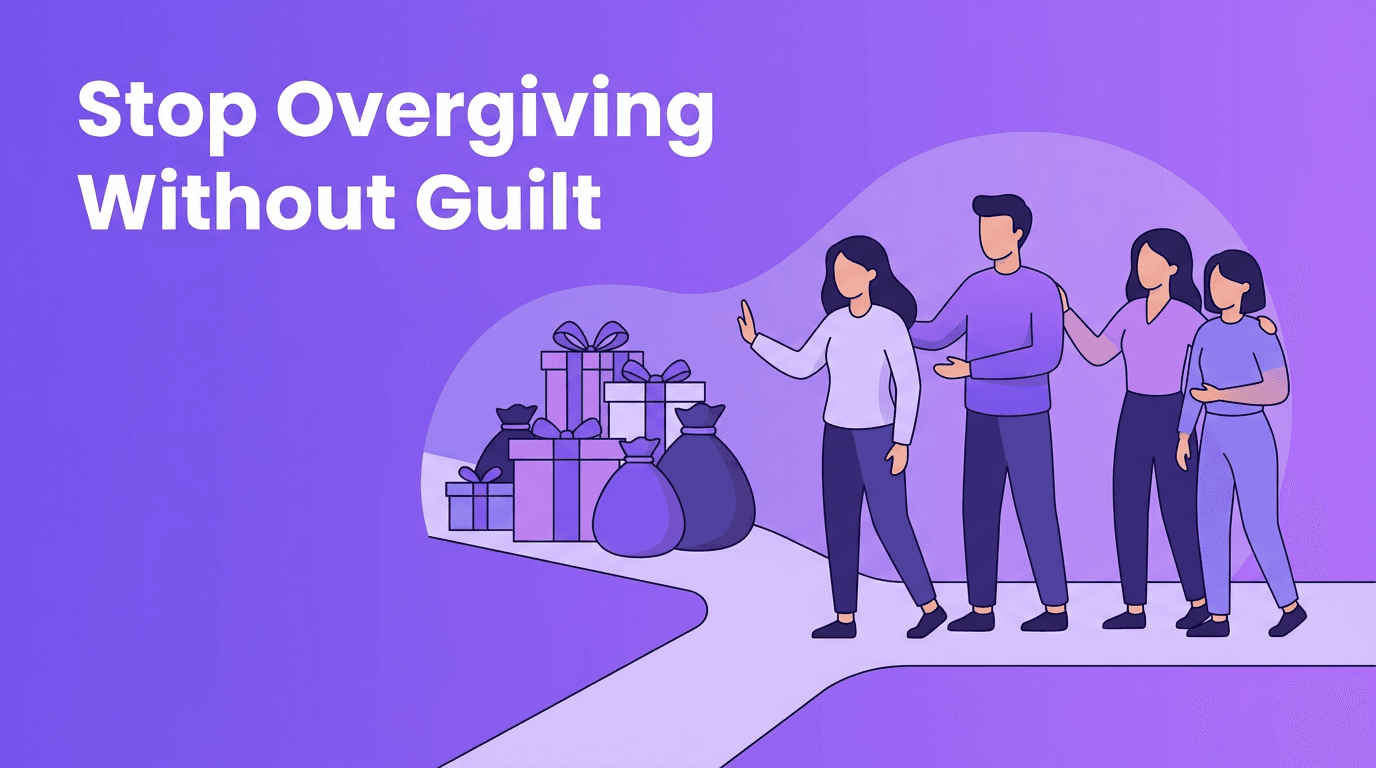
Notice what these scripts do not include: overexplaining, apologizing for existing, or inventing dramatic excuses. Short answers protect boundaries better than long defensive ones.
What to do when guilt shows up after saying no
Guilt does not always mean your boundary was wrong. Sometimes guilt is just the feeling that appears when you stop abandoning yourself. If you are used to people pleasing, guilt may simply mean you are doing something new.
Try this 3-step reset
- Name it: "I feel guilty because I changed an old pattern."
- Reality-check it: Ask, "Was I cruel, or was I clear?"
- Stay consistent: Do not rush back in with a fake yes just to soothe the discomfort.
This is where support matters. Some people use journaling. Others rehearse scripts with a trusted friend. Many people also like structured tools, such as Haply's chat-based coaching and Today Dashboard, to reflect before difficult conversations and keep new habits going with streaks and reminders.
How boundaries make healthy relationships feel safer
Strong boundaries do not push good people away. They help the right people understand how to love you well. In healthy relationships, honesty creates safety because neither person has to guess, overperform, or manage hidden resentment.
- You trust your yes because it is real.
- You trust your no because it is allowed.
- You stop treating closeness like a performance.
- You create more room for mutual respect instead of quiet obligation.
When saying no becomes a normal part of connection, your relationships often feel calmer, clearer, and more sustainable.
Frequently Asked Questions
How do I start saying no if I am a people pleaser?
Start with a pause instead of an immediate yes. Use one short script, practice it in low-stakes situations, and let consistency build confidence.
Can saying no improve healthy relationships?
Yes. Saying no honestly reduces resentment, protects boundaries, and makes your yes more meaningful, which strengthens healthy relationships over time.
Why do I feel guilty when I set boundaries?
Guilt is common when you are changing old people pleasing patterns. It does not automatically mean your boundary is wrong, it may mean you are learning a healthier way to relate.
What is the difference between boundaries and pushing people away?
Boundaries clarify what is okay and what is not, while pushing people away avoids connection altogether. Healthy boundaries support closeness with honesty and respect.