The Resentment Reset: How Saying No Protects Self-Worth in Healthy Relationships
Struggling with saying no can quietly erode self-worth and fuel people pleasing. Learn a practical reset for stronger boundaries and more healthy relationships.

By Haply Team
Haply Editorial Team
If saying no makes your stomach drop, you are not difficult, cold, or selfish. More often, it means you learned that keeping the peace felt safer than honoring your limits. But over time, avoiding no can drain self-worth, blur boundaries, and make healthy relationships feel one-sided.
This article offers a simple way to spot when guilt is driving your choices, not genuine care. If you tend toward people pleasing, the goal is not to become harsh. It is to become honest, steady, and respectful to both yourself and others.
Why saying no feels so hard
Many people were taught that being lovable means being easygoing, available, and agreeable. You may have been praised for being the helper, the calm one, or the person who never asks for much. That identity can make saying no feel like a threat to connection.
- You worry people will be disappointed and leave.
- You confuse boundaries with rejection.
- You believe your needs matter only after everyone else's are handled.
- You feel responsible for other people's emotions.
- You learned that conflict equals danger, not growth.
"A boundary is not a wall. It is a clear statement of where your responsibility ends and your self-respect begins."
The hidden cost of people pleasing in relationships
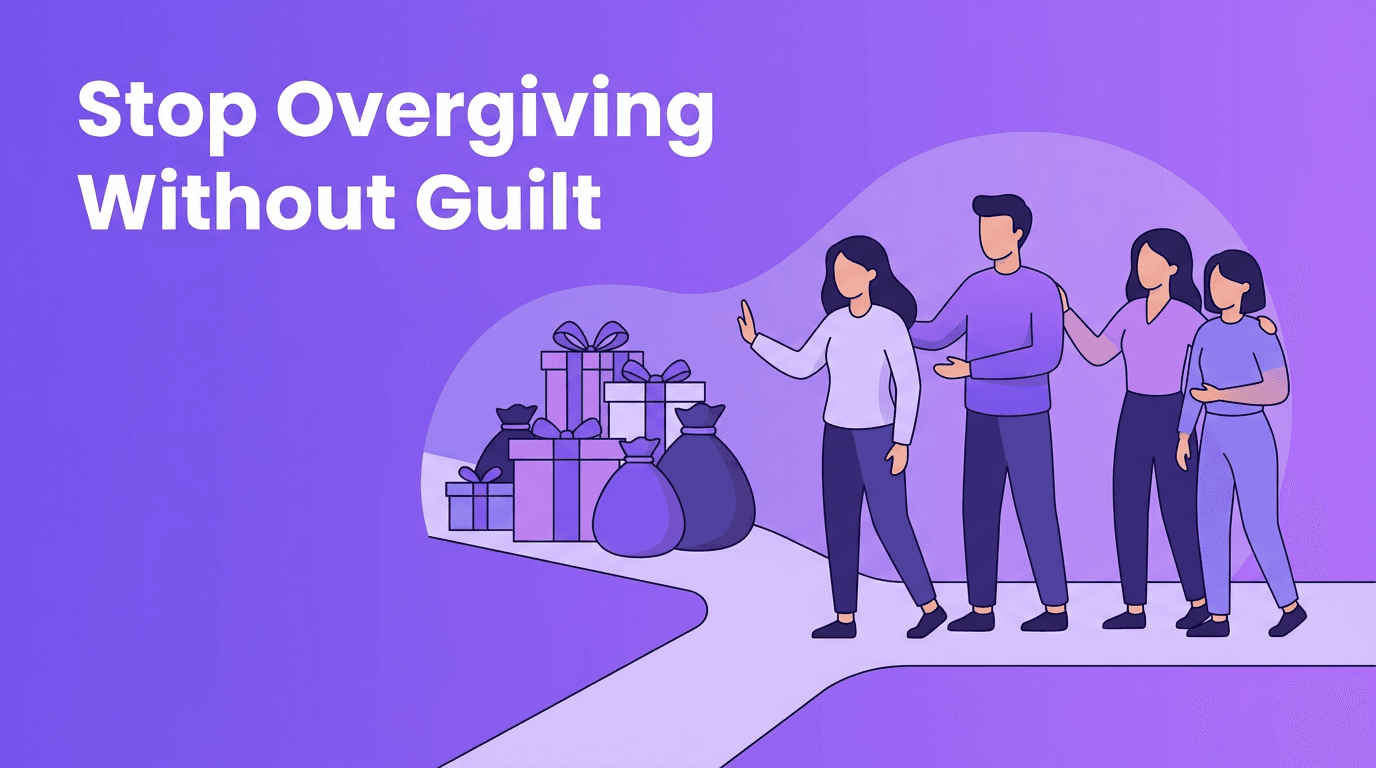
At first, over-giving can look like kindness. But if your yes is driven by fear, resentment usually follows. You may start feeling unseen, overextended, or strangely lonely even when you are constantly there for others. That is one reason people pleasing often damages healthy relationships instead of protecting them.
Common signs your yes is not a real yes
- You agree quickly, then replay the conversation and feel irritated.
- You help others while neglecting sleep, work, or emotional recovery.
- You expect people to notice your sacrifice without you naming your needs.
- You feel guilty resting unless you have earned it.
- You say, "It's fine," when it is clearly not fine.
A 4-step resentment reset for saying no
1. Pause before you answer
Buy yourself time. Try: "Let me check and get back to you." This small pause interrupts automatic compliance and gives your nervous system time to settle.
2. Check the real cost
Ask yourself, "If I say yes, what will it cost me in time, energy, money, or peace?" A request is not just about whether you can do it. It is about whether doing it supports your values and capacity.
3. Use a clean no
A clean no is brief, respectful, and not overloaded with excuses. Examples: "I can't commit to that this week." "I'm not available for that." "No, that doesn't work for me." Clear language supports self-worth because it shows you trust your own limits.
4. Let discomfort pass without fixing it
After saying no, you may feel guilt, anxiety, or the urge to over-explain. That feeling does not mean you made the wrong choice. It may simply mean you are practicing a new skill. Let the discomfort move through without turning your no into a reluctant yes.
Need help practicing boundaries in real conversations?
Haply is an AI life coaching app for iOS and Android with chat-based Relationships coaches, habit tracking, and guided tools that can help you practice saying no with more confidence.
Try Haply FreeBoundary scripts you can actually use
- For friends: "I care about you, but I can't talk late tonight. Let's check in tomorrow."
- For dating: "I'm interested, but I want to move at a pace that feels healthy for me."
- For family: "I won't stay in conversations where I'm being criticized."
- For work spillover: "I can't take that on right now without dropping something important."
- For emotional labor: "I want to support you, but I don't have the capacity for a long call today."
Notice that none of these scripts are cruel. They are clear. Healthy relationships can tolerate clarity. In fact, clarity often improves trust because people know where they stand with you.
How to rebuild self-worth after years of overexplaining
If you have spent years minimizing yourself, building self-worth may feel unfamiliar. Start small. Keep one promise to yourself each day. Leave one event when you said you would. Decline one request that drains you. Tiny acts of self-trust create a stronger inner foundation than dramatic declarations.
- Write down three situations where you regret saying yes.
- Choose one recurring request you want to answer differently.
- Practice one boundary sentence out loud until it feels natural.
- Track each successful boundary in a notes app or journal.
- Celebrate progress, even if your voice shakes.
You can also use tools that make reflection easier. In Haply, the Today Dashboard, daily reminders, and streak-based habit tracker can support consistent boundary practice. Its Relationships coaches can help you prepare for difficult conversations and reflect after them, one step at a time.
What healthy relationships do with your no
Not everyone will love your new limits. But the right people do not require endless access to feel secure. Healthy relationships make room for mutual respect, repair, and honest communication. A mature person may feel disappointed by your no, but they do not punish you for having one.
That is the deeper shift: saying no is not just about turning requests down. It is about turning toward yourself with honesty. And every time you do, you teach yourself that your needs, time, and energy are real.
Frequently Asked Questions
How do I start saying no without feeling guilty?
Start with a pause instead of an immediate answer. Then use a short, respectful response and remind yourself that guilt is a feeling, not proof you did something wrong.
Can saying no improve healthy relationships?
Yes. Clear boundaries reduce resentment, improve trust, and make your yes more genuine. Healthy relationships usually become stronger with honest communication.
Why do I feel bad when I set boundaries?
You may have learned that approval equals safety. When you set boundaries, your nervous system can mistake that change for danger even when the boundary is healthy.
How do I stop people pleasing in relationships?
Notice where fear drives your agreement, pause before answering, and practice small boundary statements consistently. Self-worth grows when your actions match your real limits.