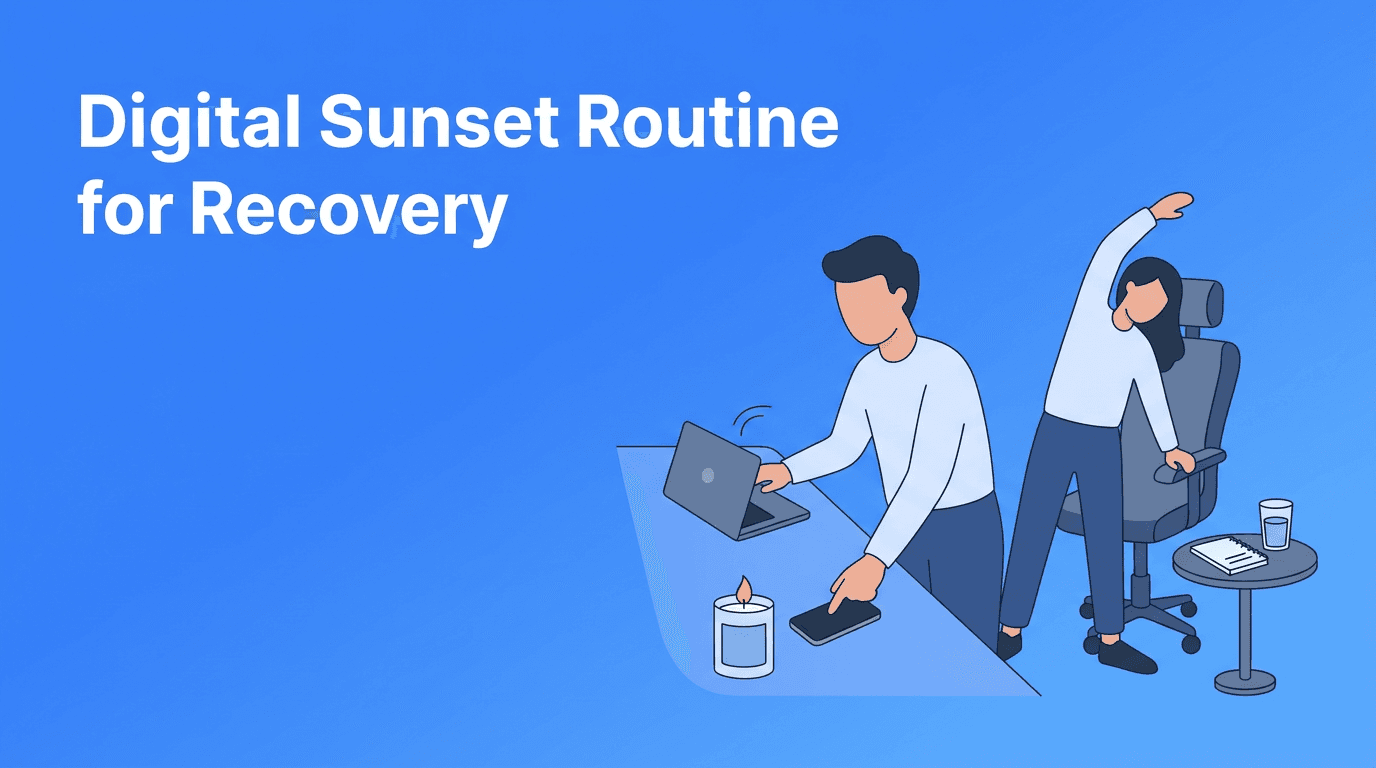
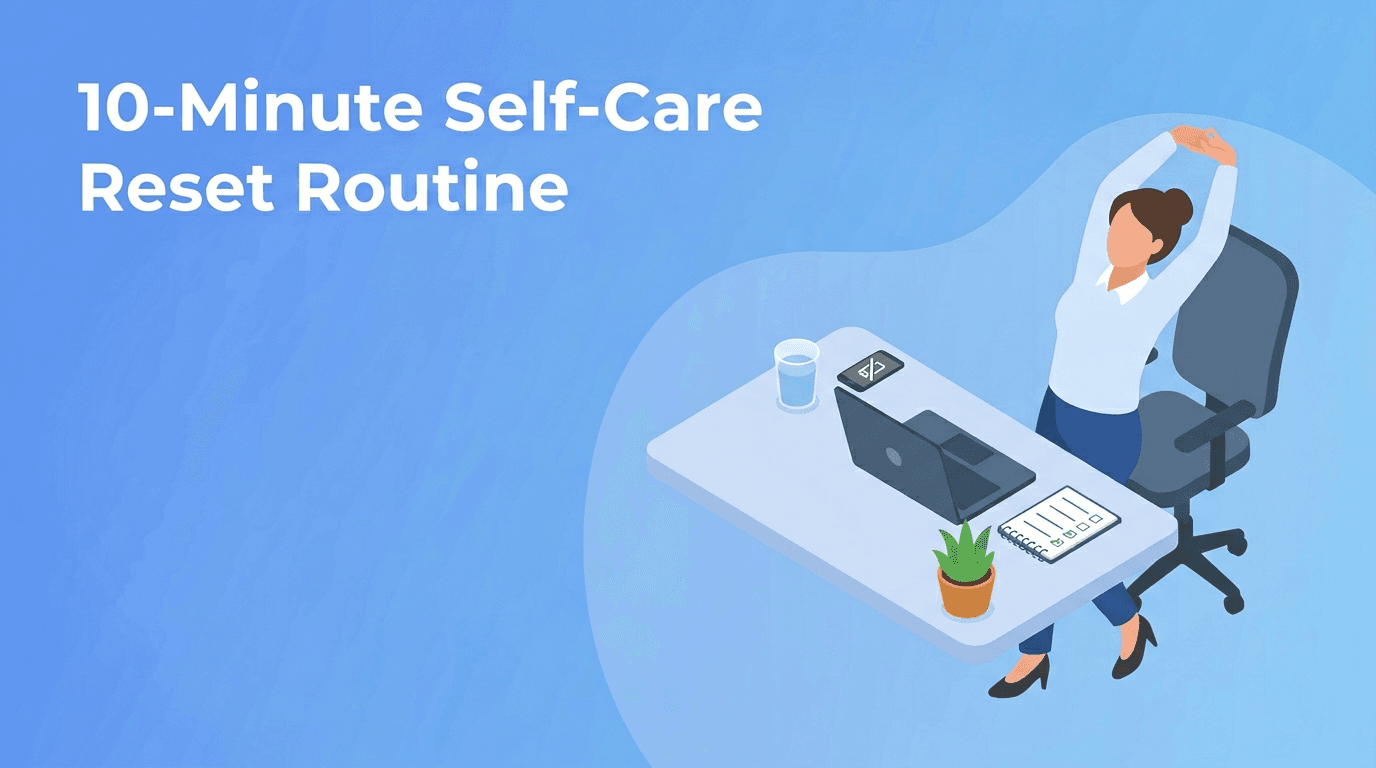
Desk Decompression: A 10-Minute Self-Care Routine for Burnout and Digital Wellbeing
This practical self-care routine helps busy professionals reduce burnout, improve digital wellbeing, and build better rest and recovery into the workday.

By Haply Team
Haply Editorial Team
A self-care routine does not have to mean hour-long baths, expensive products, or a perfect morning ritual. For busy professionals, the most useful version is often a short reset that lowers burnout, protects digital wellbeing, and creates real rest and recovery during a packed day.
Why burnout often builds at your desk
Many people think burnout comes only from long hours. In reality, it often grows through tiny patterns that repeat all day: back-to-back meetings, constant notifications, skipped water breaks, shallow breathing, and never fully stepping away from a screen. When this becomes normal, your body stays in low-level stress mode.
- You keep working through lunch and call it efficiency
- You switch between tabs all day and feel mentally scattered
- You confuse scrolling with rest
- You end the workday tired but oddly restless
- You want a wellness routine, but it feels too big to start
"Recovery is not a reward for finishing everything. It is what helps you keep going without losing yourself."
The 10-minute self-care routine
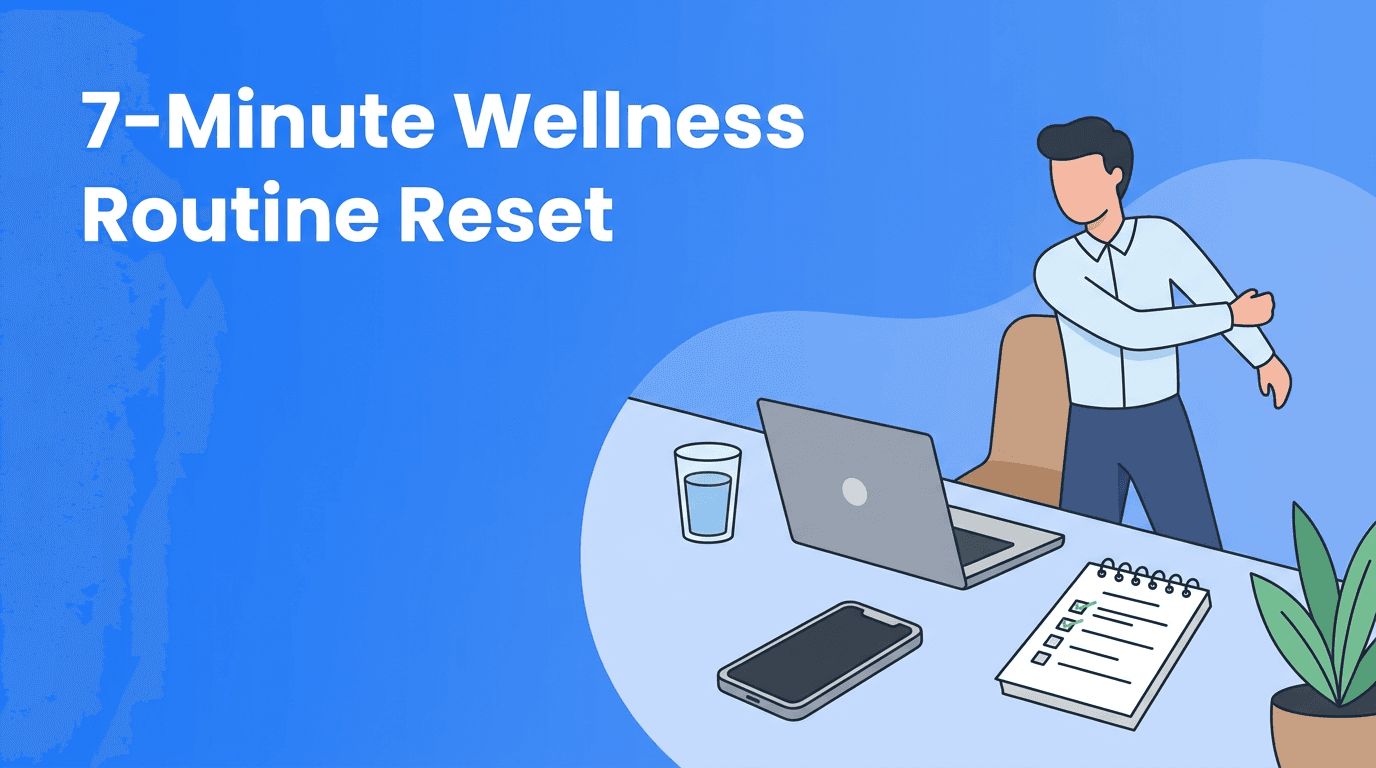
This self-care routine is designed for the middle of a real workday. No outfit change, no equipment, and no ideal schedule required. The goal is simple: interrupt stress before it stacks up.
Minute 1-2: Create a digital wellbeing boundary
Put your phone on silent, close nonessential tabs, and turn your screen brightness down slightly. This small digital wellbeing move reduces incoming stimulation and gives your attention somewhere to land.
Minute 3-4: Reset your body
- Stand up and roll your shoulders slowly 5 times
- Unclench your jaw
- Take 5 slow breaths, with a longer exhale than inhale
- Stretch your chest or walk to the other side of the room
Minute 5-6: Add water and light nourishment
Drink a glass of water. If you have not eaten in hours, choose a simple snack with protein or fiber. Basic physical support is a core part of recovery, even if it seems less exciting than productivity hacks.
Minute 7-8: Do a mental unload
Write down three things: what is draining you, what actually matters next, and what can wait until later. This protects your energy and helps your wellness routine stay grounded in reality instead of guilt.
Minute 9-10: Choose one gentler next step
Instead of jumping back into five tasks, pick one clear action that moves your day forward. A good reset ends with focus, not pressure. That is how a self-care routine supports performance rather than competing with it.
How this supports rest and recovery
Short resets matter because your nervous system responds to repeated cues. When you pause, breathe, hydrate, and reduce stimulation, you teach your body that it can come out of constant alert mode. Over time, these moments improve rest, support recovery, and make stress feel more manageable.
- Better attention after screen-heavy work
- Less afternoon irritability
- More awareness of stress signals before they spike
- A healthier relationship with breaks
- A realistic path to preventing burnout
Make your wellness routine easier to keep
Consistency gets easier when the routine is visible and simple. Tie your reset to an existing cue, like after a meeting, before lunch, or at 3 p.m. You can also use Haply, an AI life coaching app on iOS and Android, to build a personalized wellness routine with reminders, streaks, and tools like Focus Timer, Meditation/Breathe, and the Today Dashboard. It can support healthy habits and reflection, but it is not a replacement for professional care.
Need help turning breaks into a habit?
Use Haply's Wellness coaching and mini-apps to build a realistic self-care routine that fits your schedule, supports digital wellbeing, and reduces burnout one small step at a time.
Try Haply FreeCommon mistakes that make self-care feel useless
- Waiting until you are exhausted to take a break
- Using your phone as your only form of rest
- Creating a routine that takes too long for weekdays
- Treating recovery like something you earn after overworking
- Copying someone else's self-care routine instead of building your own
A useful routine should feel repeatable on your busiest day, not just your best day. Small actions done consistently usually beat ideal plans that never happen.
Frequently Asked Questions
What is a good self-care routine for busy professionals?
A good self-care routine is short, repeatable, and easy to do during a workday. Focus on hydration, movement, breathing, and a brief mental reset.
How can I reduce burnout without taking a full day off?
Use small recovery breaks throughout the day, reduce notification overload, and set clearer work boundaries. Short pauses can help lower stress before burnout builds.
What are the best digital wellbeing habits for work?
Silence nonessential notifications, batch email checks, close extra tabs, and take screen breaks every few hours. These habits reduce mental overload and protect focus.
Does rest help with productivity?
Yes. Rest supports attention, decision-making, and emotional regulation. Short breaks can improve output by helping your brain recover between demands.