Self Distancing for Personal Development: A Practical Way to Build Self-Belief Under Pressure
Self distancing can strengthen personal development by helping you respond to stress with more clarity, self-belief, and behavior change. Learn how to use it in your daily routine.

By Haply Team
Haply Editorial Team
When emotions run high, self distancing can be one of the most useful tools in personal development. Instead of reacting from panic, shame, or self-doubt, you learn to step back and coach yourself with more clarity. For young professionals and students, this small mindset shift can improve self-belief, support behavior change, and make your daily routine feel more intentional.
What is self distancing?
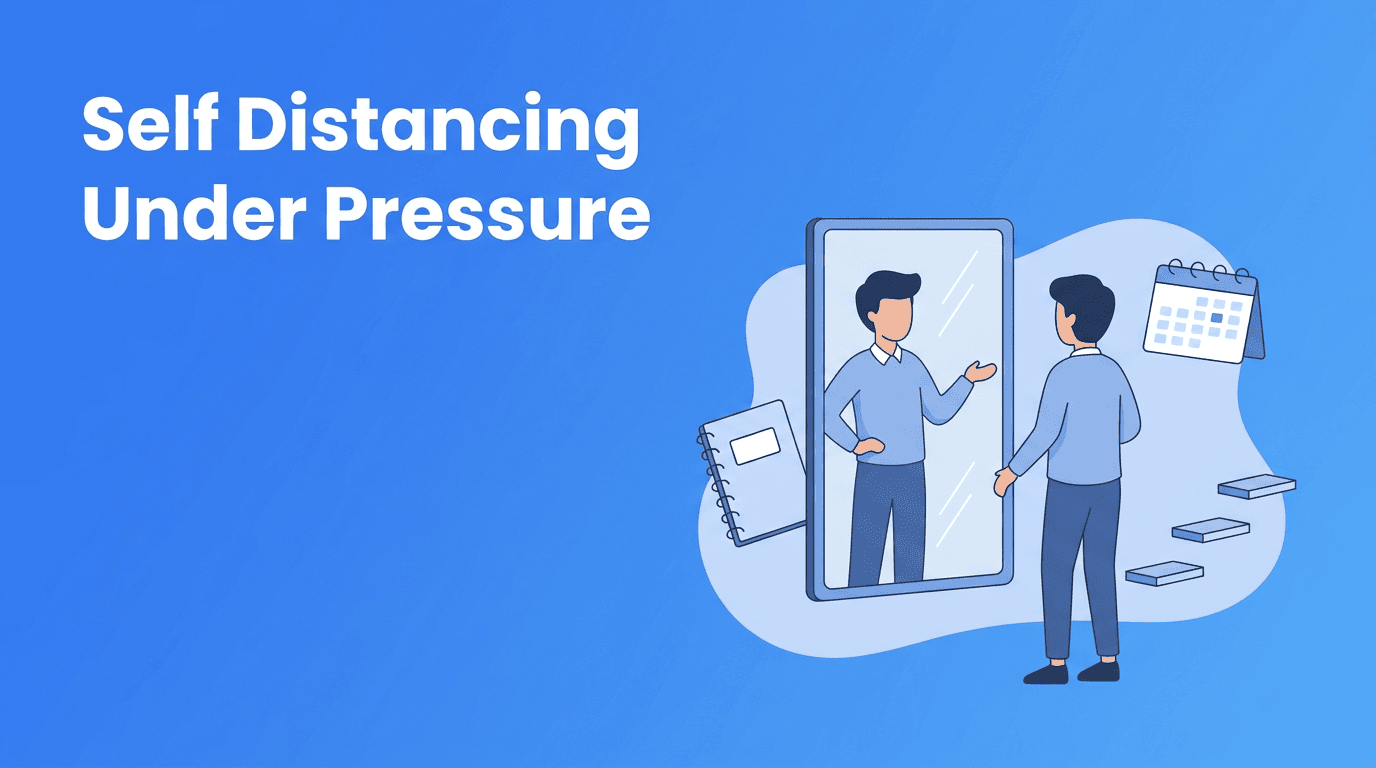
Self distancing is the practice of looking at your situation from a slight mental distance. You might ask, "What would I tell a friend right now?" or use your own name instead of "I" when reflecting. This creates enough space to think clearly without ignoring your feelings.
It is not about suppressing emotion. It is about reducing emotional overwhelm so you can respond with a growth mindset. You still feel the pressure, but you stop letting the pressure make every decision for you.
"You do not have to believe every thought you think. Sometimes growth starts when you step back and observe."
Why self distancing works for behavior change
Most people fail at behavior change not because they are lazy, but because they get trapped in the emotion of the moment. A missed workout becomes "I always quit." A hard conversation becomes "I am terrible with people." A setback at work becomes "I am not good enough."
With self distancing, you interrupt that spiral. You move from identity attacks to practical problem solving. That is powerful for personal development, because lasting change usually starts with better interpretation, not just better effort.
- It lowers emotional intensity so you can think before reacting.
- It strengthens self-belief by replacing harsh self-talk with useful guidance.
- It supports a growth mindset by turning mistakes into feedback.
- It improves your daily routine because small decisions become less dramatic and more consistent.
A simple example
Imagine you failed an exam or missed a deadline. A close-up reaction says, "I am a mess." A self-distanced response says, "Alex is overwhelmed right now. What would help Alex recover in the next 30 minutes?" That question creates movement. And movement is often the beginning of confidence.
How to use self distancing in your daily routine
The best time to practice self distancing is not only during a crisis. Add it to your daily routine in small ways so it becomes natural when pressure rises.
- Morning check-in: Ask, "What does my best self need to focus on today?"
- Stress pause: When upset, write 3 sentences about the situation using your name instead of "I".
- Evening reset: Reflect with, "What did I learn today, and what is the next small step?"
- Before important moments: Ask, "How would a calm, capable coach advise me right now?"
Want guided support for personal growth?
Haply is an AI life coaching app for iOS and Android that helps you build a better daily routine, strengthen self-belief, and stay consistent with goals through personalized coaching, habit tracking, and practical mini-tools.
Try Haply FreeIf you want structure, Haply can make this easier. Its chat-based coaching, Today Dashboard, habit tracker, and tools like Focus Timer and Task Planner can help you turn reflection into real action. That matters because personal development works best when insight meets consistency.
Common mistakes that weaken self-belief
Even a helpful tool can lose power if you use it the wrong way. Here are common mistakes to avoid:
- Using distance as avoidance. The goal is clarity, not emotional shutdown.
- Overanalyzing every feeling. Reflection should lead to action, not endless looping.
- Expecting instant confidence. Self-belief grows through repeated evidence.
- Making the next step too big. Small wins are what make behavior change stick.
Try the 5-minute reset
When your mind feels noisy, take five minutes. Name what happened. Describe it from a distance. Choose one useful action. Then do it immediately. This tiny reset trains your brain to trust that you can handle discomfort without collapsing into it.
The deeper personal development shift
The real power of self distancing is that it changes your relationship with yourself. You stop acting like your inner critic is the truth. You start becoming your own coach. Over time, that supports self-belief in a realistic way, not because life gets easier, but because you become steadier inside it.
That is also where a growth mindset becomes real. You no longer ask, "Why am I like this?" You ask, "What skill can I build next?" That question opens the door to change.
Frequently Asked Questions
What is self distancing in psychology?
Self distancing is a mental technique that helps you step back from intense emotions and reflect more objectively. It can improve decision-making, emotional regulation, and self-talk.
How can self distancing improve self-belief?
Self distancing reduces harsh inner criticism and helps you respond with more balanced, supportive thinking. Over time, this builds trust in your ability to handle challenges.
Can self distancing help with behavior change?
Yes. It helps you pause, think clearly, and choose actions that align with your goals instead of reacting emotionally. That makes healthy habits easier to repeat.
How do I practice self distancing every day?
Use it during journaling, stressful moments, and evening reflection. Speaking to yourself like a coach or using your name in self-talk are simple daily methods.