Self Distancing for Self-Improvement: A Smarter Way to Build Resilience
Self distancing is a practical self-improvement skill that strengthens resilience, sharpens emotional intelligence, and helps you change habits with more clarity.

By Haply Team
Haply Editorial Team
Self distancing is one of the most underrated tools in self-improvement. Instead of getting trapped inside a stressful thought, you learn to step back and view your situation with more clarity. That small mental shift can improve personal growth, strengthen resilience, support better habits, and deepen emotional intelligence.
Most people assume growth comes from pushing harder, being stricter, or trying to "fix" themselves. But often, the real breakthrough happens when you create a little space between yourself and your emotions. From that space, you can respond wisely instead of reacting automatically.
What self distancing actually means
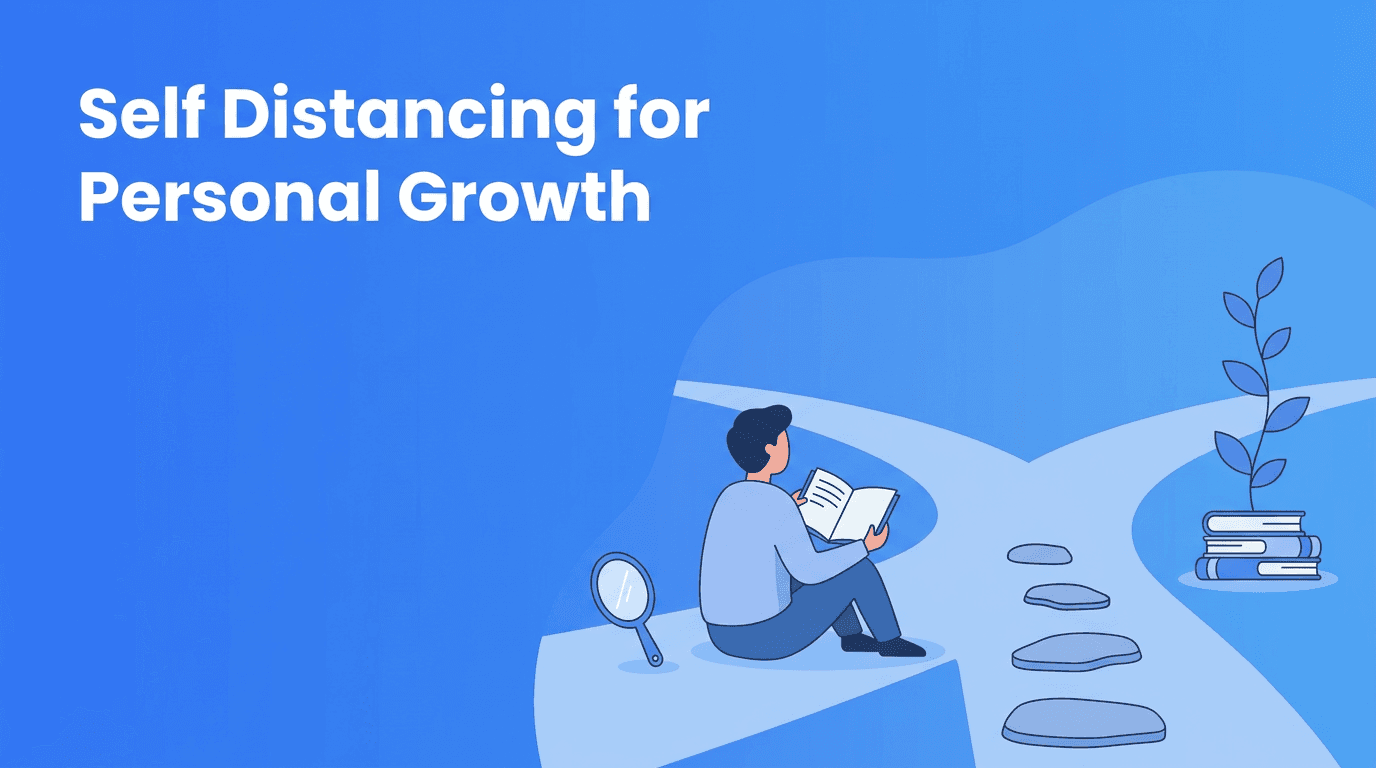
Self distancing is the practice of observing your thoughts, feelings, and challenges from a slight psychological distance. You are not ignoring your emotions. You are not pretending not to care. You are simply shifting from "I am this problem" to "I am noticing this problem."
- Instead of saying, "Why am I such a failure?" you might ask, "What is happening here, and what would help right now?"
- Instead of replaying embarrassment, you examine the event like a coach reviewing a game.
- Instead of reacting from panic, you slow down enough to choose your next move.
"You do not have to believe every thought you think."
Why self distancing helps personal growth
Many self-help strategies fail because they only target behavior. But behavior is often driven by the story you tell yourself in hard moments. Self distancing interrupts that story. It helps you notice patterns before they become impulsive decisions.
This matters for personal growth because lasting change usually requires three things: awareness, emotional regulation, and repetition. When you can step back from a difficult moment, you make all three easier.
- Awareness: You spot triggers earlier.
- Resilience: You recover faster after setbacks.
- Emotional intelligence: You name what you feel without being ruled by it.
- Habits: You reduce all-or-nothing reactions that break routines.
It is especially useful during setbacks
If you miss a workout, freeze before a difficult conversation, or lose focus on an important goal, self distancing helps prevent one mistake from becoming a spiral. This is a key part of resilience. You stop turning a momentary slip into a personal identity.
A simple 3-step self distancing method
You do not need a long meditation session to use this. Try this quick method when emotions run high.
- Step 1: Name the moment. Say, "This is a stressful moment," or "I am noticing frustration." Labeling reduces emotional intensity and supports emotional intelligence.
- Step 2: Shift perspective. Ask, "What would I tell a friend in this exact situation?" This creates instant distance and often reveals a kinder, more useful response.
- Step 3: Choose the next smallest action. Focus on one concrete move, like sending the email, taking a five-minute walk, or restarting your routine at the next opportunity.
Build better habits with guided support
Haply is an AI life coaching app for iOS and Android that helps you turn insights into action. Use chat-based coaching, habit tracking, daily reminders, and mini-apps like Focus Timer and Meditation to stay consistent.
Try Haply FreeHow self distancing improves habits
People often think broken habits come from laziness. In reality, habits are frequently disrupted by shame, frustration, or perfectionism. Self distancing helps you relate to those emotions differently, so you can restart faster.
- After missing one day, you avoid the "I already failed" mindset.
- After criticism, you return to the process instead of quitting.
- After a bad mood, you make one good choice instead of waiting to feel perfect.
Use it with habit tracking
A habit tracker works best when it is not used as a judgment tool. In Haply, you can track streaks, set reminders, and check your Today Dashboard without turning every missed day into a crisis. That makes consistency feel more supportive and realistic.
Self distancing and emotional intelligence
There is a strong link between self distancing and emotional intelligence. When you can observe your feelings instead of instantly acting on them, you become better at recognizing emotional patterns, understanding what triggered them, and responding more skillfully.
This also improves relationships. You are more likely to pause before sending a defensive text, interrupting someone, or assuming the worst. In other words, self distancing is not cold detachment. It is thoughtful engagement.
Daily practices to make it easier
- Journal in the third person once or twice a week. Write your name instead of "I" to gain perspective.
- Use a short pause phrase like, "Let me step back for a second."
- Review difficult moments at the end of the day and ask, "What was I feeling, what story did I tell, and what would a wiser response look like?"
- Practice with small frustrations first, like delays, distractions, or minor mistakes.
- Use guided support tools to stay consistent. Haply's goal-based coaching and mini-apps can help you build this skill across productivity, wellness, and relationships.
The real goal is not distance, it is wiser action
The purpose of self distancing is not to become less human. It is to become less trapped. In the middle of stress, fear, or self-doubt, a little perspective can protect your energy, improve decisions, and keep your self-improvement process moving.
If you want more personal growth, do not only ask how to become more disciplined. Ask how to become more observant, more flexible, and more compassionate in hard moments. That is often where real change begins.
Frequently Asked Questions
What is self distancing in psychology?
Self distancing is a mental technique where you observe your thoughts and emotions from a step back. It helps reduce emotional overwhelm and improves decision making.
How does self distancing help self-improvement?
Self distancing helps self-improvement by reducing impulsive reactions, improving emotional regulation, and making it easier to restart habits after setbacks.
Can self distancing improve resilience?
Yes. Self distancing supports resilience by helping you recover from mistakes without turning them into identity-based judgments.
Is self distancing the same as avoiding emotions?
No. Avoidance pushes emotions away, while self distancing helps you notice them clearly without getting consumed by them.