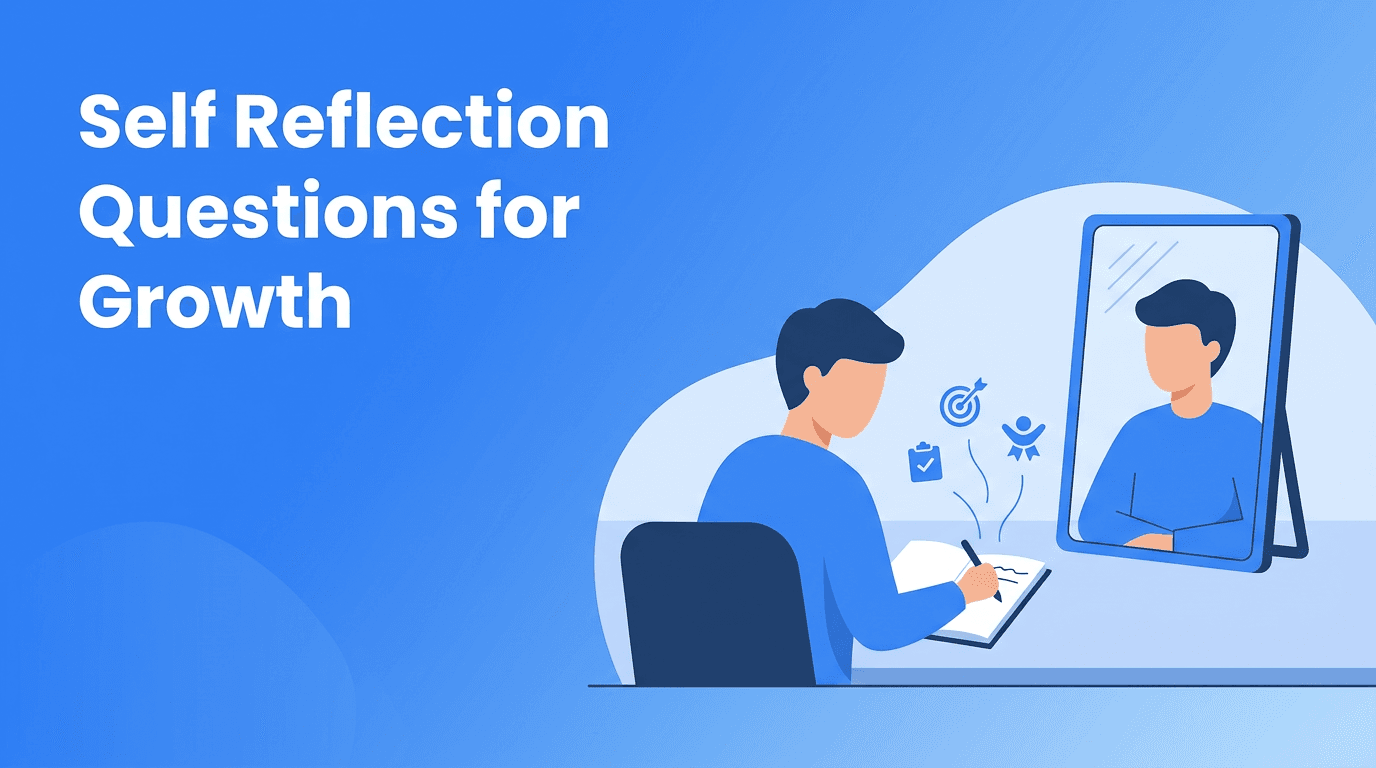
Self Reflection Questions for Personal Growth: A Weekly Reset That Builds Clarity
Use self reflection questions to turn self-improvement into a weekly reset. Build clarity, stronger habits, resilience, and emotional intelligence with a simple practice.

By Haply Team
Haply Editorial Team
Most people treat self-improvement like a motivation problem, when it is often a reflection problem. The right self reflection questions can help you notice what is working, what is draining you, and what needs to change before another week slips by on autopilot.
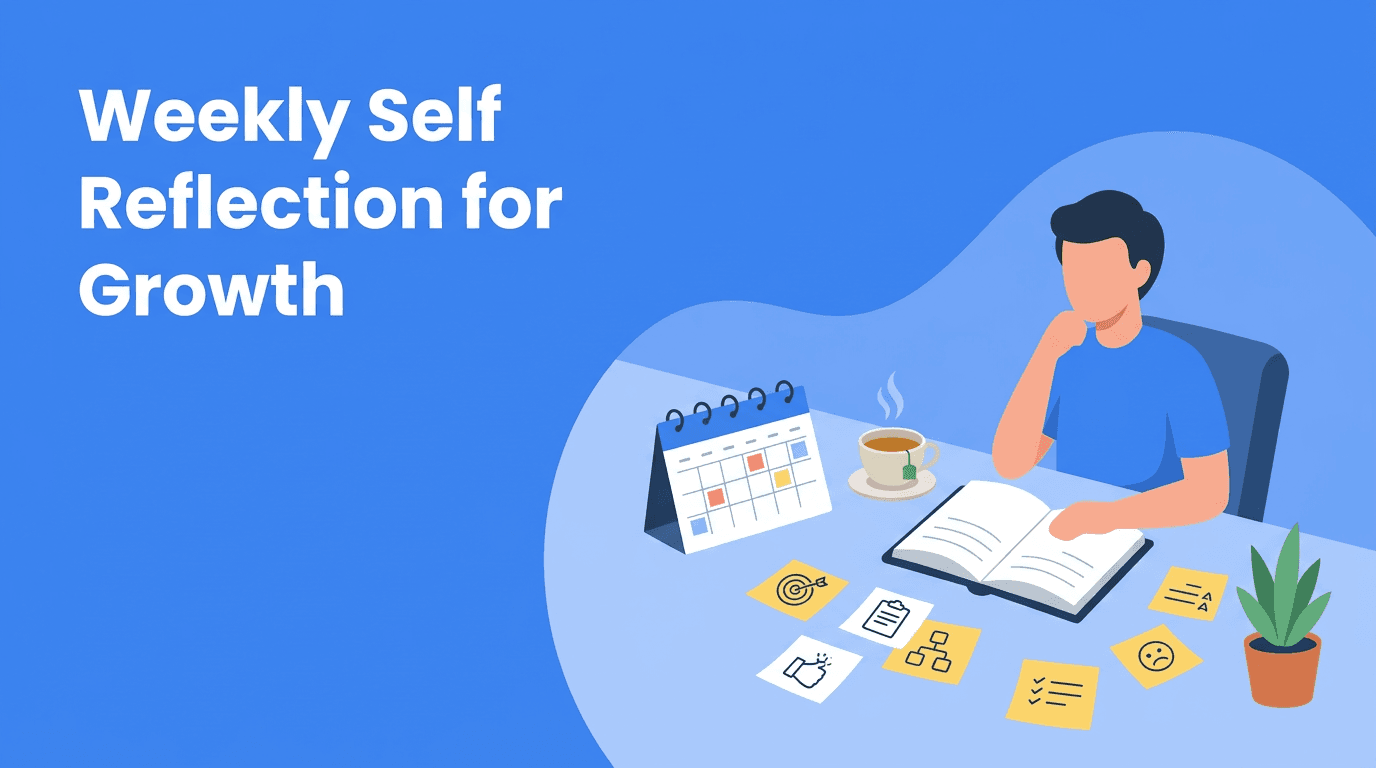
A weekly reflection practice is one of the simplest tools for personal growth because it connects your intentions to your actual behavior. Instead of guessing why your habits keep breaking or why your energy feels off, you learn to observe patterns with honesty and without drama.
Why self reflection questions work so well
Reflection creates a pause between experience and reaction. That pause strengthens emotional intelligence, because you get better at naming what you felt, understanding why it happened, and choosing a smarter response next time.
- Reflection turns vague stress into specific insight. You stop saying 'I had a bad week' and start seeing the real cause.
- Reflection supports resilience by helping you recover lessons from setbacks instead of only replaying mistakes.
- Reflection improves habits because you can track what helped consistency and what triggered avoidance.
- Reflection keeps self-improvement grounded in real life, not fantasy plans.
A 15-minute weekly reset for personal growth
You do not need a long journaling session. Set aside 15 minutes at the end of the week. Open a notebook or notes app and answer a short set of self reflection questions in the same order each time. This makes the practice easy to repeat and easier to compare from week to week.
Step 1: Review the facts first
- What did I actually do this week, not what I planned to do?
- Which moments gave me energy?
- Which situations drained me or made me avoid important work?
- What habits did I keep, even in a small way?
Step 2: Review your emotions
This is where emotional intelligence grows. Instead of labeling the whole week as good or bad, get more precise.
- When did I feel confident, calm, frustrated, or insecure?
- What triggered those emotions?
- How did my emotions affect my choices, communication, or focus?
- What feeling did I ignore that needed attention?
Step 3: Review your response to difficulty
This step builds resilience. Every hard week contains data. The goal is not to judge yourself. The goal is to learn how you respond under pressure.
- What challenge tested me this week?
- How did I respond at first?
- What helped me recover faster?
- What would a more resilient response look like next time?
Step 4: Choose one adjustment
The biggest mistake in self-improvement is trying to fix everything at once. End your reflection by choosing one small adjustment for the next week.
- Make one habit easier to start.
- Reduce one source of friction.
- Prepare for one predictable challenge.
- Ask for one kind of support you usually avoid.
"You do not grow by repeating your week. You grow by understanding it."
The best self reflection questions to reuse every week
If you want a repeatable framework, save these self reflection questions and answer them every Sunday or at the end of your workweek.
- What am I proud of this week?
- What felt harder than it needed to be?
- Which habit helped me most?
- What pattern keeps showing up in my behavior?
- What emotion influenced me the most this week?
- Where did I show resilience?
- What did I avoid, and why?
- What matters most next week?
How Haply can support your weekly reflection
If you want structure without overcomplicating the process, Haply can help. Haply is an AI life coaching app on iOS and Android that supports personal growth through chat-based coaching, habit tracking, daily reminders, and a Today Dashboard that helps you review your priorities and progress.
You can use Haply to check in with an AI coach about your week, spot patterns in your habits, and turn reflection into a concrete plan. Features like the Task Planner, Meditation and Breathe tools, and streak tracking can make your weekly reset more consistent and more actionable.
Turn reflection into real progress
Use Haply to review your week, strengthen habits, and build a personalized self-improvement routine with AI coaching.
Try Haply FreeCommon mistakes that make reflection less useful
- Being too vague. Specific examples create better insight than broad statements.
- Turning reflection into self-criticism. Honest review works better than shame.
- Changing too many things at once. One clear adjustment beats five ambitious ones.
- Skipping emotional patterns. Growth is easier when you understand feelings, not just actions.
- Reflecting without planning. Insight matters most when it leads to one next step.
Make self reflection a habit that lasts
The power of reflection comes from repetition. A single thoughtful session can help, but a weekly rhythm creates lasting change. Over time, self reflection questions improve your awareness, strengthen resilience, sharpen emotional intelligence, and make self-improvement feel less random and more intentional.
You do not need perfect discipline to grow. You need a simple way to learn from your own life, one week at a time.
Frequently Asked Questions
What are the best self reflection questions for personal growth?
The best self reflection questions help you review actions, emotions, setbacks, and next steps. Focus on what worked, what felt difficult, what you learned, and what you will adjust next week.
How often should I use self reflection questions?
A weekly practice works well for most people because it is frequent enough to spot patterns without feeling overwhelming. A 10 to 15 minute check-in is often enough.
Can self reflection improve emotional intelligence?
Yes. Reflection helps you identify emotions more clearly, understand triggers, and respond more intentionally in future situations.
How do self reflection questions help with resilience?
They help you learn from setbacks instead of only judging them. This makes it easier to recover, adapt, and respond better the next time you face stress.
What app can help me stay consistent with self reflection?
An app like Haply can support consistency with AI coaching, reminders, habit tracking, and tools that help turn insight into action.