Social Battery Recovery: A Gentle Reset Plan for Introverts After Networking
Social battery recovery can help an introvert bounce back after networking, public speaking, or high-stimulation social skills practice without guilt.

By Haply Team
Haply Editorial Team
Social battery recovery is a skill most people never learn, yet it can make a huge difference if you are an introvert, live with social anxiety, or feel wiped out after networking, deep conversation, or public speaking. Instead of seeing exhaustion as a personal flaw, you can treat it as a signal. With the right reset plan, you can protect your energy, build stronger social skills, and return to connection with more ease.
Why social confidence often falls apart after the event
A lot of advice focuses on how to act during a conversation. Much less attention goes to what happens after. You replay what you said, wonder if you sounded awkward, and feel tempted to avoid people for days. That pattern can quietly damage your confidence more than the event itself. Social battery recovery helps interrupt that spiral.
- High stimulation drains attention, especially in loud rooms, group settings, and fast conversations.
- Social anxiety can keep your body in alert mode long after the interaction ends.
- Trying to build rapport while monitoring yourself at the same time creates mental overload.
- For an introvert, even positive experiences can still require recovery time.
"Rest is not proof that you failed socially. Rest is how you stay available for real connection."
A 4-step social battery recovery routine
1. Close the loop with facts, not fear
Right after a social event, write down three neutral facts about what happened. Example: "I introduced myself to two people," "I asked one follow-up question," or "I stayed for 45 minutes." Facts calm the brain better than self-criticism. This is especially useful after networking or public speaking, when your mind may exaggerate mistakes.
2. Reduce stimulation on purpose
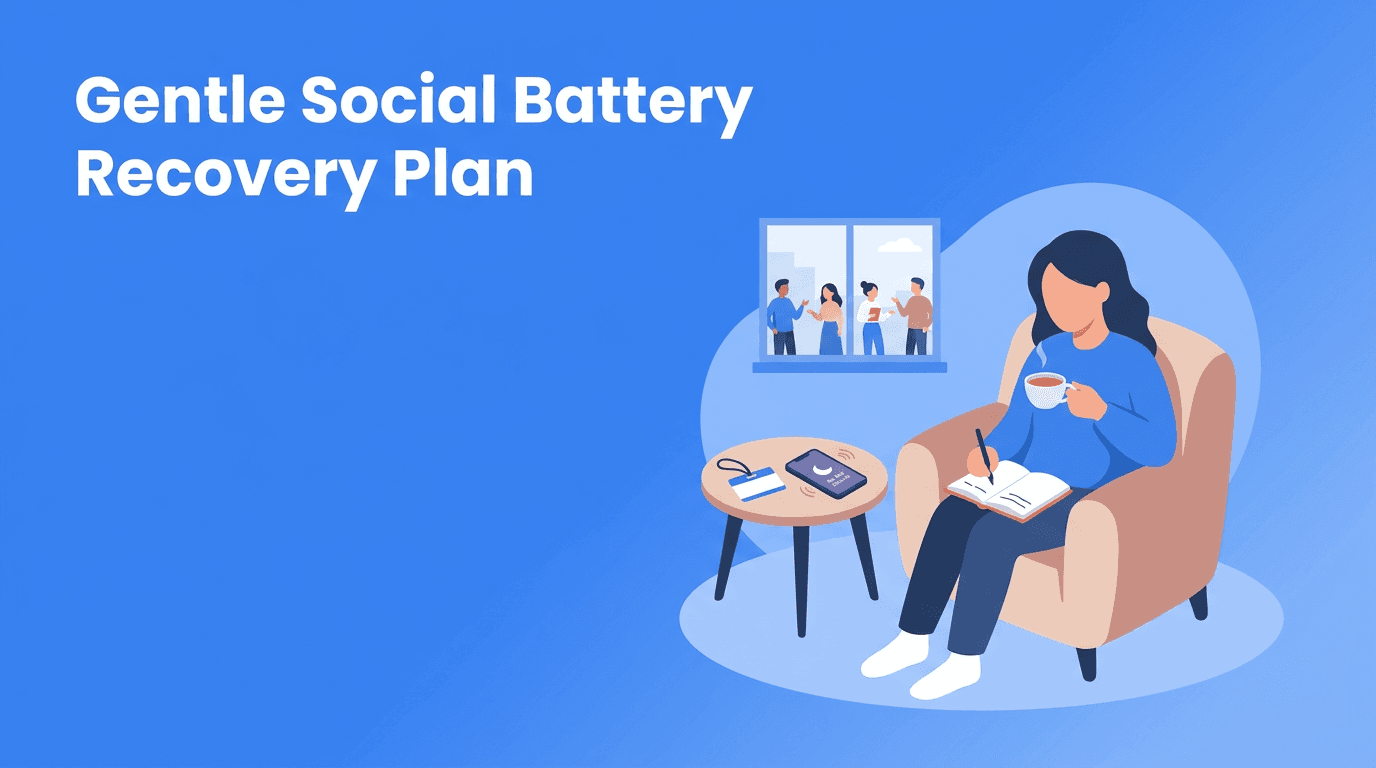
Choose one low-input activity for 10 to 20 minutes: sit in silence, take a short walk, stretch, shower, or make tea. Avoid doom-scrolling or rereading every message. Effective social battery recovery is not just stopping, it is choosing input that actually soothes your nervous system.
3. Replace performance review with rapport review
If you tend to judge yourself harshly, ask: "Where did I create a small moment of connection?" Maybe you smiled, remembered a name, or listened well. Rapport is rarely built through perfect lines. It grows through safety, warmth, and attention. This mindset improves social skills without turning every interaction into a test.
4. Plan the next tiny exposure
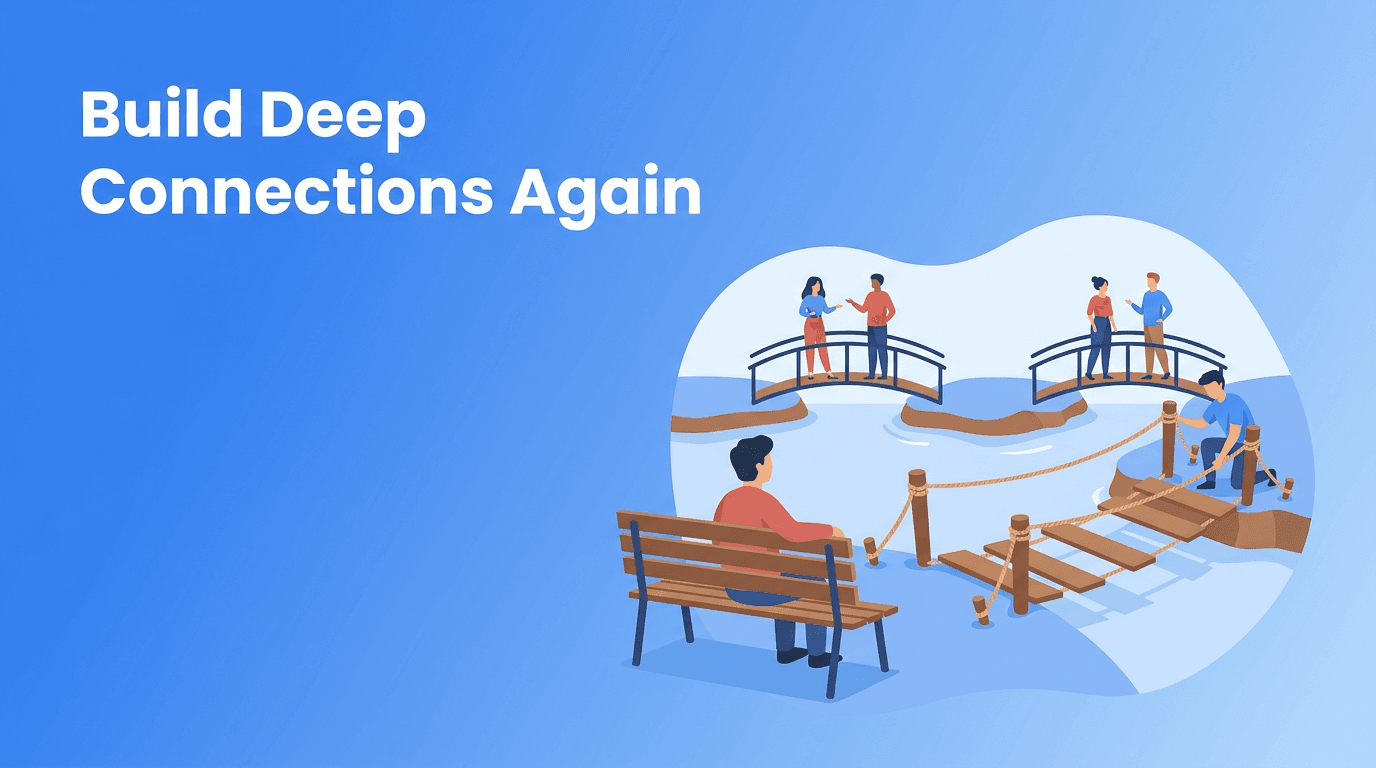
Confidence grows faster when recovery ends with a small next step. Send one follow-up message. Practice one introduction line. Attend one shorter event next time. Good social battery recovery does not mean disappearing forever. It means re-entering social life in a manageable way.
What to do after networking, public speaking, or a draining meetup
- After networking, send one simple follow-up within 24 hours, then stop revisiting the event.
- After public speaking, note one thing that worked before asking what to improve.
- After a group hangout, spend time alone without apologizing for it.
- If social anxiety spikes, do one grounding exercise before analyzing the conversation.
- Keep your next social commitment lighter if you know your energy is low.
Want support that fits your energy?
Haply is an AI life coaching app for iOS and Android that helps you rebuild confidence gently. You can chat with personalized coaches, use the Today Dashboard, track habits, and practice calmer social routines with support that adapts to your goals.
Try Haply FreeHow introverts can build social skills without burning out
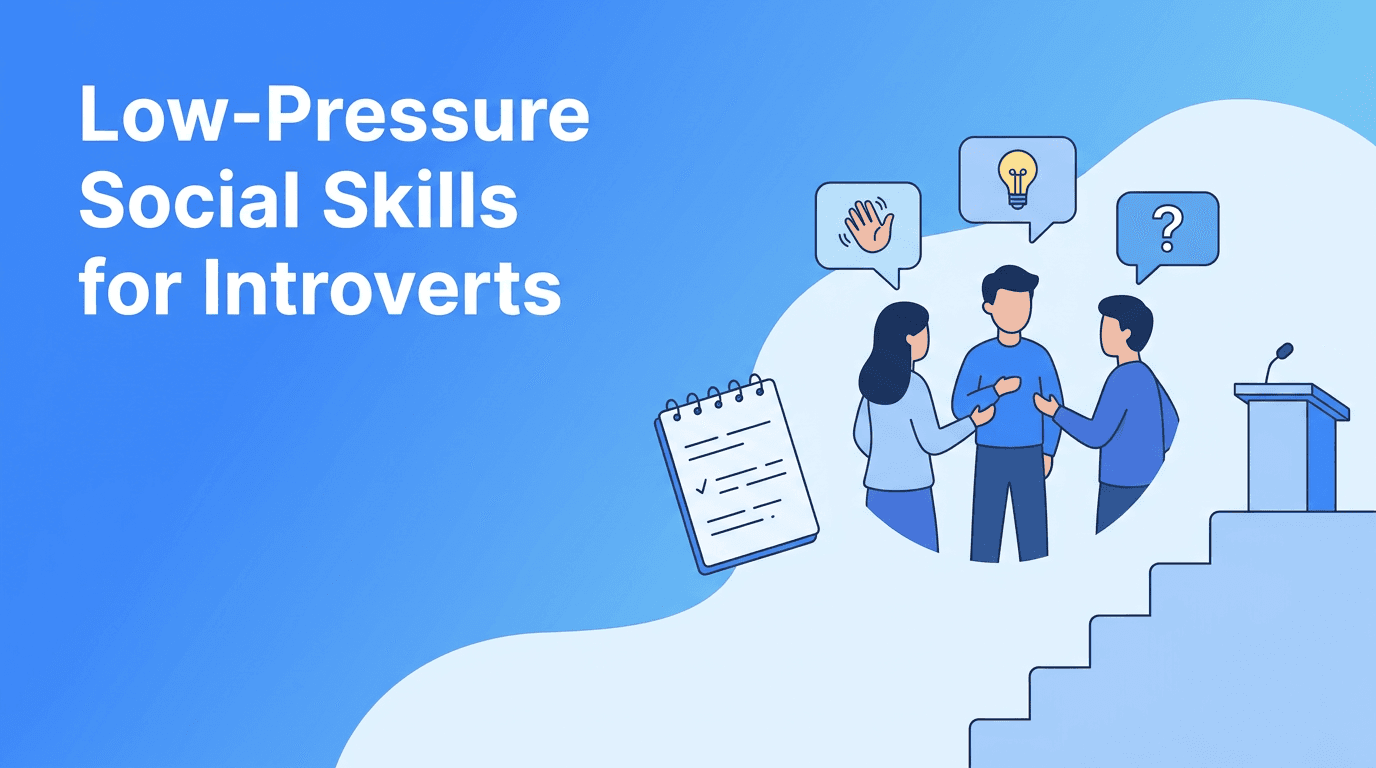
You do not need to become louder to become more connected. Many introvert strengths already support good relationships: listening well, noticing detail, asking thoughtful questions, and creating depth. The goal is not nonstop sociability. The goal is a sustainable rhythm between effort and recovery.
- Use social skills goals that are measurable and small, like asking two questions instead of "being charismatic."
- Choose lower-pressure settings to practice rapport, such as one-on-one chats or brief coffee meetings.
- Treat recovery time as part of the plan, not as evidence you did something wrong.
- If networking feels fake, focus on curiosity and shared interests instead of impressing people.
A simple weekly reset for social anxiety and energy management
At the end of each week, review three things: what drained you, what helped you recover, and which interactions felt most genuine. This creates a personal map. Over time, you will notice patterns around social anxiety, event length, group size, and the kinds of conversations where you naturally build rapport.
If you want structure, Haply can help you turn that map into action. Its chat-based coaching, habit tracker with streaks, reminders, and mini-apps like Meditation/Breathe and Task Planner can support a realistic confidence plan, especially if relationship goals feel easier with guided prompts.
Frequently Asked Questions
How do I recover my social battery after networking?
Start with quiet time, reduce stimulation, and write down a few neutral facts about what went well. Then send one follow-up message and let the event be finished.
Can introverts improve social skills without becoming extroverted?
Yes. Introverts can build strong social skills by focusing on listening, thoughtful questions, and steady practice in lower-pressure settings.
Why does social anxiety feel worse after social events?
Your mind may replay conversations and magnify mistakes after the event ends. A recovery routine helps calm your body and stop overanalysis.
What is the best recovery routine after public speaking?
Take a short decompression break, note one success, and limit immediate self-critique. Review improvements later when you feel calmer and more objective.