Stress Bucket Method for Better Wellness: A Practical Self-Care Reset
The stress bucket method is a simple way to improve wellness, support mental health, and build better stress management habits through realistic self-care and healthy living.

By Haply Team
Haply Editorial Team
When life feels heavy, the stress bucket method can turn vague overwhelm into something you can actually work with. Instead of asking yourself to magically feel better, this simple wellness tool helps you see what is filling your internal bucket, what helps it drain, and which small self-care changes support healthier living and steadier mental health.
What is the stress bucket method?
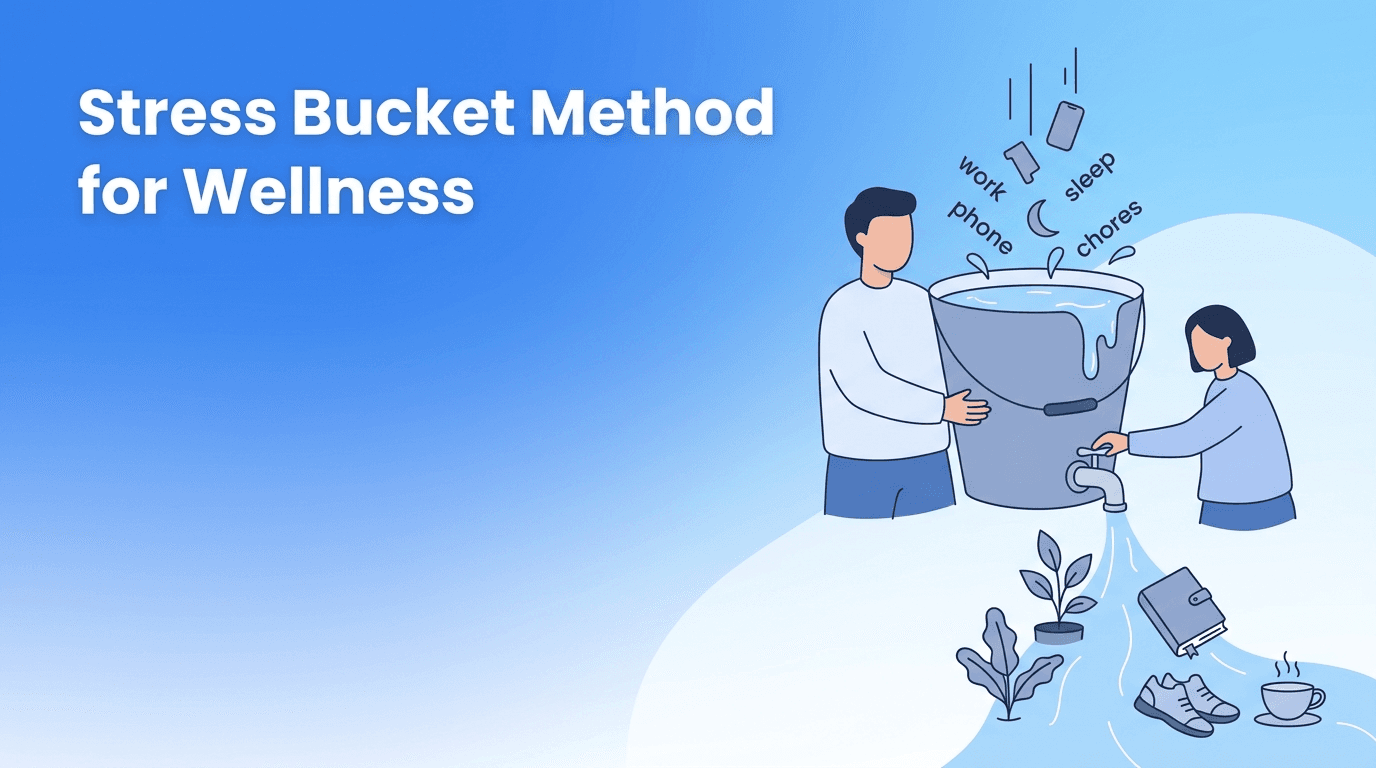
Imagine that every demand in your life adds water to a bucket. Work pressure, poor sleep, family tension, money worries, clutter, and constant notifications all raise the level. Stress management becomes easier when you can spot both sides of the equation: what pours in, and what lets stress flow out.
The goal is not to remove all pressure. The goal is to keep your bucket from overflowing too often. This is a practical wellness approach because it replaces self-judgment with awareness, planning, and compassionate action.
You do not need a perfect life to feel better. You need a clearer picture of what is draining you and what restores you.
Why this model supports mental health and healthy living
Many adults try to improve mental health by focusing only on mindset. But stress often has physical, emotional, social, and digital sources. The stress bucket method works because it connects daily habits with your emotional state. It shows why skipped meals, doomscrolling, overcommitment, and isolation can quietly raise stress even when nothing dramatic is happening.
- It makes stress visible so you can name real triggers instead of saying 'everything is too much.'
- It encourages realistic self-care like sleep, movement, hydration, and boundaries rather than all-or-nothing routines.
- It supports healthy living by linking body care and emotional regulation.
- It helps prevent overload because you notice rising stress before burnout hits.
How to use the stress bucket method in real life
1. List what is filling your bucket
Take five quiet minutes and write down current stress inputs. Include obvious items like deadlines, but also subtle ones like noisy environments, decision fatigue, relationship tension, or too much time online. Be honest and specific. Wellness begins with clear noticing.
2. Identify what drains your bucket
Now list the habits, people, and conditions that help you recover. This might include walking, stretching, prayer, journaling, therapy, laughter, a tidy room, saying no, or going to bed on time. Good self-care is not always glamorous. Often, it is simple and repeatable.
3. Find the hidden leaks
Some coping habits look helpful but actually keep the bucket full. Examples include staying up late to 'get alone time,' scrolling to numb out, skipping meals, or saying yes when you mean no. Gentle awareness here can improve stress management without shame.
4. Choose one inflow reduction and one outflow boost
Avoid trying to fix everything at once. Pick one thing that reduces incoming stress and one thing that improves recovery. For example: mute work notifications after 6 p.m., and take a 10-minute walk after lunch. Small paired changes are easier to maintain and better for long-term healthy living.
Build your personal wellness reset with Haply
Haply is an AI life coaching app for iOS and Android that can help you turn the stress bucket method into daily action. Use chat-based coaching, the Today Dashboard, habit streaks, and mini-apps like Meditation/Breathe and Focus Timer to support wellness and mental health. It complements professional care, not replaces it.
Try Haply FreeA 10-minute stress management reset
- Minute 1-2: Rate your stress from 1 to 10.
- Minute 3-4: Write down three things filling your bucket today.
- Minute 5-6: Choose one thing you can postpone, delegate, or simplify.
- Minute 7-8: Do one regulating action, drink water, breathe slowly, stretch, or step outside.
- Minute 9-10: Decide on one protective boundary for the rest of the day.
This quick check-in is useful when your mind feels busy and scattered. Over time, the stress bucket method can become a daily language for understanding overload before it becomes a crisis.
Self-care that actually lowers stress
Effective self-care is less about buying things and more about supporting your nervous system. If you want stronger wellness habits, focus on basics that lower background stress consistently.
- Sleep protection: Keep a regular wind-down time and reduce screens before bed.
- Food stability: Eat regular meals to avoid mood and energy crashes.
- Movement snacks: Use short walks or stretching breaks instead of waiting for the perfect workout.
- Digital boundaries: Create phone-free windows to reduce mental clutter.
- Social support: Send one honest message to someone safe when stress rises.
- Professional support: If stress feels constant or unmanageable, consider speaking with a licensed mental health professional.
When to get extra support
Sometimes an overflowing bucket is a sign that you need more than lifestyle changes. If stress is disrupting sleep, appetite, work, relationships, or your ability to function, reaching out for professional help is a strong next step. Tools like Haply can support routines, reflection, and motivation, but they are best used alongside appropriate care when needed.
Frequently Asked Questions
What is the stress bucket method for stress management?
The stress bucket method is a simple way to understand stress by imagining life pressures filling a bucket and coping tools draining it. It helps you spot triggers and choose practical self-care actions.
How can the stress bucket method improve mental health?
It improves mental health by making stress patterns easier to notice and manage. This can help you reduce overwhelm, build healthier habits, and respond earlier to rising pressure.
What are the best self-care habits for healthy living and wellness?
Some of the most effective habits are regular sleep, balanced meals, hydration, movement, boundaries with technology, and supportive relationships. Simple routines done consistently matter more than perfect plans.
Can an app help with wellness and stress management?
Yes, an app can help you track habits, reflect on triggers, and practice calming exercises. Haply offers AI coaching, reminders, and wellness tools that can support daily routines.