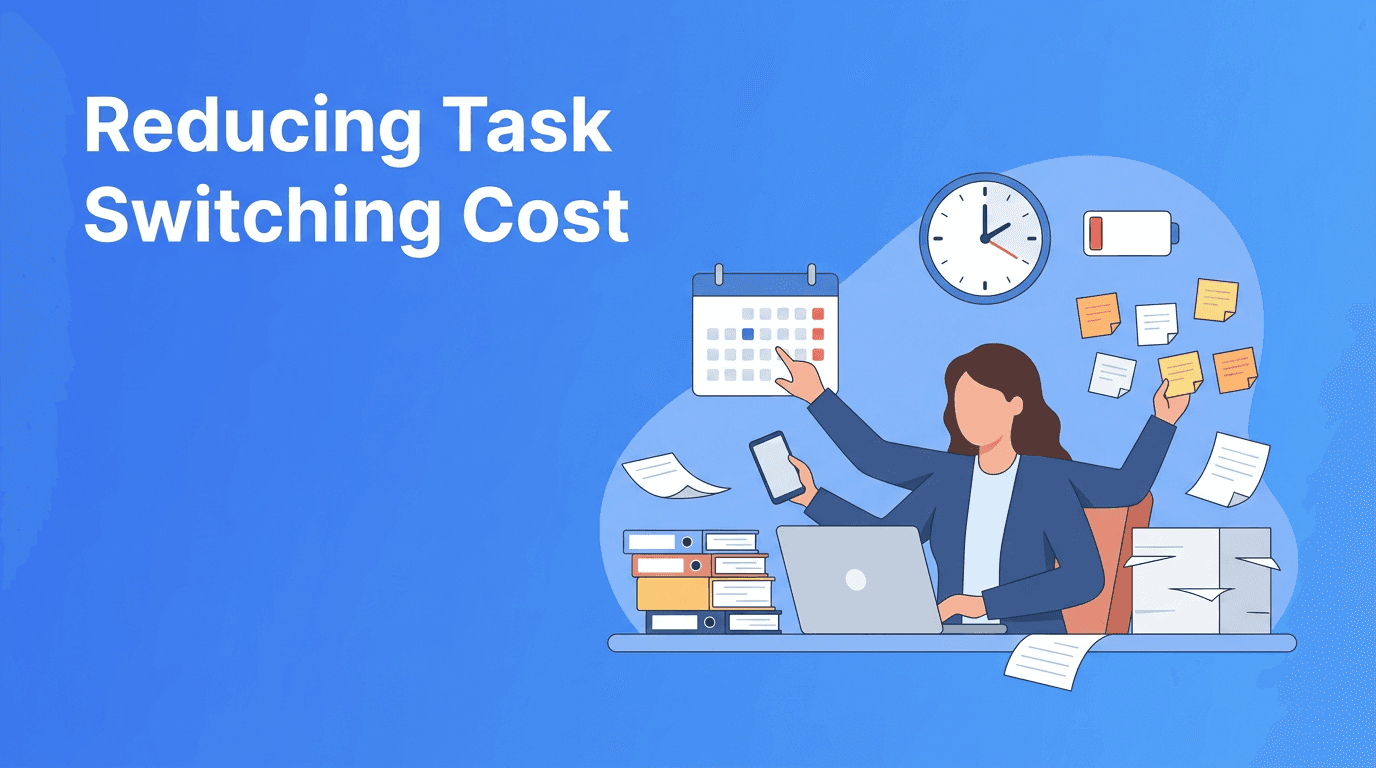
Task Switching Costs: The Productivity Trap Hurting Remote Work and Study Sessions
Task switching costs quietly drain focus during remote work, freelancer productivity, and student productivity. Learn practical ways to reduce context switching and get more done.
By Haply Team
Haply Editorial Team
Task switching is one of the most common reasons smart people feel busy but finish less. In remote work, freelance projects, and study sessions, the problem is not always lack of effort. It is often the constant jump between tabs, messages, assignments, and small decisions that quietly burns mental energy.
If you work from home, manage clients, or study on your own schedule, reducing task switching can improve output without making your day longer. This article breaks down what task switching looks like in real life, why it slows you down, and how to build a workflow that protects attention.
Why task switching feels productive, but is not
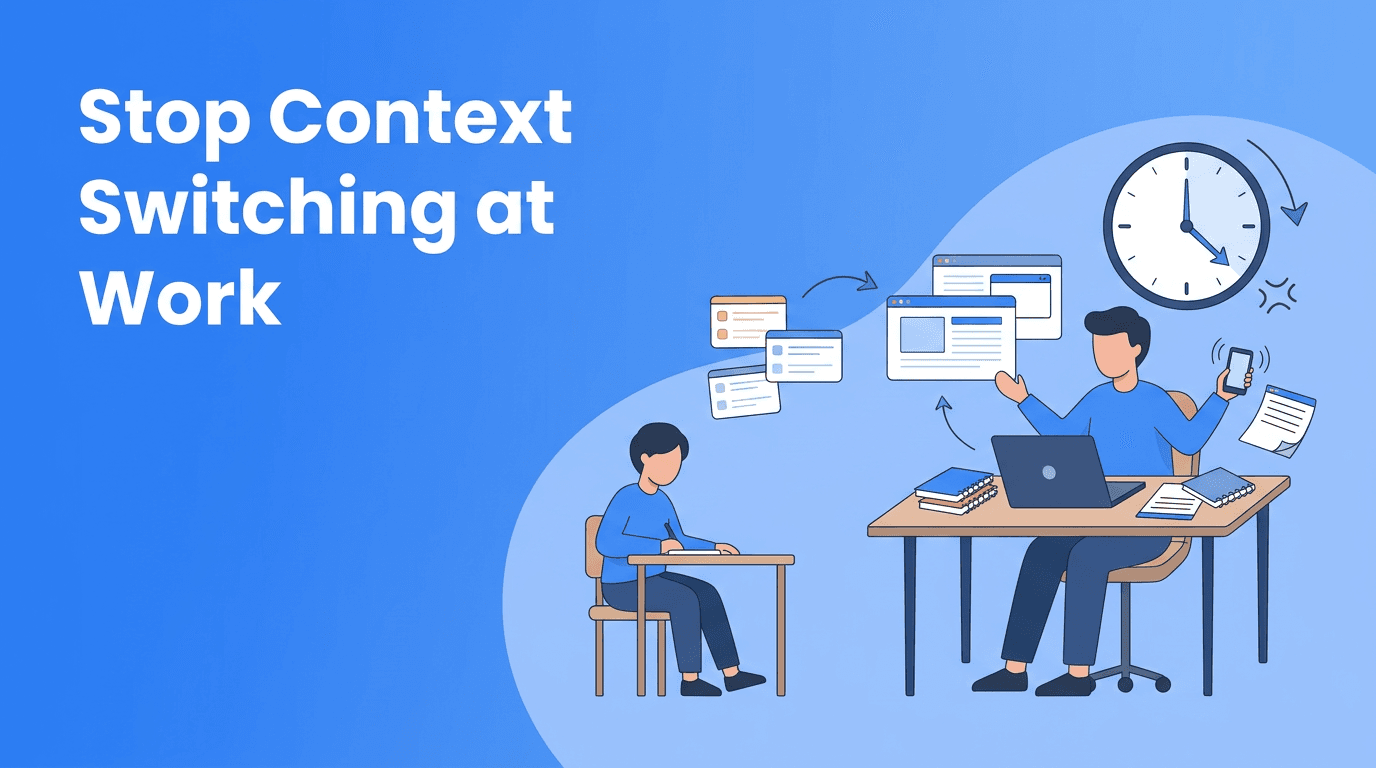
Switching tasks creates the illusion of momentum. You answer a message, check a file, update a calendar, and reply to an email, so it feels like progress. But your brain pays a reset cost every time you move from one type of work to another.
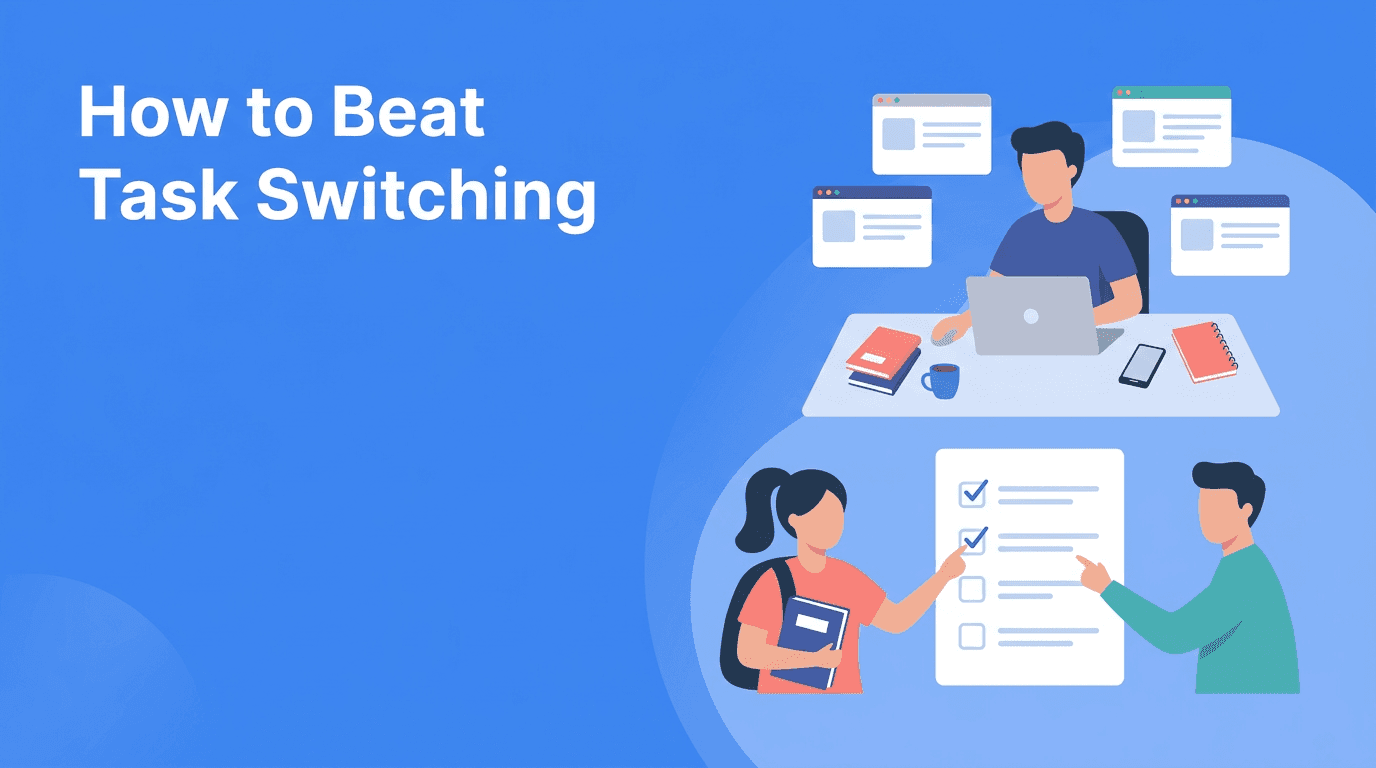
- A remote worker moves from a report to Slack to email to a meeting note
- A freelancer jumps between client revisions, invoices, and social media messages
- A student switches from reading to lecture notes to group chat to a new browser tab
"You do not need more hours. You need fewer unnecessary switches."
The hidden costs of context switching in remote work
In remote work, interruptions are often self-created. Notifications, open tabs, and loose task lists make it easy to react all day. The result is fragmented attention, slower thinking, and more mistakes.
What it does to your day
- Slows deep work because it takes time to re-enter a complex task
- Increases stress when unfinished tasks pile up in your mind
- Reduces quality because details get missed during transitions
- Makes workdays feel longer even when meaningful output stays low
This matters for freelancer productivity too. Freelancers often wear multiple hats, creator, marketer, admin, and customer support. Without clear boundaries, every role competes for attention at the same time.
A better workflow for freelancer productivity and student productivity
The fix is not perfection. It is designing your day so similar tasks live together. That means fewer resets, fewer decisions, and more time spent actually thinking.
1. Group tasks by mode, not by urgency
Instead of chasing whatever feels loudest, create work modes such as writing, admin, communication, and planning. This helps task switching happen less often because your brain stays in one mode longer.
2. Create one capture place
Use one trusted list for ideas, to-dos, and reminders. When tasks live across sticky notes, apps, and inboxes, your attention gets pulled in every direction. A simple task planner works better than a scattered system.
3. Build low-friction focus starts
- Close unrelated tabs before starting
- Put your phone out of reach for one work sprint
- Write the next tiny step before you stop working
- Use a timer for a 25 to 45 minute focus block
These are strong study tips for students too. When you reduce setup friction, it becomes easier to start reading, reviewing notes, or finishing problem sets without drifting into distractions.
Simple daily rules that reduce task switching
- Check messages at set times instead of continuously
- Batch admin work into one or two short windows
- Keep a separate list called "Not now" for tempting but nonessential tasks
- End each session by deciding the first step for your next session
- Use website blockers during your most important focus periods
If you want better student productivity or better output as a freelancer, consistency beats intensity. A few simple rules followed every day work better than a perfect system used once.
Need help building a focus system?
Haply is an AI life coaching app for iOS and Android that helps you stay consistent with chat-based coaching, a Focus Timer, Task Planner, daily reminders, and personalized productivity support.
Try Haply FreeHow to use Haply when your attention is scattered
If your day feels fragmented, Haply can help you simplify it. You can use the Productivity coach to map your work modes, the Task Planner to capture tasks in one place, and the Focus Timer to protect your most important block. The app also includes a Today Dashboard, streaks, and goal-based onboarding, which can be useful for remote workers, freelancers, and students trying to stay on track.
Try this 15-minute reset today
- Write down everything competing for your attention
- Circle one task that actually matters today
- Group the rest into admin, communication, or later
- Set a timer and work on the main task until it ends
- Review what pulled your attention away and remove one trigger tomorrow
This short reset helps turn a chaotic day into a usable plan. It is especially useful in remote work settings where structure does not appear automatically.
Frequently Asked Questions
What is task switching in productivity?
Task switching is moving back and forth between different tasks or mental modes. Each switch creates a small focus cost that can reduce speed and quality.
How can I stop task switching while working from home?
Batch similar tasks, limit notifications, and use scheduled message checks. A simple focus timer and one task list can also help.
Why is task switching bad for students?
It makes studying less efficient because your brain keeps resetting between reading, notes, apps, and messages. This leads to slower learning and weaker concentration.
How does task switching affect freelancer productivity?
Freelancers often switch between creative work, client communication, and admin tasks. Too much switching reduces deep focus and makes projects take longer than necessary.