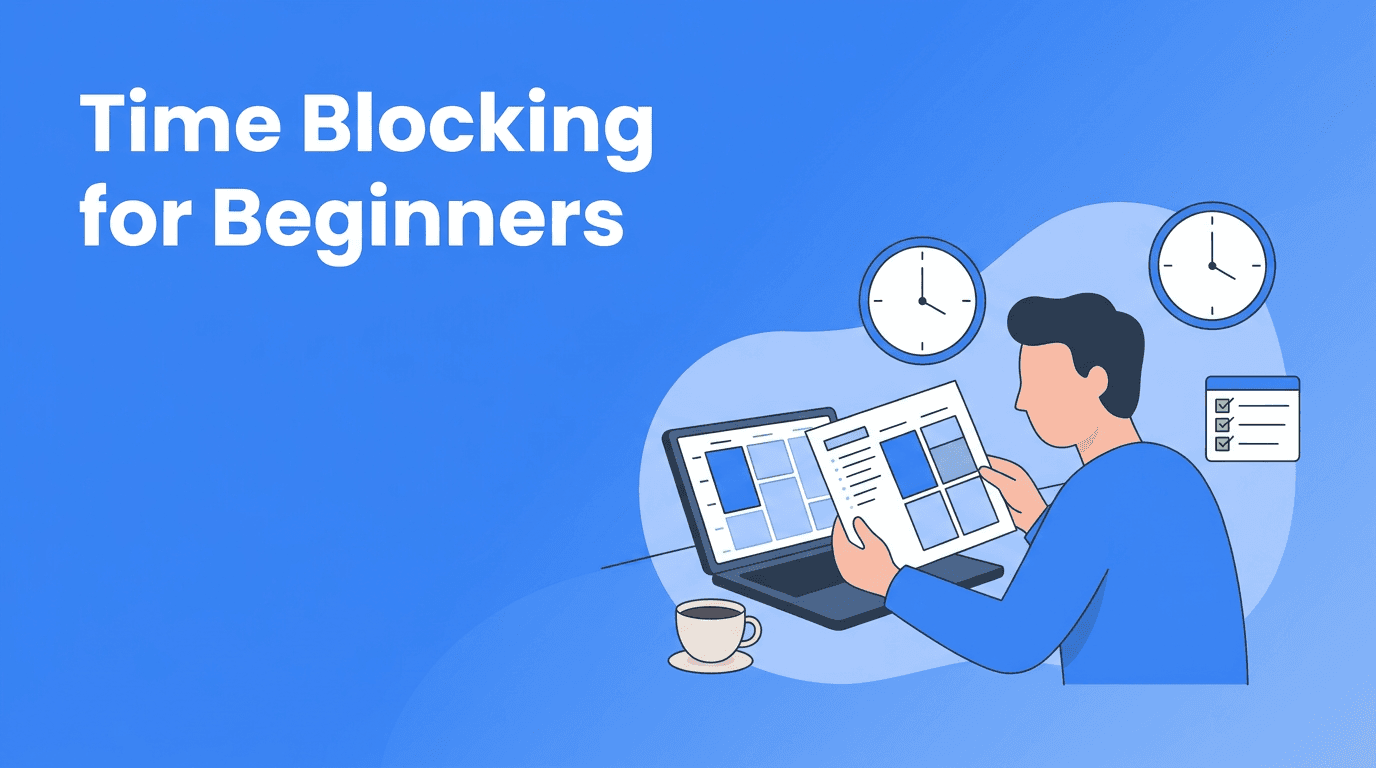
Time Blocking for Beginners: A Gentle Fix for Procrastination
Time blocking can make time management feel less chaotic and more realistic. Learn a beginner-friendly way to reduce procrastination, protect deep work, and rebuild motivation.

By Haply Team
Haply Editorial Team
If your to-do list keeps growing while your motivation keeps shrinking, time blocking may be the missing link. Instead of hoping you'll "find time," this approach gives every important task a place in your day, making time management less stressful and procrastination harder to hide behind.
Why time blocking works when to-do lists fail
A long task list can look productive, but it often creates quiet pressure. You see ten priorities, start none, and end the day wondering where your time went. Time blocking changes the game by turning vague intentions into visible commitments.
- A to-do list asks, "What should I do?"
- A calendar block asks, "When will I do it?"
- That small shift makes deep work easier to protect and easier to begin.
"You do not need more time. You need more intention with the time you already have."
The beginner version of time blocking
You do not need a color-coded planner or a perfectly optimized routine. A simple version works best when you're starting. The goal is not to schedule every minute. The goal is to create enough structure that your next step is obvious.
Step 1: Pick only 3 anchor blocks
Start with three blocks: one for deep work, one for admin or shallow tasks, and one for life maintenance. This keeps your plan realistic and lowers resistance.
- Deep work block: one important task that needs real concentration
- Admin block: email, messages, scheduling, quick follow-ups
- Life block: meals, movement, errands, breaks, and transition time
Step 2: Match tasks to your energy
Better time management is not only about the clock. It is also about energy. Put demanding work where your brain is naturally sharper. Save routine tasks for lower-energy hours. This simple habit often improves output more than squeezing in extra hours.
Step 3: Leave space between blocks
Most people underestimate how long things take. Add 10 to 15 minutes between blocks when possible. These small buffers reduce stress, help you reset, and prevent one delay from ruining the rest of your day.
How time blocking reduces procrastination
Procrastination often looks like laziness from the outside, but it is usually a mix of uncertainty, overwhelm, and fear of starting. Time blocking helps by making work smaller and clearer. You are no longer facing a huge project. You are facing a 45-minute block called "draft intro" or "review chapter notes."
- It lowers the emotional weight of big tasks
- It creates a visible start time, which reduces endless delay
- It gives you a stopping point, so work feels safer to begin
- It turns progress into something measurable, which boosts motivation
A realistic daily template you can copy
If you want a simple starting point, try this structure and adjust it to your life:
- 9:00 - 10:30: Deep work on your most important task
- 10:30 - 10:45: Break and reset
- 10:45 - 11:30: Admin tasks and communication
- 11:30 - 12:00: Planning and wrap-up
- Afternoon: Meetings, errands, lighter work, or a second focus block if energy allows
Want help sticking to your plan?
Haply is an AI life coaching app for iOS and Android that helps you turn good intentions into action. Use the Focus Timer, Task Planner, daily reminders, and personalized Productivity coaching to build a time blocking habit that actually lasts.
Try Haply FreeCommon time blocking mistakes
- Overplanning: If every minute is scheduled, one surprise can derail the whole day
- Ignoring breaks: Your brain needs recovery to sustain deep work
- Blocking tasks, not outcomes: Write specific actions like "outline report" instead of vague labels like "work"
- Making blocks too long: Shorter blocks are easier to start when motivation is low
How to make the habit stick
Keep your system lightweight. Review tomorrow's blocks at the end of each day. Notice which blocks worked, which ones were too ambitious, and when your focus felt strongest. Consistency matters more than perfection.
If you want support, Haply can help you check in daily, track streaks, and use mini-tools like the Focus Timer and Task Planner so your plan lives beyond a notebook page. That extra accountability can be especially useful when procrastination tends to creep back in.
Final thought
The best productivity system is not the most complicated one. It is the one you will actually use on an ordinary Tuesday. Time blocking is powerful because it makes your priorities visible, protects your attention, and turns good intentions into real time on the calendar.
Frequently Asked Questions
What is time blocking and how does it work?
Time blocking is a planning method where you assign specific tasks to specific time slots in your day. It helps you make clearer decisions, reduce distractions, and follow through more consistently.
Is time blocking good for procrastination?
Yes. Time blocking reduces procrastination by giving tasks a clear start time, smaller scope, and a visible place in your schedule.
How many hours should I time block each day?
Start small with two or three important blocks a day. You can expand later once you learn how long tasks really take and what fits your energy.
Can time blocking help with deep work?
Absolutely. A dedicated time block makes it easier to protect focused work from interruptions, meetings, and low-value tasks.