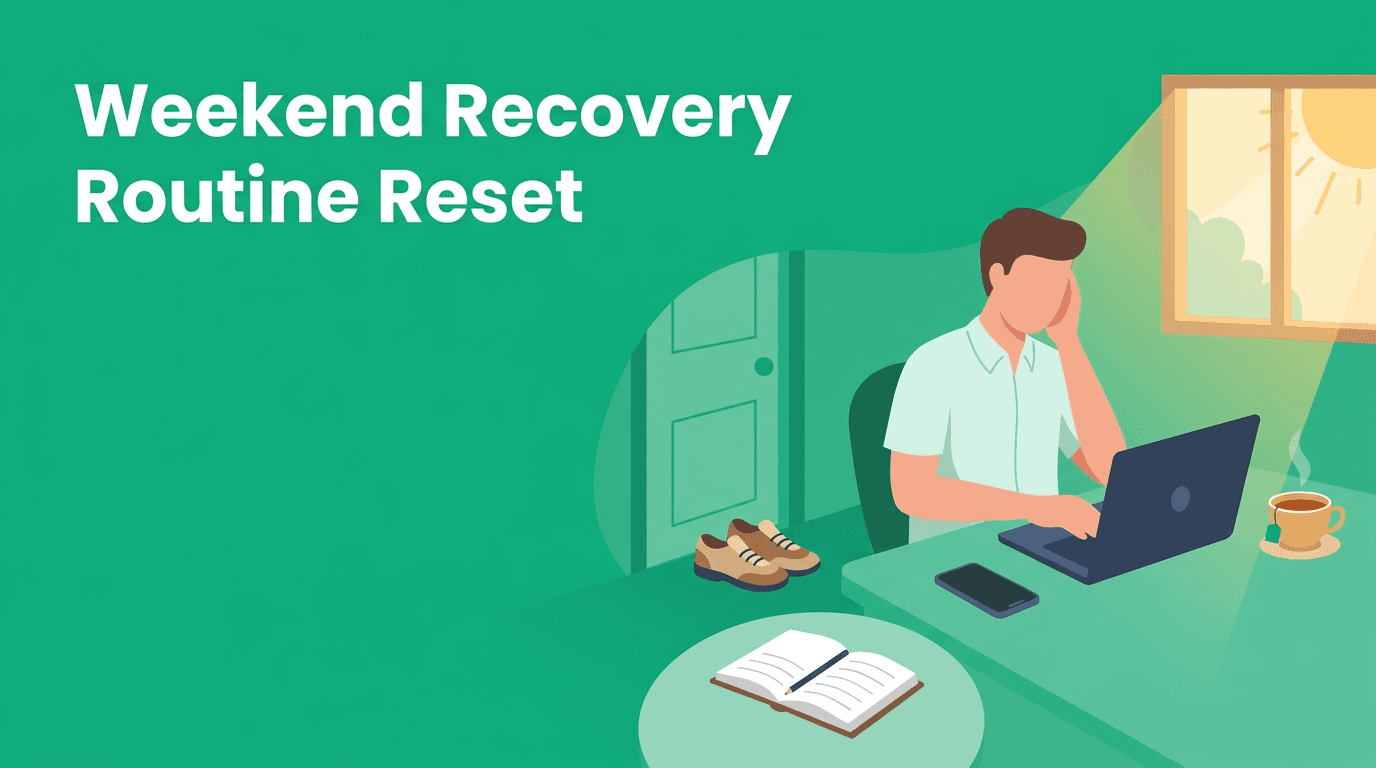
Weekend Recovery Routine: A Smarter Self-Care Reset for Burnout
A weekend recovery routine can turn self-care into real rest and recovery. Learn a simple reset that helps busy professionals reduce burnout and build a sustainable wellness routine.

By Haply Team
Haply Editorial Team
A weekend recovery routine can do more than help you feel "caught up" by Monday. For busy professionals, it creates a repeatable form of self-care that protects your energy, supports rest, and lowers the slow creep of burnout. Instead of using two days to numb out, over-scroll, or over-schedule, you can build a simple system for real recovery and a more sustainable wellness routine.
Why burnout recovery often fails on weekends
Many people reach the weekend already depleted, then expect one long sleep, a few errands, and passive downtime to fix everything. But burnout recovery usually fails when your days off become a mix of chores, screen overload, social pressure, and guilt about not being productive enough. Real recovery works better when it is intentional, light, and realistic.
- Self-care is not only pampering, it is energy management.
- Too much unplanned screen time can drain digital wellbeing instead of restoring it.
- A packed weekend can leave you more tired than the workweek.
- Small rituals are easier to repeat than dramatic resets.
The 4-part weekend recovery routine
1. Create a Friday shutdown ritual
Your weekend recovery routine starts before the weekend begins. Spend 10 minutes on Friday closing open loops. Finish with a short list: what is done, what can wait, and what matters on Monday. This helps your brain stop rehearsing work while you are trying to rest.
- Write down your top 3 priorities for Monday.
- Clear your desk or digital workspace for a visual reset.
- Turn off nonessential work notifications until your return.
- Choose one small reward that marks the start of rest and recovery.
2. Use a digital wellbeing block on Saturday morning
If the first hour of Saturday disappears into email, news, or social media, your nervous system never gets a real break. Protect your digital wellbeing by keeping the first 60 to 90 minutes low-input. This is one of the simplest forms of self-care because it reduces mental noise before it builds momentum.
- Keep your phone out of reach until after breakfast.
- Avoid work apps completely.
- Choose one analog activity like stretching, journaling, reading, or a walk.
- Notice whether your energy feels calmer without instant digital stimulation.
Rest is not a reward for finishing everything. It is a requirement for showing up well.
Build a wellness routine that actually restores energy
3. Schedule active recovery, not just passive downtime
Streaming for hours may feel easy, but it does not always create true recovery. A stronger wellness routine includes light activities that restore attention and mood. Think gentle movement, daylight, hydration, a nourishing meal, and one meaningful personal task that makes life feel less chaotic.
- Take a 20 to 30 minute walk outdoors.
- Drink water before coffee if you wake up depleted.
- Prep one simple meal with protein, fiber, and color.
- Do one life-admin task that reduces background stress.
- Leave open space in the day so your mind can settle.
4. End the weekend with a low-pressure Sunday reset
The final part of a weekend recovery routine is not about squeezing in more productivity. It is about reducing Monday friction. A 30-minute Sunday reset can support burnout prevention because it lowers decision fatigue and helps your next week begin with less chaos.
- Set out clothes, meals, or essentials for Monday.
- Review your calendar and remove one nonessential task if possible.
- Pick one anchor habit for the week, such as a lunch walk or bedtime cutoff.
- Go to bed on time instead of trying to "extend" the weekend with more scrolling.
Signs your self-care is becoming real recovery
A healthy wellness routine does not need to look impressive. It needs to leave you more steady, clear, and capable. If your self-care is working, you may notice that you dread Monday less, recover faster from stress, and feel less trapped in all-or-nothing habits.
- You feel less mentally foggy on Sunday night.
- Your screen time drops without forcing it.
- You have fewer stress spikes about unfinished work.
- You stop treating rest like something you have to earn.
- Your energy becomes more consistent across the week.
Want help turning recovery into a repeatable habit?
Haply is an AI life coaching app for iOS and Android that can help you build a personalized wellness routine with chat-based coaching, habit tracking, reminders, and mini-apps like Meditation/Breathe and Focus Timer. It can support self-care and burnout recovery as a practical companion, not a replacement for professional help.
Try Haply FreeHow to keep your weekend recovery routine realistic
The best weekend recovery routine is the one you will still use during a busy month. Start small. Pick one shutdown ritual, one digital wellbeing boundary, one recovery activity, and one Sunday reset step. That is enough to create momentum without turning self-care into another performance project.
Frequently Asked Questions
What is a weekend recovery routine?
A weekend recovery routine is a simple set of habits that help you rest, reduce stress, and reset for the week ahead. It focuses on intentional recovery instead of random downtime.
How do I recover from burnout on weekends?
Start with low-pressure steps like reducing screen time, getting outside, sleeping consistently, and planning a light Sunday reset. If burnout feels severe or ongoing, professional support can help.
How can digital wellbeing improve rest?
Digital wellbeing improves rest by reducing constant input from email, social media, and notifications. Fewer digital interruptions can help your mind settle and make downtime feel more restorative.
What does self-care look like for busy professionals?
For busy professionals, self-care often looks like practical habits such as boundaries with work, hydration, better sleep timing, gentle movement, and simplified routines that protect energy.