Worry Time: A Simple Stress Management Ritual for Better Mental Health
Worry time is a practical stress management tool that supports mental health, self-care, and healthy living by containing anxious thoughts instead of letting them run your day.

By Haply Team
Haply Editorial Team
If anxious thoughts tend to follow you from morning to night, worry time can help. This simple wellness practice gives your mind a set place to process concerns, so they do not spill into every moment of your day. It is a gentle stress management tool that can support mental health, strengthen self-care, and make healthy living feel more realistic.
What is worry time?
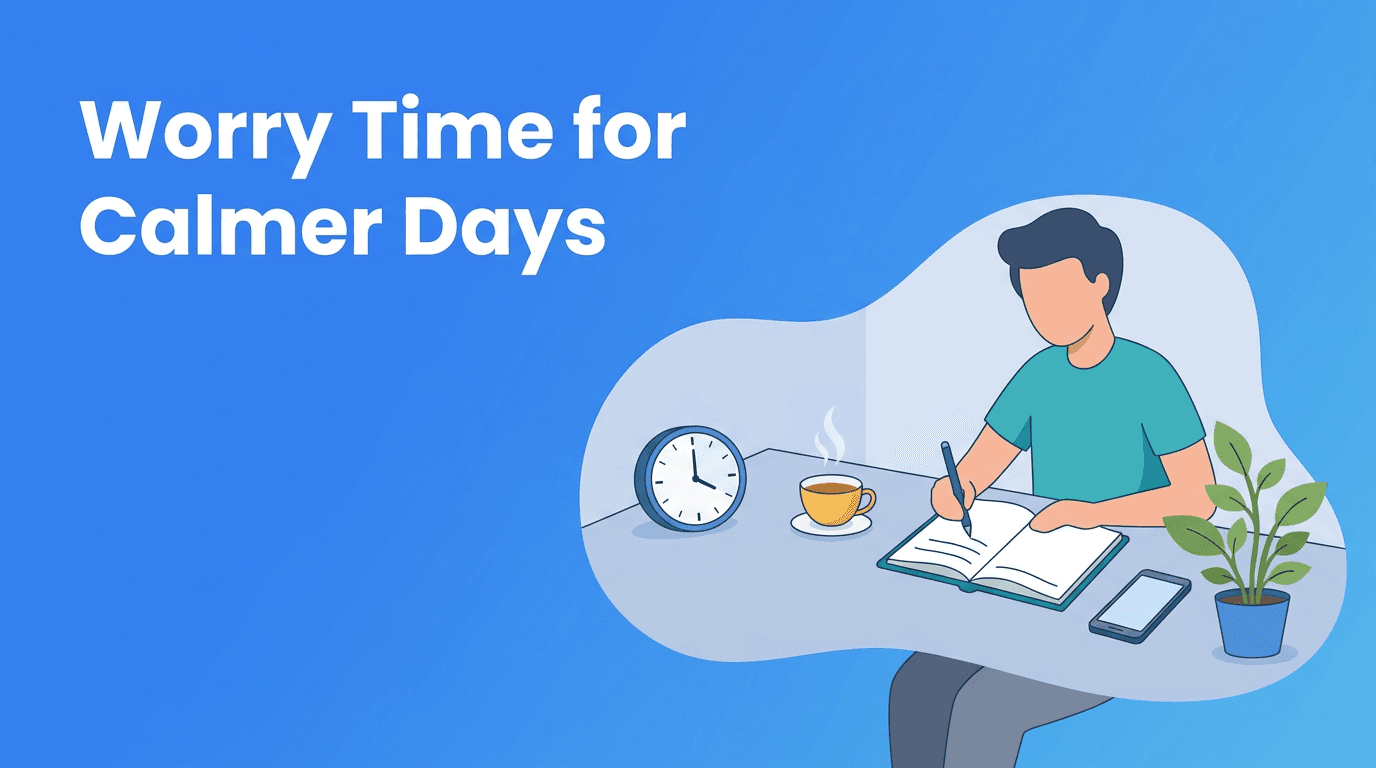
Worry time is a planned 10 to 20 minute window where you intentionally write down or think through your worries. Instead of arguing with every anxious thought as it appears, you remind yourself, "I will come back to this later." That small boundary can reduce mental clutter and create more calm.
Why this ritual works for stress management
- It helps separate real problem-solving from repetitive overthinking.
- It creates a predictable container for anxious thoughts, which can feel safer to the nervous system.
- It supports mental health by reducing the urge to mentally rehearse worst-case scenarios all day.
- It turns self-care into something practical, not just aspirational.
- It fits easily into a healthy living routine because it takes very little time.
"You do not have to solve every thought the moment it appears."
How to practice worry time in 4 simple steps
1. Pick a consistent time
Choose a daily slot, ideally not right before bed. Late afternoon or early evening often works well. Consistency teaches your brain that there is a reliable time for reflection, which can lower the urgency of random worry during the day.
2. Capture worries as they show up
Keep a note on your phone or a small notebook nearby. When a worry appears, write a few words like money, health appointment, or awkward conversation, then return to what you were doing. This supports both wellness and focus.
3. Sort worries during your worry time
When your scheduled worry time begins, look at your list and divide items into two groups: things I can act on and things I cannot control right now. For actionable worries, choose one next step. For the rest, practice naming the feeling and letting the thought exist without chasing it.
4. End with a closing ritual
Finish with one calming action, like stretching, slow breathing, or making tea. This tells your body that the reflection period is over. Small transitions matter in stress management because they help the mind shift gears.
A realistic example of worry time
Imagine you keep worrying about a work message, your sleep, and an upcoming family conversation. During the day, you jot them down instead of spiraling. Later, in worry time, you decide to reply to the message tomorrow at 10 a.m., move caffeine earlier to support sleep, and write three talking points for the family discussion. The worries become clearer, smaller, and more manageable.
Common mistakes that make worry time less effective
- Scheduling it too late at night, which can make sleep harder.
- Letting it stretch beyond 20 minutes and turn into rumination.
- Trying to force every worry to disappear instead of simply containing it.
- Skipping the actionable next step for problems you actually can influence.
- Judging yourself for having worries in the first place. Self-care starts with less self-criticism.
Build a calmer wellness routine with Haply
If you want more support, Haply offers AI life coaching on iOS and Android with Wellness coaches, habit tracking, daily reminders, and mini-apps like Meditation/Breathe and Focus Timer. It can help you turn small practices like worry time into a steady routine. Haply is a helpful companion, not a replacement for professional care.
Try Haply FreeHow to make worry time part of healthy living
The best routines are simple enough to repeat. Pair worry time with an existing habit, such as your afternoon tea, post-work walk, or evening planning session. When a tool fits your real life, it is more likely to support long-term wellness and mental health.
- Set a daily reminder so you do not rely on memory alone.
- Use a timer to keep the practice contained.
- Write one next step for any solvable worry.
- Follow it with a calming action like breathing, stretching, or a short walk.
- Track your consistency for two weeks and notice how your stress patterns shift.
If you use Haply, the Today Dashboard, habit tracker, and guided wellness tools can make this easier to sustain. A short check-in with an AI coach can also help you spot patterns in your triggers, routines, and progress over time.
When to get extra support
Worry time is a practical habit, but it is not a cure-all. If worry feels overwhelming, affects sleep for long periods, causes panic, or makes daily life hard to manage, reaching out to a licensed mental health professional can be an important next step. Support tools and apps can complement care, but they should not replace it.
Frequently Asked Questions
What is the worry time technique?
The worry time technique is a scheduled daily period, usually 10 to 20 minutes, for writing down and reviewing worries. It helps contain anxious thinking so it does not interrupt the rest of your day.
Does worry time help with anxiety?
Worry time can help some people reduce constant rumination and feel more in control of their thoughts. It is a practical stress management tool, but it is not a substitute for professional treatment when needed.
When should I schedule worry time?
Most people do best with worry time in the late afternoon or early evening. Try to avoid doing it right before bed so it does not interfere with sleep.
How long should worry time be?
A good starting point is 10 to 15 minutes. Keeping it short helps prevent the practice from turning into extended overthinking.