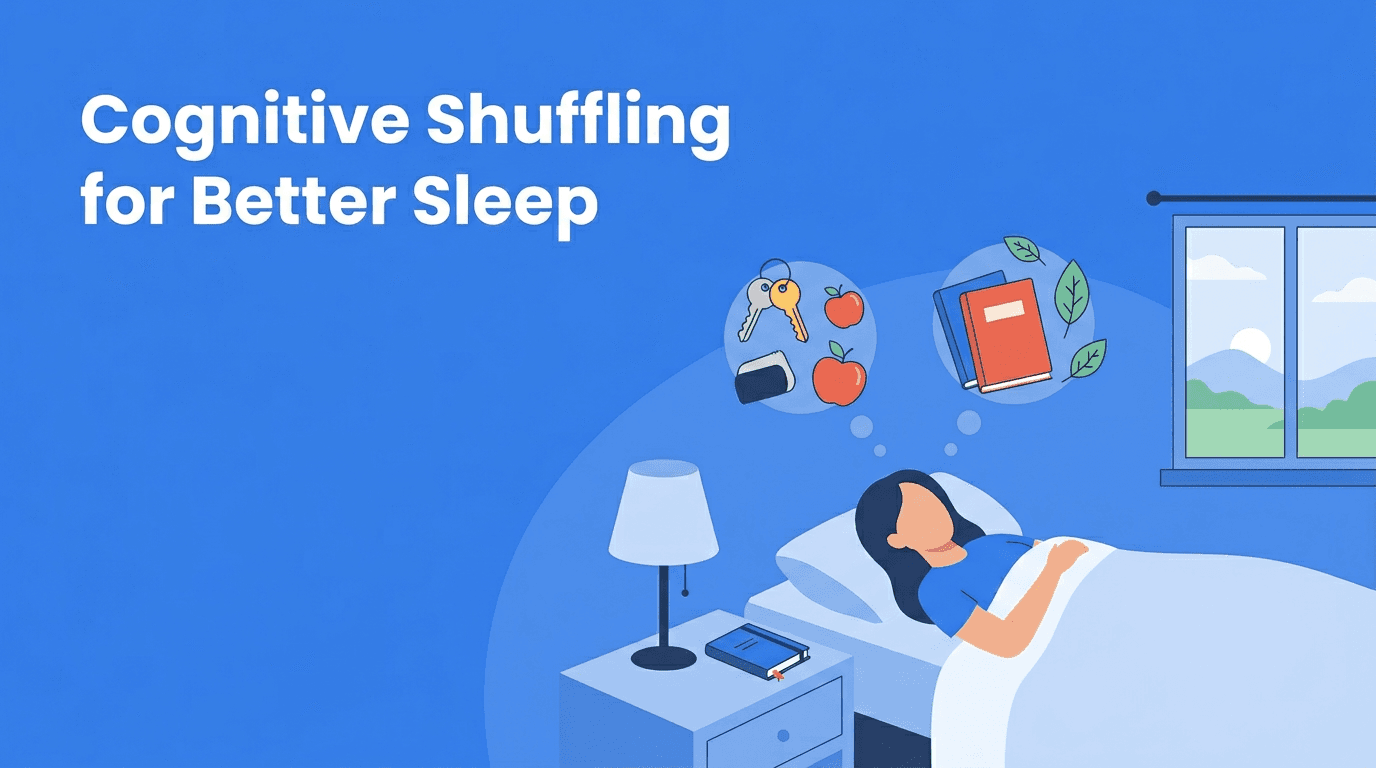
Cognitive Shuffling for Sleep: A Gentle Bedtime Skill for Stress Management
Cognitive shuffling for sleep is a simple mental technique that can support wellness, stress management, and mental health when your mind will not slow down at night.

By Haply Team
Haply Editorial Team
If your brain gets louder the moment your head hits the pillow, cognitive shuffling may be a surprisingly gentle way to settle down. This bedtime skill is gaining attention because it can support wellness, mental health, and stress management without asking you to force sleep.
Instead of trying to empty your mind, you give it a low-stakes task: thinking of random, unrelated items in a loose sequence. That small shift can interrupt overthinking and make bedtime feel less like a performance. For many adults, it becomes a practical form of self-care that fits naturally into healthy living.
What is cognitive shuffling?
Cognitive shuffling is a mental exercise designed to make your thoughts less organized and less emotionally charged. You choose a word, take its first letter, and think of unrelated words that begin with that letter. Then you move to the next letter and repeat.
A quick example
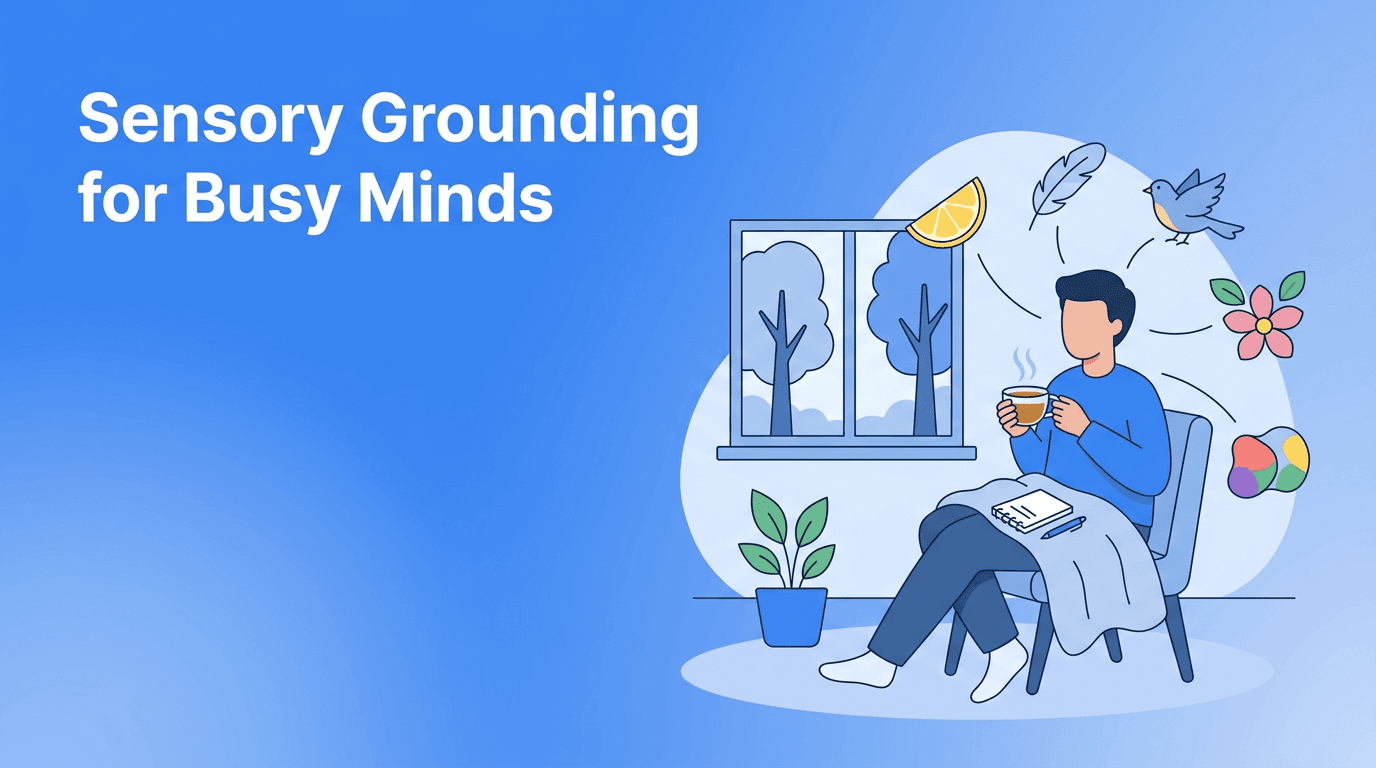
Take the word "lamp." For L, you might think: leaf, ladder, lemon. For A: apple, anchor, apron. For M: mountain, marble, mitten. The goal is not speed or perfection. The goal is to let your mind drift through neutral images instead of spiraling through tomorrow's worries.
"Rest often begins when the mind no longer feels responsible for solving everything tonight."
Why cognitive shuffling helps with sleep and mental health
At night, many people stay awake because their thoughts become too linear, emotional, or problem-focused. Cognitive shuffling works differently. It nudges your brain toward a more dreamlike, scattered pattern that may feel less activating.
- It reduces rumination by shifting attention away from stressful narratives.
- It feels easier than meditation for people who dislike trying to clear the mind.
- It supports stress management because the words are intentionally neutral.
- It can fit into self-care routines without extra equipment, apps, or long preparation.
- It complements healthy living habits like regular sleep times, evening light reduction, and limiting caffeine late in the day.
What it is not
This method is not a cure for insomnia, anxiety, or other sleep difficulties. It is simply one helpful tool. If sleep problems are ongoing or severe, professional support matters. A calming app like Haply can also support bedtime routines with guided breathing, habit tracking, and gentle coaching, but it should complement, not replace, qualified care.
How to practice cognitive shuffling tonight
- Get physically comfortable first. Dim the lights, put your phone away, and settle your body before starting.
- Pick a simple word. Choose something ordinary like "table," "cloud," or "garden."
- Use one letter at a time. Think of a few unrelated items for the first letter, then move on.
- Picture each item briefly. A fast mental image works better than analyzing the word.
- Keep it loose. If you get stuck, skip to another letter or start a new word.
- Let sleep interrupt the exercise. You do not need to finish. Drowsiness is the point.
Common mistakes that make bedtime feel harder
- Trying too hard to do it correctly. This is a soft-focus exercise, not a memory test.
- Choosing emotional words. Neutral words work best. Avoid topics tied to work, relationships, or stress.
- Judging whether it is working. Monitoring yourself can wake you up more.
- Using it while scrolling. For better wellness and digital wellbeing, finish screen time before you begin.
- Expecting instant results every night. Like many self-care skills, it often works better with repetition.
A simple 10-minute bedtime routine built around cognitive shuffling
If you want a more reliable wind-down ritual, pair cognitive shuffling with a few small habits. This creates a repeatable cue for sleep and supports broader healthy living goals.
- Minute 1-2: Lower lights and put your phone on charge outside reach.
- Minute 3-4: Take slow breaths or do a brief body scan.
- Minute 5-6: Write down one unfinished task for tomorrow so your brain does not keep holding it.
- Minute 7-10: Begin cognitive shuffling with a neutral word and let your thoughts soften.
Build a calmer bedtime with Haply
Use Haply, the AI life coaching app for iOS and Android, to create a personalized evening routine. Its Wellness coaching, breathing tools, sleep content, reminders, and habit streaks can help you stay consistent.
Try Haply FreeWhen to use this technique beyond bedtime
You can also try cognitive shuffling during high-stress moments when your brain is stuck in loops, such as before a presentation, after an argument, or during travel. It is not about avoiding emotions. It is about giving your nervous system a brief, neutral landing place.
Frequently Asked Questions
What is cognitive shuffling for sleep?
Cognitive shuffling is a mental technique where you think of random, unrelated words or images to make thoughts less linear and less stimulating at bedtime.
Does cognitive shuffling help with anxiety at night?
It may help reduce racing thoughts for some people by shifting attention to neutral mental images. It is a coping tool, not a replacement for professional mental health care.
How long should I do cognitive shuffling before sleep?
Most people try it for a few minutes or until they feel drowsy. There is no ideal length, and you do not need to complete the exercise.
Is cognitive shuffling better than meditation for falling asleep?
It depends on the person. Some people find cognitive shuffling easier because it gives the mind a simple task instead of asking for stillness.