The Two-Minute Restart: A Procrastination Reset for Better Time Management
A simple procrastination reset can improve time management, reduce mental friction, and help you start deep work even on overwhelming days. Try this practical system today.
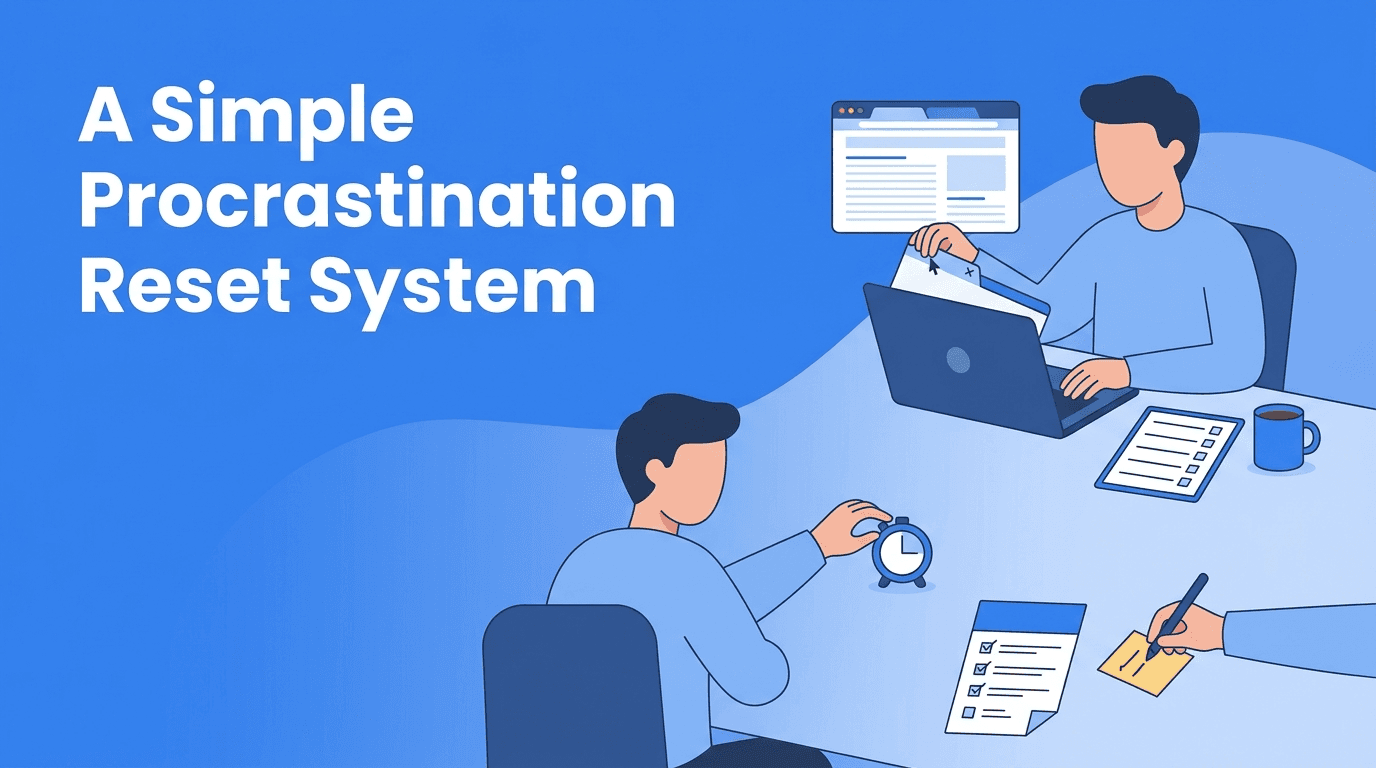

By Haply Team
Haply Editorial Team
If your to-do list feels heavy before the day even begins, a procrastination reset can help you stop circling and actually start. Instead of waiting for perfect motivation, this approach uses tiny actions to reduce resistance, support time management, and make deep work feel possible again.
Why starting is harder than planning
Most people do not struggle because they are lazy. They struggle because the brain treats unclear, emotionally loaded tasks like threats. You open your laptop, think about the size of the project, and suddenly checking email feels urgent. That is why many productivity tips fail. They optimize the calendar, but not the moment of friction right before action.
- Planning feels safe because it creates the illusion of progress
- Procrastination often comes from vagueness, not lack of ability
- Motivation usually appears after you begin, not before
- A small, visible next step is often more effective than a perfect plan
"You do not need more willpower to begin. You need less friction."
What a procrastination reset looks like
A procrastination reset is a two-minute ritual you use whenever you are stuck. It is not a full routine and it does not require a new app, notebook, or life overhaul. Its job is simple: move your brain from avoidance to action.
Step 1: Close the open loops
Take 30 seconds to clear visual noise. Close random tabs, silence notifications, and put unrelated papers in one pile. This is basic time management, but it works because your environment stops reminding you of ten other unfinished things.
Step 2: Write the next visible action
Do not write "finish report." Write something so small it feels almost silly, like open the document and draft three bullet points. A visible next step reduces uncertainty, which is one of the biggest drivers of procrastination.
Step 3: Set a tiny start timer
Set a timer for just 5 minutes. Your goal is not to finish. Your goal is to make beginning feel safe. Once you start, motivation often catches up because momentum replaces dread.
Step 4: Protect the first minutes of deep work
For those 5 minutes, do only the task in front of you. No inbox, no messages, no research detours unless they are essential. This small boundary helps you enter deep work without the pressure of a long focus session.
How to use this with real time management
A procrastination reset works best when it fits inside a simple day structure. Pick one priority task for the morning, one for the afternoon, and use the reset whenever you notice yourself stalling. This keeps your system realistic and prevents your schedule from becoming another source of guilt.
- Choose 1 must-do task before noon
- Define the first visible action for that task
- Use a 5-minute start instead of waiting for motivation
- After starting, continue if focus is building, or take a short break and repeat
- Track what triggers delay so you can design better workdays over time
Need help turning good intentions into action?
Haply is an AI life coaching app for iOS and Android that helps you build better work habits with personalized Productivity coaching, a Focus Timer, Task Planner, habit tracking, and daily reminders. If you want gentle structure without overwhelm, it is a practical place to start.
Try Haply FreeWhen procrastination is really a signal
Sometimes delay is not a discipline problem. It is feedback. You may be tired, overcommitted, confused about expectations, or afraid the work will not be good enough. In those moments, better productivity tips are not about pushing harder. They are about asking a better question: What is making this task feel expensive right now?
- If the task feels too big, shrink the scope
- If it feels boring, pair it with a timer or a reward
- If it feels scary, draft badly on purpose
- If it feels unclear, ask one clarifying question
- If you are drained, rest before calling yourself unmotivated
A low-pressure way to build consistency
The real benefit of a procrastination reset is not one productive morning. It is trust. Every time you learn how to start without drama, your brain gets evidence that hard tasks are manageable. That is how better time management becomes a personal skill instead of a rigid system.
Frequently Asked Questions
How do I stop procrastinating when I feel overwhelmed?
Start with a procrastination reset: clear distractions, define one tiny next step, and work for 5 minutes. Reducing friction is often more effective than forcing motivation.
What is the best time management method for chronic procrastination?
The best method is usually the one that makes starting easier. A simple priority list plus a small start ritual works better than an overly detailed schedule for many people.
Can deep work help with procrastination?
Yes, but only after you begin. Short, protected focus windows help you move from avoidance into concentration without the pressure of a long session.
Why do I have motivation after I start working?
Because action creates momentum. Your brain often resists uncertainty at the beginning, but once the task is in motion, it feels less threatening and more manageable.